Research · Sources · Context

Artists

Biographies, facts and images with open sources and verified rights.

Reset
Found: 1775
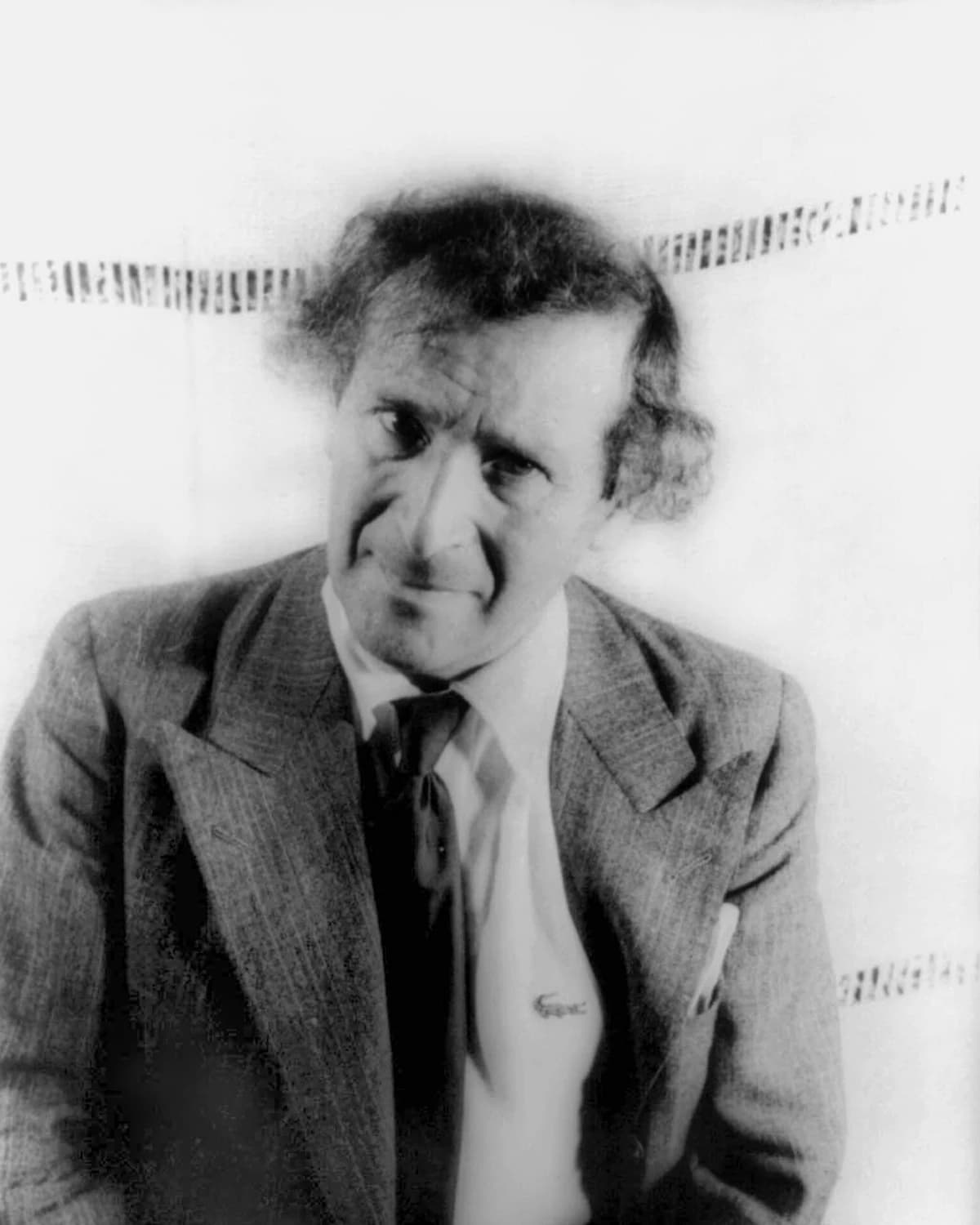
Marc Chagall

24.06.1887–28.03.1985

Marc Chagall

Marc Chagall grew up in Jewish Vitebsk and spent seventy years painting it from memory: fiddlers, lovers above the rooftops, wooden houses. He studied under Pen, Roerich and Bakst, lived at La Ruche in Paris, and after the revolution opened an art school in Vitebsk. From 1923 he worked in France, lived through the war in New York, and in his later years painted the ceiling of the Opéra Garnier and made stained glass for cathedrals and for a synagogue in Jerusalem.
Ilya Repin

24.07.1844–29.09.1930

Ilya Repin

Ilya Repin (1844–1930) started out in an icon-painting workshop in Chuguyev and ended up as a professor and rector of the Academy of Arts. A member of the Peredvizhniki, he painted “Barge Haulers on the Volga”, “Religious Procession in Kursk Province”, “Reply of the Zaporozhian Cossacks” and portraits of Mussorgsky and Tolstoy. From the early 1900s he lived at Penaty in Kuokkala, and after 1917, without moving anywhere, found himself in independent Finland.
Arkhip Kuindzhi

15.01.1841–11.07.1910

Arkhip Kuindzhi

Arkhip Kuindzhi, the son of a Greek shoemaker from Mariupol, spent several years as a photo retoucher in Taganrog and got into the Academy of Arts only at the third attempt. In 1880 his “Moonlit Night on the Dnieper” was shown in a darkened room as the only picture in the exhibition, and two years later he stopped exhibiting for twenty years. He taught landscape to Roerich, Rylov and Bogaevsky and left all his money to a society of artists later named after him.
Viktor Vasnetsov

03.05.1848–23.07.1926

Viktor Vasnetsov

Viktor Vasnetsov, the son of a village priest in Vyatka province, left the seminary for the Academy of Arts and made epic songs and fairy tales a subject for large-scale painting: “Alyonushka”, “The Knight at the Crossroads”, “Bogatyrs”. He spent ten years painting St Vladimir's Cathedral in Kiev, and the façade of the Tretyakov Gallery was built to his design. He did not accept the revolution but stayed in Moscow, working to the end on the cycle “The Poem of Seven Fairy Tales”.
Isaac Levitan

18.08.1860–22.07.1900

Isaac Levitan

Isaac Levitan, a pupil of Savrasov and a friend of Chekhov, turned the unassuming landscape of central Russia into a picture of a state of mind: “Vladimirka”, “Above Eternal Peace”, “March”, “Golden Autumn”. Twice, as a Jew, he was expelled from Moscow. His main subjects came from summer seasons on the Volga at Plyos and in Tver Governorate; in 1898 he became an academician and took charge of the landscape studio at the school where he had studied.
Vasily Surikov

12.01.1848–19.03.1916

Vasily Surikov

Vasily Surikov (1848–1916), a Siberian from a Cossack family, came to St Petersburg with the wagon train of a Krasnoyarsk gold-mine owner and made his name in Moscow with large history paintings. He often painted the figures of “The Morning of the Streltsy Execution”, “Boyarynya Morozova” and “Suvorov Crossing the Alps” from his Krasnoyarsk relatives and fellow townspeople. He was a Peredvizhnik, a full member of the Academy of Arts and an academician.