
08.05.1899–12.06.1969
Aleksandr Deyneka
Aleksandr Deyneka (1899–1969), the son of a Kursk railwayman, went from the agitation trains of the Civil War to the mosaics of Mayakovskaya metro station and the Kremlin Palace of Congresses. A pupil of Favorsky at Vkhutemas and a founder of OST, he painted “The Defence of Petrograd”, “Mother” and “The Defence of Sevastopol”, and loved to paint sport, aviation and the body in motion.
Biography
In 1918 in Kursk the nineteen-year-old Aleksandr Deyneka worked as a photographer for the criminal investigation department. At the same time he headed the fine arts section of the provincial department of public education, decorated agitation trains and theatre productions, and when the Whites approached the town he took part in the defence of Kursk. In 1919–1920 he ran an art studio attached to the Kursk political directorate and the local ROSTA Windows.
By then he had had two years of specialist training.
Deyneka was born on 8 (20) May 1899 in Kursk, into a railwayman’s family. In 1915–1917 he studied at the Kharkov Art School under A. M. Lyubimov and M. R. Pestrikov. The army sent him to Moscow, to the printing department of Vkhutemas, where in 1920–1925 his teachers were Vladimir Favorsky and Ignaty Nivinsky. The years beside Favorsky and his meetings with Mayakovsky meant a great deal to his development as an artist. Paint was scarce, and his early works are often monochrome.
He was noticed at once. In 1924, at the First Discussional Exhibition of Associations of Active Revolutionary Art, he showed as part of the “Group of Three” with Andrei Goncharov and Yuri Pimenov, and in 1925 he was one of the founders of the Society of Easel Painters. Deyneka drew for the magazines Bezbozhnik, Prozhektor and Krasnaya Niva, illustrated books and made posters. Already in the twenties he painted “Football” (1924), “Skiers” (1926) and “Textile Workers” (1927), and in 1928 “The Defence of Petrograd”, which has been called the first truly monumental Soviet painting of revolutionary history; it is still his best-known work. Then came the October group and the Russian Association of Proletarian Artists, and in 1928–1930 he taught at Vkhutein.
The thirties turned out very varied for him. The posters “Mechanise the Donbass” and “Sportswoman” (1930), “Girl at the Window” and “On the Balcony” (1931), “Mother” (1932), “Noon”, “Bathing Girls” and “Night Landscape with Horses and Dry Grasses” (1932–1933). Alongside this lyricism came “The Unemployed in Berlin” (1933) and drawings for Barbusse’s novel “Under Fire”. From the early thirties he was taken with aviation: “Parachutist over the Sea” (1934), “Future Pilots” (1937), illustrations for the pilot Georgy Baidukov’s book “Over the Pole to America”. For Meyerhold he designed Mayakovsky’s “The Bathhouse” (1930). In 1935, at the invitation of the Philadelphia Museum of Art, Deyneka went to the United States, where he had a solo exhibition and drew a great deal of American life, and Vanity Fair commissioned a cover from him for its January 1936 issue. From the same time comes “Collective Farm Woman on a Bicycle” (1935), often cited as a model of the Socialist Realist style. In 1937 he received a grand gold medal at the Paris World’s Fair; in 1938 his mosaics appeared at Mayakovskaya metro station, and in 1943 at Novokuznetskaya. “Left March” dates from 1940.
During the war he stayed in Moscow and drew posters for the TASS Windows. In 1942 he went to the front near Yukhnov with Georgy Nissky. “The Outskirts of Moscow. November 1941”, “Burnt Village” (1942) and “The Downed Ace” were painted in these years, as was “The Defence of Sevastopol” (1942). I think Deyneka has no work more tense than this: the heroic rhetoric of the time rests here on the same bodies in motion that he had earlier painted at the stadium. In 1944 he painted the bright, spacious “Expanse”.
After the war Deyneka mostly taught and made monumental works. He led studios at the Surikov Institute (1934–1946 and 1957–1963), at the Moscow Institute of Applied and Decorative Art (1945–1952; until 1948 he was its director) and at the Architectural Institute (1953–1957). From 1947 he was an academician of the USSR Academy of Arts, and in 1962–1966 its vice-president. His known post-war works include “Relay Race on the B Ring” (1947) and mosaics for the foyer of the assembly hall at Moscow State University (1956) and for the Palace of Congresses in the Kremlin (1961). He was awarded the Lenin Prize in 1964 for the mosaics “Red Guard”, “Milkmaid”, “Working Morning” and “Hockey Players”. In 1963 he became a People’s Artist of the USSR, and in 1969 a Hero of Socialist Labour.
Deyneka died in Moscow on 12 June 1969 and is buried in the Novodevichy Cemetery. The picture gallery in Kursk bears his name.
Related context
Associations
Works connected through artistic movements, cultural context and period. Priced works available in this market appear first.








Profile notes
Profile and sources
Image
Artist image
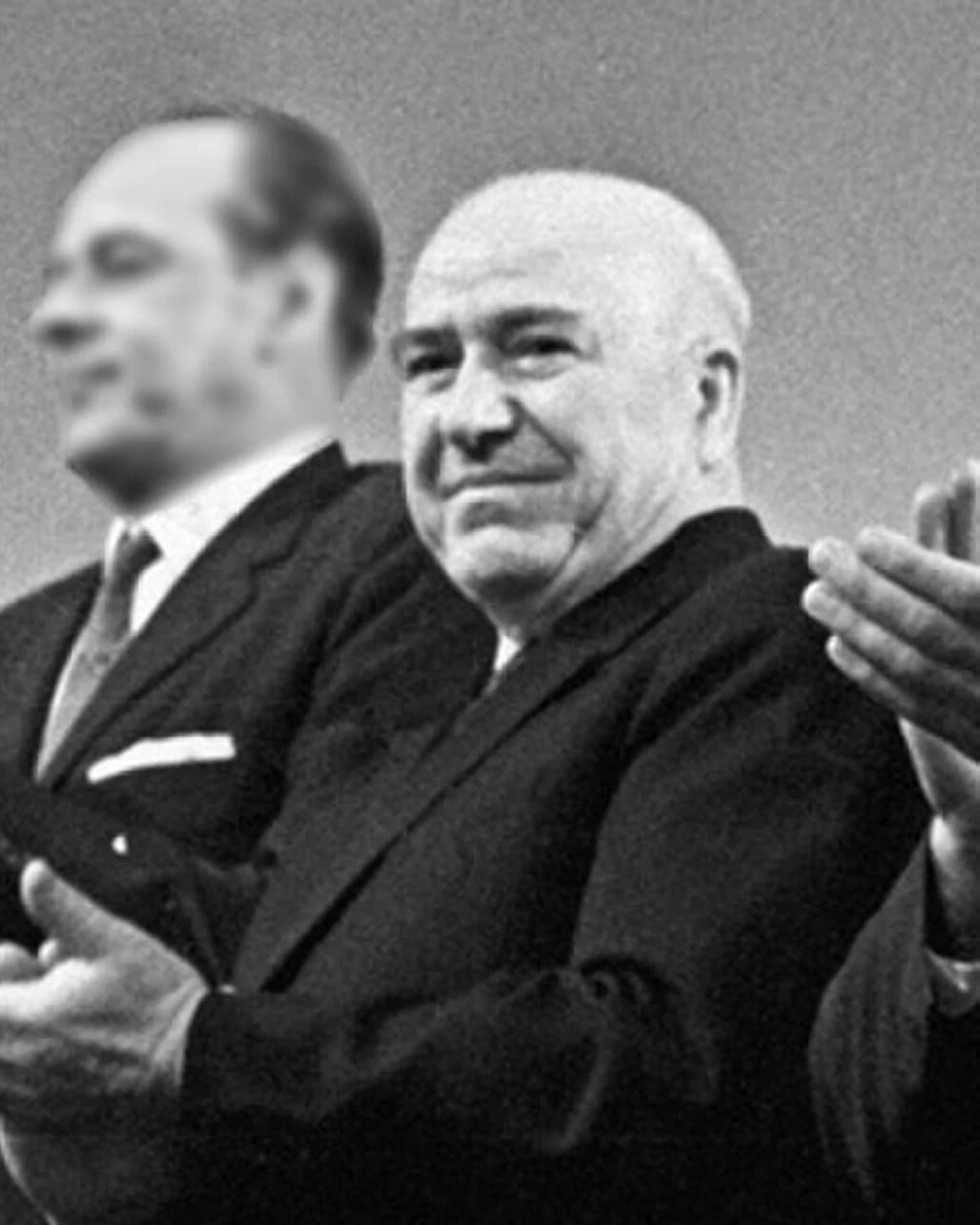
Sholomovich / Шоломович; Wikimedia Commons; CC BY-SA 3.0.
