
22.11.1693–22.01.1766
Zheng Xie
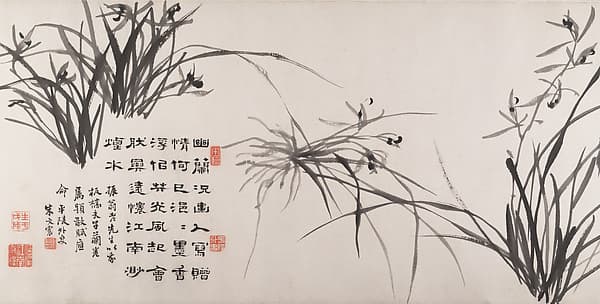
Zheng Xie, known as Zheng Banqiao, grew up in poverty, passed the imperial examinations and served for more than ten years as a county magistrate in Shandong. After leaving office he lived in Yangzhou, belonged to the circle of the Eight Eccentrics, painted bamboo, orchids and rocks, and devised his own script, “six and a half parts”. His three stages of painting bamboo are the part of his theory quoted most often.
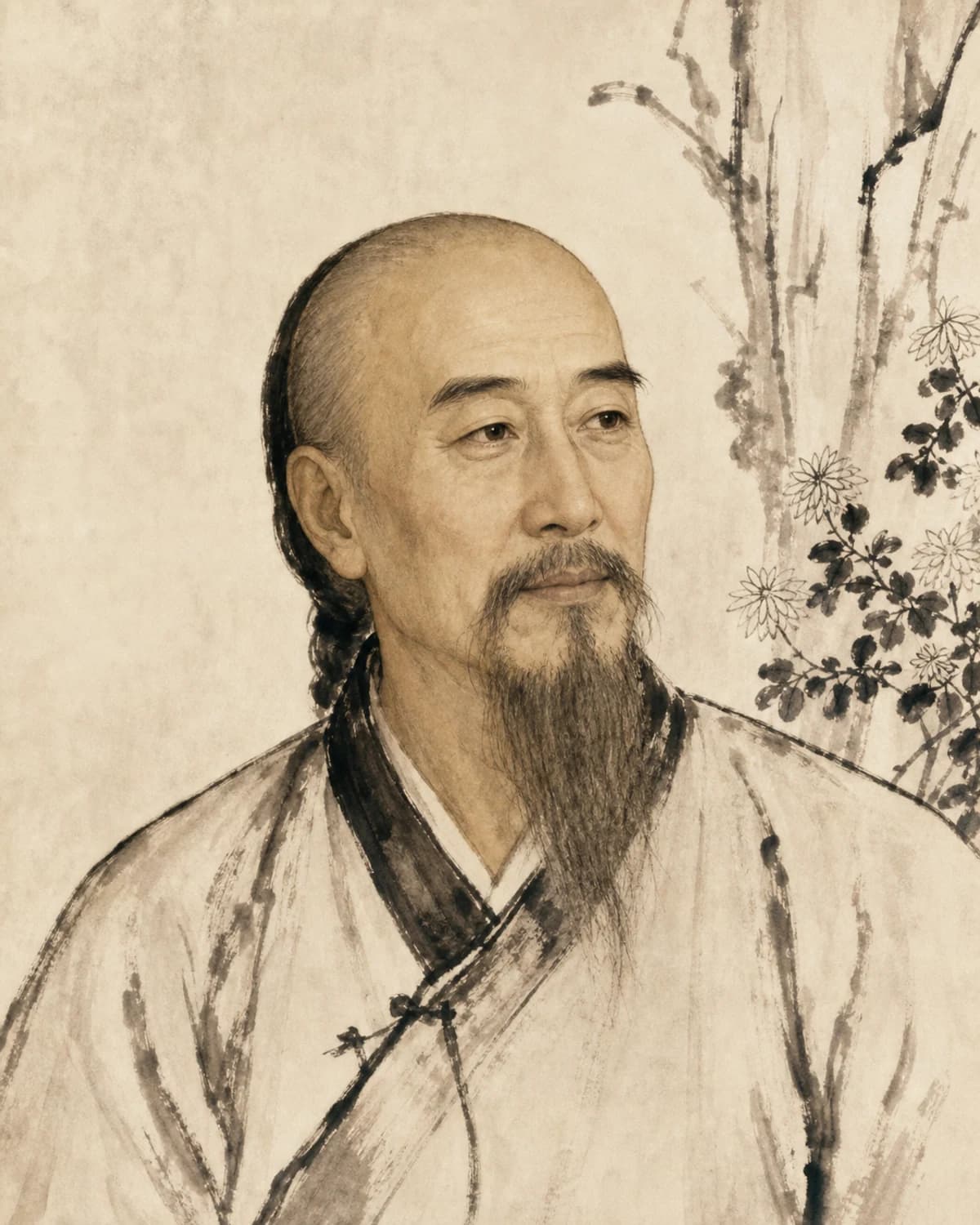
Biography
Above Zheng Xie’s desk, according to Qian Yong, hung four characters: “Hard to be a fool.” Qian Yong understood them this way: it is hard for a clever man to pass for a stupid one, but there should be a drop of simplicity in a clever mind. How Zheng Xie himself understood the inscription is hard to check.
He was born on 22 November 1693 in Xinghua County, in the prefecture of Yangzhou (Jiangsu province), into a family that came from Suzhou. His given name was Xie, his courtesy name Kerou, his art name Banqiao (“Plank Bridge”), and later also Banqiao Daoren, “the Daoist of Banqiao”. His father was a village schoolteacher who taught hundreds of children; the son began early to read history, poetry and ci (lyric songs) and knew much of it by heart. His youth was spent in poverty. In the Kangxi reign he took the first degree, that of xiucai; in 1732 he passed the provincial examination in Nanjing and became a juren, at forty by Chinese reckoning. In 1736 in Beijing he received the highest degree, jinshi. In those same years he grew close to Prince Yunxi, a son of the Kangxi Emperor, who painted and wrote himself. His first appointment came in 1742: Fan County in Shandong. In 1746 he was transferred to Wei County, where in the famine years he opened the granaries and lent grain against written receipts, hired the starving to build reservoirs, and, when the harvest failed again in the autumn, burned the receipts. The people built him a shrine in his lifetime. In twelve years of service, it is said, there was not one unjust verdict. He did not curry favour with senior officials; by one account he was censured over a shelter for the poor, and he resigned.
In 1748, when the Qianlong Emperor toured Shandong, Zheng Xie received from him the title of court calligrapher and painter, and even carved a seal bearing it. The service was brief.
After resigning he settled in Yangzhou and lived by selling paintings and calligraphy, with almost no possessions. Here he came to be counted among the Eight Eccentrics of Yangzhou. His contemporaries spoke of his “three perfections”: poetry, calligraphy and painting. In verse he followed Tao Yuanming and Lu You, wrote about ordinary people and used natural language.
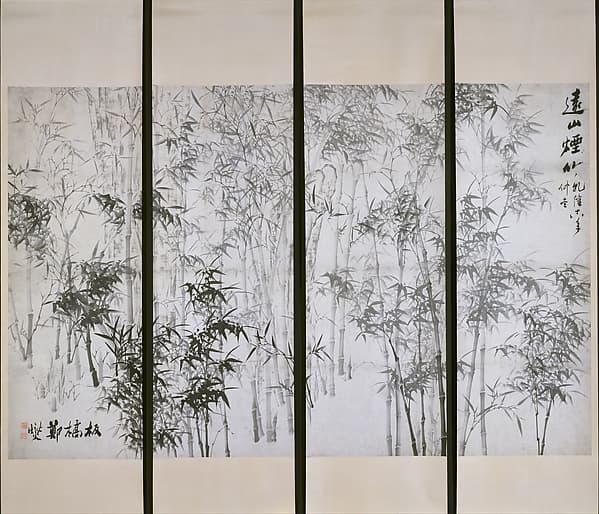
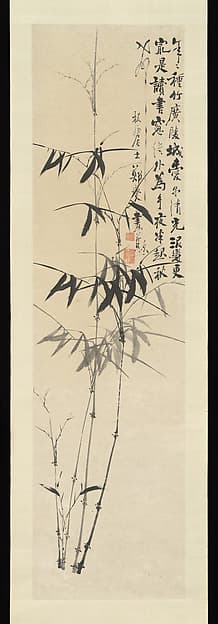
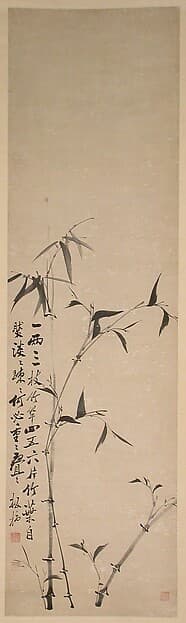
He is best known for his bamboo, and also for orchids and rocks. He learned from Xu Wei, Shitao and Bada Shanren. He described three stages of work: the bamboo one sees with the eyes, the bamboo in the chest and the bamboo in the hand. The first is simply observed, the second takes shape in the design, the third appears on the paper, and, in his words, the third is not the same as the second. The idea must come before the brush, and the charm lies beyond the rules. He also wrote that he learned bamboo from the window paper: in winter flies tapped on it like a little drum, and the shadow of bamboo moved across the paper.
He built his own script from the forms of seal, clerical, cursive, running and regular writing and brought into it methods taken from drawing orchids. His lines have no aligned columns, and the density of the characters varies. The script was called “six and a half parts” and later “the Banqiao style”. His collections of poems, ci, family letters and inscriptions on paintings survive. In 1751 he wrote the inscription “Hard to be a fool”, mentioned at the start.
He died in the twelfth lunar month of 1765, which is 22 January 1766 in the Gregorian calendar, and was buried east of the town of Xinghua. According to other accounts, Beijing is given as the place of his death. Zheng Xie’s works are held in museums in Berlin, London, Princeton and Shanghai.
Artist works
Works by the artist
Works by Zheng Xie available in this edition of NEOARCA.
Related context
Associations
Works connected through artistic movements, cultural context and period. Priced works available in this market appear first.
Profile notes
Profile and sources
Image
Artist image
На основе открытого изображения: Zheng Xie; Wikimedia Commons; Public domain.
