
28.03.1877–12.11.1952
Yury Artsybushev
In 1904 Yury Artsybushev began publishing the satirical magazine Zritel (Spectator) in St Petersburg, and was sentenced to confinement in a fortress for it. In 1917 he sketched congresses, trials and sessions of the Petrograd Soviet; hundreds of these drawings are kept in the State Archive of the Russian Federation. He emigrated in 1919, returned to the USSR in 1947 and died in exile in Kazakhstan.
Biography
In 1926 Artsybushev, in great need, sold 241 drawings made between 1909 and 1925 to the Russian Foreign Historical Archive in Prague. Most of them were portraits. After the war the archive was transferred to Moscow, and these sheets now lie in the State Archive of the Russian Federation.
He was born on 28 March 1877 (16 March, Old Style) in Moscow. His father, Konstantin Artsybushev, a nobleman and railway engineer, was a partner and friend of the patron Savva Mamontov, and Yury took his first painting lessons in Mamontov’s house. His childhood and youth were spent in Moscow and on the family estate of Ust-Krestishche in Kursk Governorate. He finished the Voskresensky Real School in Moscow, and in 1898 entered the architecture department of the Higher Art School at the Academy of Arts in St Petersburg, but did not complete the course.
In the autumn of 1899 his father was arrested together with Savva and Nikolay Mamontov on a charge of unlawfully disposing of funds of the board of the Moscow–Yaroslavl–Arkhangelsk Railway. The court acquitted them all, but they left prison bankrupt, and in 1901 Konstantin Artsybushev died.
In January 1903 Yury, together with Nikolay Alyabyev, the intended editor-in-chief, applied for permission to publish a satirical magazine in Moscow, Vetrograd mnogotsvetny (“The Multicoloured Garden”). Permission was refused: Alyabyev had been repeatedly involved in student disturbances. In 1904 Artsybushev obtained permission for an illustrated magazine, Zritel, in St Petersburg, and the first issue appeared on 5 June. The editorial board included three men whose full names could not be established: Gints, Kagan and Faleev. Individual issues were seized, on 2 October 1905 publication was banned, and in December the St Petersburg Judicial Chamber opened a case against the editor. Artsybushev was sentenced to two and a half years in a fortress; an appeal saved him from imprisonment, and he was acquitted only in 1907. While the case went on, the magazine came out under the title Maski (Masks).
In 1908, when it had become impossible to continue the magazine in the conditions of the advancing reaction, Artsybushev returned to Moscow. He worked for the theatre and contributed to Ogonyok, Krivoye zerkalo (The Crooked Mirror) and the newspaper Rus. In 1909 he made a series of drawings at the trial of the murderers of the State Duma deputy Mikhail Herzenstein, held in Terijoki.
In 1911, together with his wife, the actress Maria Artsybusheva, he took part in founding the Mamonov Theatre of Miniatures, an enterprise of the playwright Sergey Mamontov. Before it opened, Mamontov withdrew, announcing in the newspapers that he differed with Artsybusheva over the theatre’s artistic aims, and demanded the return of the money he had put in. The then little-known Alexander Vertinsky tried himself in the role of Pierrot on its stage, and Tamara Karsavina and Vaslav Nijinsky danced the tango. The closing of the theatre was accompanied by scandals and lawsuits. In spring 1915 Artsybushev was sentenced in one of them to two weeks’ arrest for insulting an assistant to a sworn attorney.
From 1916 he began sketching meetings, rallies and trials: cases of abuses in army supply contracts (summer 1916), of food riots (autumn 1916), of agents of the Moscow Okhrana, the tsarist security police (April 1917). He devoted a separate series to the Moscow City Duma. After February 1917 he drew at the congresses of the Union of Towns, of railwaymen, of military doctors and of the merchant fleet. In 1917–1918 he went to the Smolny, attended sessions of the Petrograd Soviet and drew political and public figures. The albums “12, 14 and 15 August in Moscow” (1917) and “The Dictatorship of the Proletariat” (1918, published by Knebel) came out at that time.
In 1918 he moved to the south, living in Kyiv and Odessa, and on 24 December 1919 he left Odessa with his wife for Serbia; soon they moved from Belgrade to Paris. Later he lived in Algeria, France and Italy, drew portraits of figures of émigré culture and belonged to the Paris society Ikona (Icon). In 1922 he made a series of portraits of sailors of the Russian flotilla at Bizerte in Tunisia, and in 1926 he drew the participants of the Russian Congress Abroad. In France he published an album of lithographs, “In Memory of the Departed”.
In 1946 Artsybushev and his wife received Soviet citizenship, and in 1947 they returned to the USSR and settled in Tbilisi. He worked in the scenery workshop of the Shota Rustaveli Opera and Ballet Theatre until 1950. In April 1952, by decision of the Special Council of the Ministry of State Security of the USSR, they were sent into forced settlement in southern Kazakhstan as re-emigrants who had come to Georgia from France. A few months later, on 12 November 1952, Artsybushev died in exile.
In 2017 the State Archive of the Russian Federation published the album “Portraits of the Russian Revolution”, with 239 of his sheets, and held an exhibition, “1917. Drawings by the Artist Yury Artsybushev”.
Related context
Associations
Works connected through artistic movements, cultural context and period. Priced works available in this market appear first.








Profile notes
Profile and sources
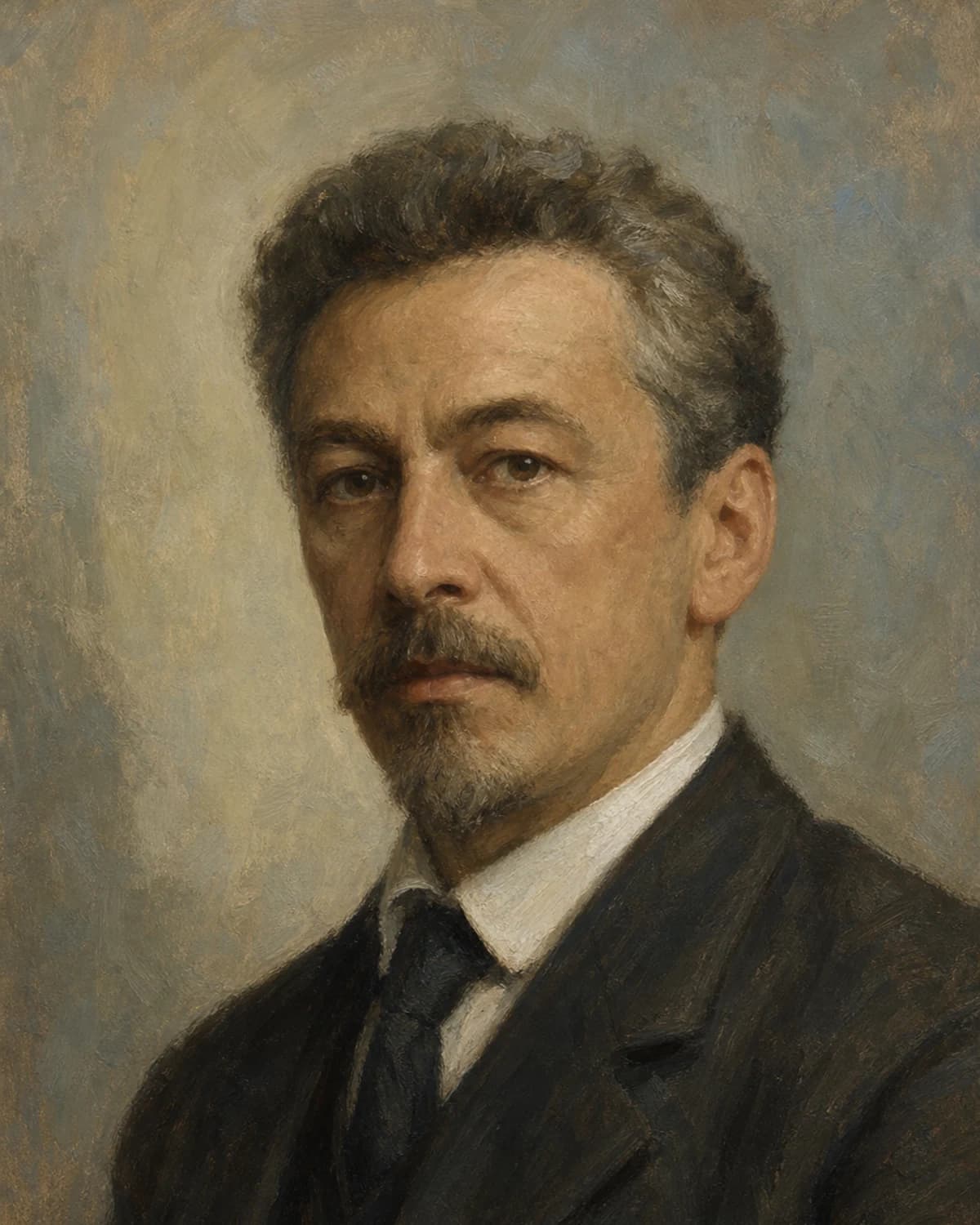
Image
Artist image
На основе открытого изображения: Unknown photographer; Wikimedia Commons; Public domain.
