
1633–1690
Yun Shouping
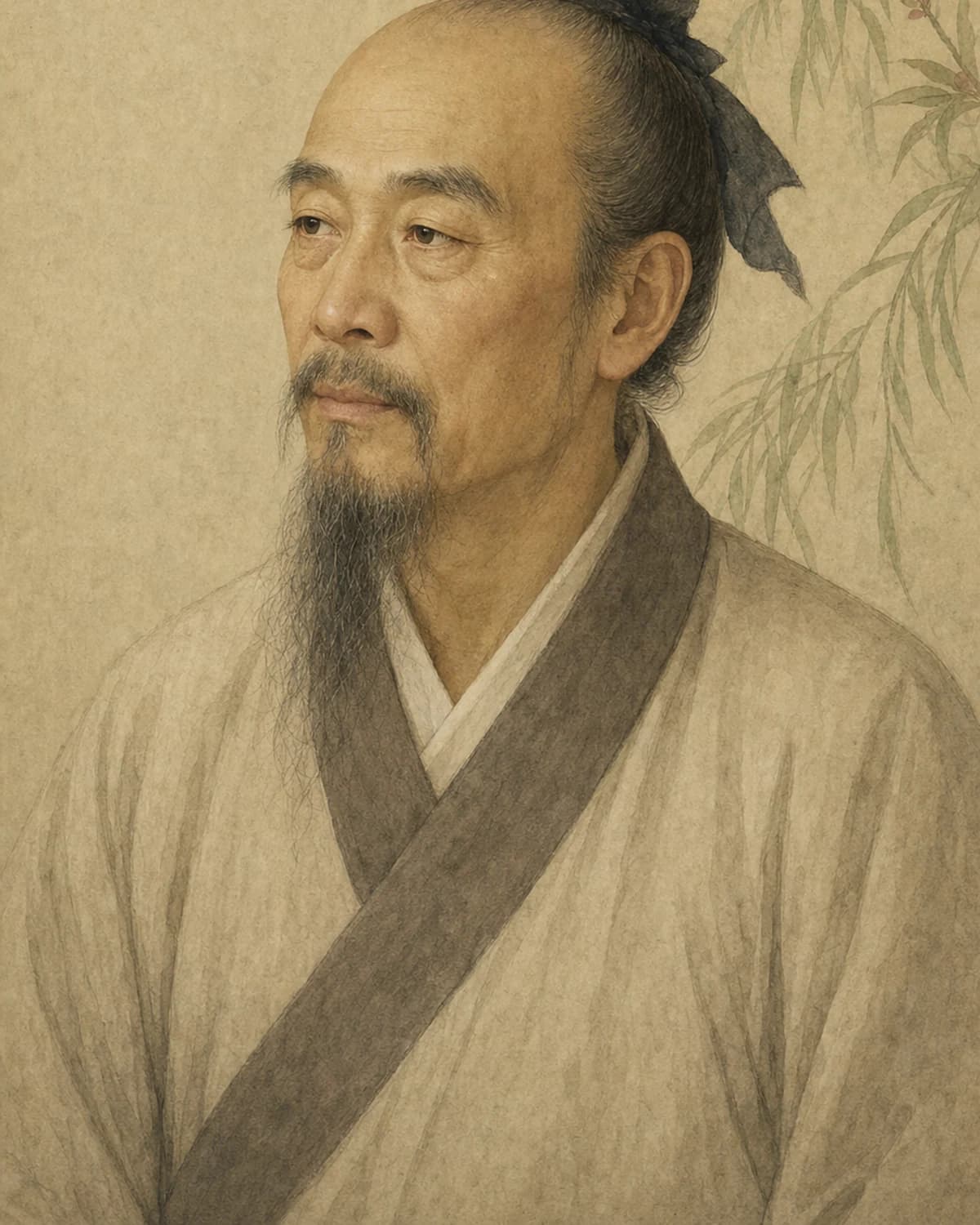
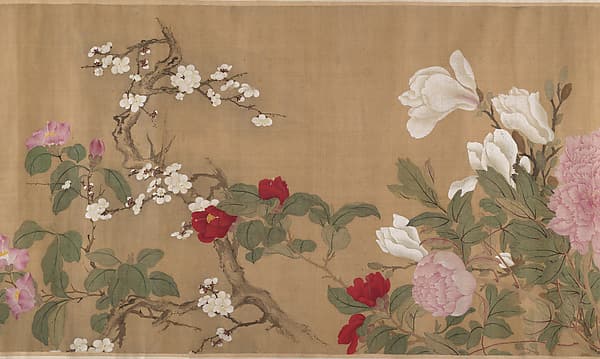
Yun Shouping (1633–1690), a native of Wujin county, spent his youth in the war on the side of the resistance to the Manchus, but became famous as a painter of flowers. He painted peonies, magnolias and lotuses in the “boneless” manner, in patches of colour without outline, and founded his own school. He is counted among the Six Masters of the early Qing, together with the Four Wangs and Wu Li.
Biography
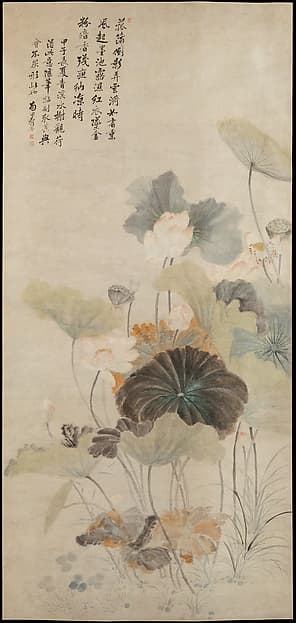
As a boy of eight he composed verses on lotus flowers. Many years later a lotus just risen above the water would become one of his best-known paintings; the scroll, in which a red flower opens above a green leaf and columns of calligraphy run down the upper right, is in the Palace Museum in Beijing.
Yun Shouping was born in 1633, at the end of the Ming era, in Wujin county of Changzhou prefecture, in what is now Jiangsu province. At birth he was named Ge; Shouping was his second, adult name, which later became his main one, and the best known of his literary sobriquets remained Nantian. His father, Yun Richu, was a prominent member of the Fushe literary society. The family was poor, and for all the boy’s abilities there was no money to prepare him for the civil service examinations.
His youth coincided with war. Together with his father he took part in the resistance to the new Manchu Qing dynasty, and after the defeat he lost track of his father. The boy was taken in by the wife of Chen Jin, the Qing governor-general of Fujian province. When Chen Jin was assassinated, the young man escorted the coffin north and at the Lingyin monastery unexpectedly met his father. For a time he remained there as a monk. Then he returned home, to his family. Information about these years is scant and comes from later biographies, so in my view it is better not to fill in the details.
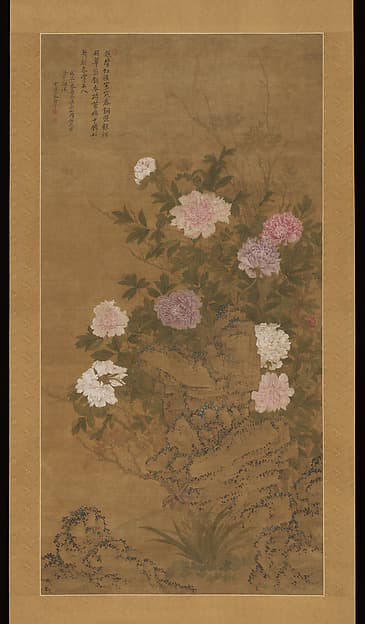
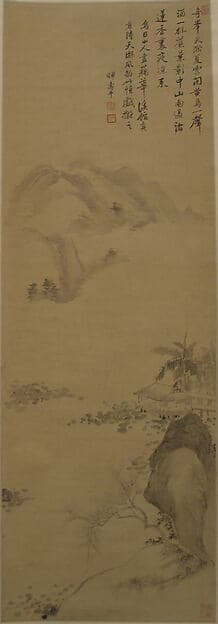
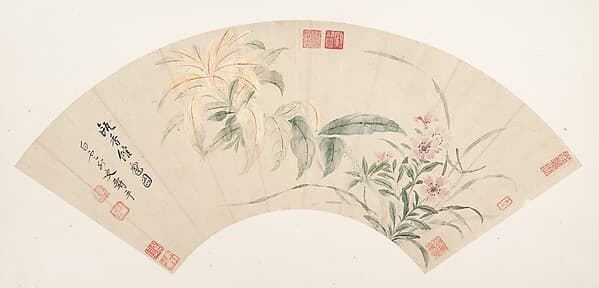
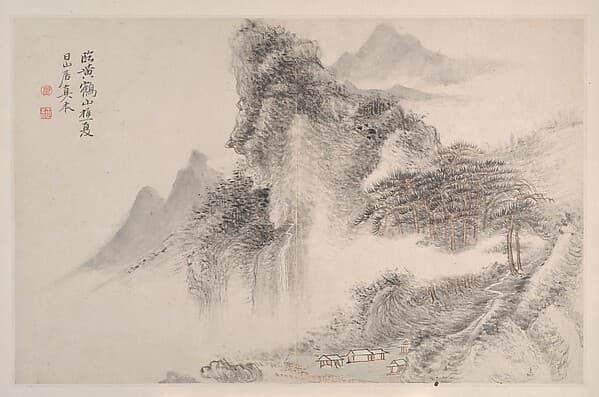
He began as a landscape painter, and his mountains and trees in ink were admired for their refined sharpness. The turning point is linked with Wang Hui: Yun Shouping became his friend and, as the story goes, was so impressed by his landscapes that he gave up the genre, and from then on painted mainly flowers, plants, birds and insects. He attached great importance to working from life. As his model he took the “boneless” method of the eleventh-century master Xu Xi, in which form is built from patches of colour and ink without a firm outline drawing. His colours are light and clean, and he used boldly the reds and purples that Chinese painters had previously considered garish. This is how his peonies are painted, the tree peonies in the Metropolitan Museum of Art, the magnolias, the album “Flowers and Plants” in the Shanghai Museum. His manner came to be called the “Yun school”, and he himself is regarded as the founder of the Changzhou school, which restored flower painting to its former popularity.
He was also a calligrapher who followed the hand of Chu Suiliang, and a poet, so that he was spoken of as a master of all three perfections: poetry, calligraphy and painting. Together with Wang Shimin, Wang Jian, Wang Hui, Wang Yuanqi and Wu Li, he is counted among the Six Masters of the early Qing.
Yun Shouping set no store by money, and in old age he became very poor. He died in 1690 and was buried at the expense of his old friend Wang Hui.
Artist works
Works by the artist
Works by Yun Shouping available in this edition of NEOARCA.
Related context
Associations
Works connected through artistic movements, cultural context and period. Priced works available in this market appear first.
Profile notes
Profile and sources
Image
Artist image
На основе открытого изображения: Yun Shouping; Wikimedia Commons; Public domain.
