
1720–1786
Yuhanna al-Armani
Yuhanna al-Armani al-Qudsi (c. 1720–1786), an icon painter of Armenian stock, worked in Cairo from the 1740s and left about four hundred icons, most of them in the churches of Egypt and in the Coptic Museum. His icons decorate the Hanging Church of the Virgin in Old Cairo. He painted in the Coptic tradition, with elongated figures and landscapes of Armenian schooling, labelling the images with Arabic and Coptic text.
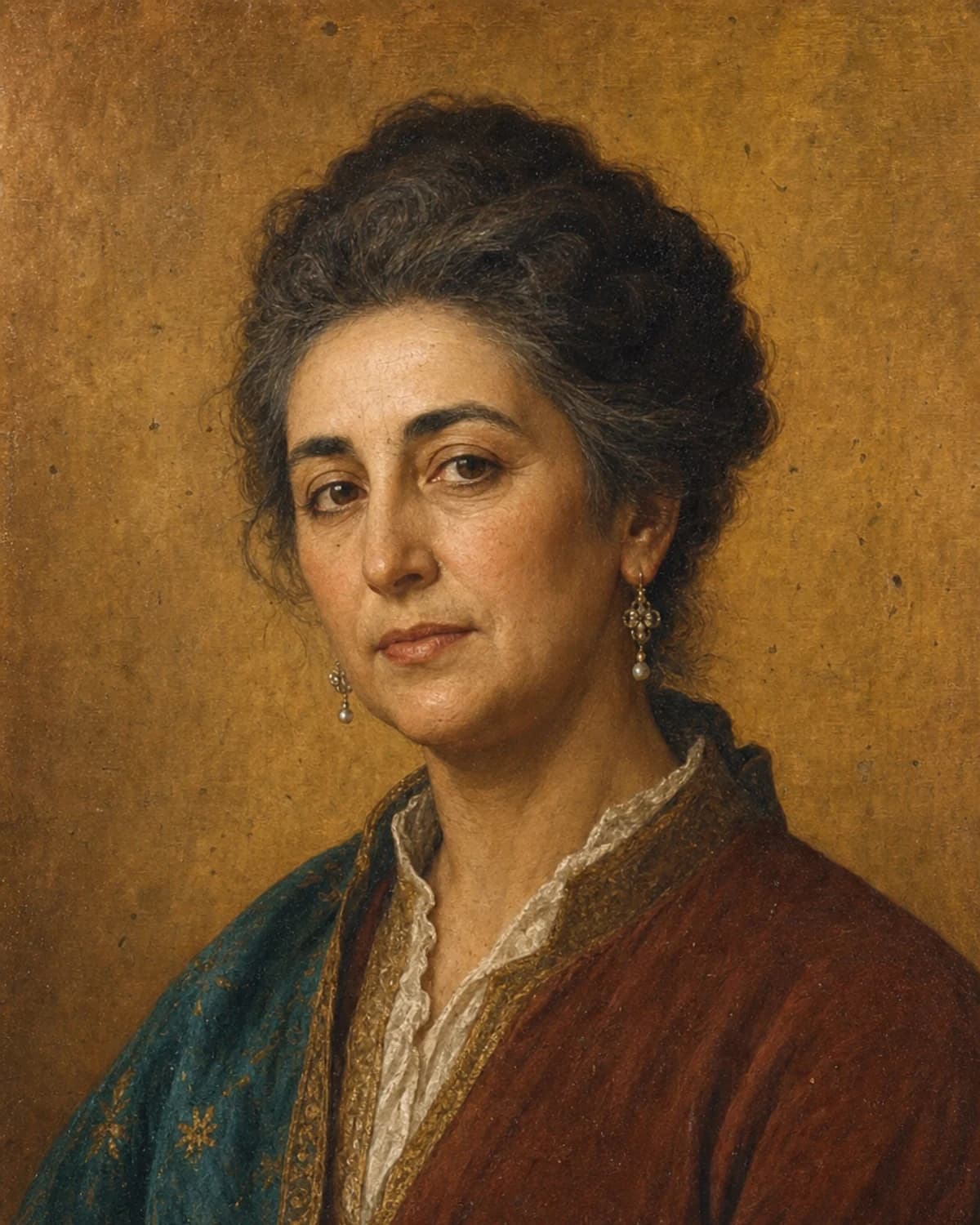
Biography
On the sixth of the month of Jumada in the year 1200 of the Hijra, that is in 1786, a deed was drawn up in a Cairo court confirming the property and heirs of the icon painter Yuhanna al-Armani. It is from this document, and from a few others in the Cairo archives, that we know when his life ended and how it went. He died in Cairo in that same year, 1786.
He was born around 1720. For a long time it was believed that he had come to Egypt from Jerusalem, and that explained everything: the Armenian, Jerusalem and Aleppo features of his icons. The epithet al-Qudsi, “the Jerusalemite”, did indeed stand beside his name, but, judging by recently found documents, it was already borne by his father, Artin al-Qudsi, and his grandfather Karabid, while Yuhanna himself was, in all likelihood, born in Cairo. The dates of marriages in the family and of the children’s births leave no room for a young immigrant. The Armenian origin, fixed in the epithet al-Armani, is not in doubt. He was married twice, both times to Egyptian Coptic women from families of standing, the daughter of a tailor and the daughter of a jeweller; the first marriage produced three sons and a daughter. Such marriages between Armenians and Copts recurred in his family, and the family, by all appearances, was firmly woven into Christian Cairo. He lived, like any craftsman of an Ottoman city, in modest comfort.
Of his youth almost nothing is known: neither whom he studied with nor what he did before he became famous for his icons. What the signatures on the panels do show is how his standing grew: over time he began adding to his name the titles al-naqqash, al-rassam, al-musawwir, by which Ottoman practice distinguished painters by rank.
He worked in Cairo from the 1740s, and the eighteenth century was a time of revival for the Coptic icon: the weakening of Ottoman power in Egypt and a change of attitude towards non-Muslims allowed Christians to make themselves more visible. For many years he worked with another Cairo icon painter, Ibrahim al-Nasikh, “Ibrahim the scribe”; they may have shared a workshop, and there is also a view that Ibrahim was the master and Yuhanna the apprentice. Their icons are alike: a post-Byzantine and Syro-Palestinian base, Arabic and Coptic inscriptions that narrate the scene and name the saints, the mounted warrior saints beloved in Egypt. But Yuhanna also has what the Coptic tradition did not know: elongated, “pear-shaped” figures, folds of garments and landscapes such as are found in Armenian gospels and psalters of the time. In the icon of Saint George of 1753 a rider in armour is about to deal the dragon its final blow and save the princess, with two figures beside him far smaller than he. In an icon of 1754 stand Saint Onuphrius, in a plain tunic, with unkempt hair and beard, a cross in his hand, and the Ethiopian monk Takla Haymanot in Coptic dress, with a staff and a book; it is painted on linen stretched over a panel. In an icon of 1782 Saint Behnam, huge, crowned and haloed, rides his horse to the left, and around him are small scenes: an army on the march, someone being anointed.
In all, about four hundred panels are attributed to him, most of which remain in the churches of Egypt and in the Coptic Museum in Cairo.
Related context
Associations
Works connected through artistic movements, cultural context and period. Priced works available in this market appear first.








Profile notes
Profile and sources
Image
Artist image
На основе открытого изображения: Yuhannarmani; Wikimedia Commons; CC BY-SA 3.0.
