
27.07.1963–present
Wayne Barker
In 1990 Wayne Barker sent a hasty drawing to a national drawing competition in South Africa under the name of a black artist, Andrew Moletsi, and it was shortlisted while his own entry was not. That scandal made his name. He grew up in Pretoria, ran the independent gallery FIG in Johannesburg for many years, and for more than two decades reworked the landscapes of Jacob Hendrik Pierneef.
Biography
In 1990 Wayne Barker submitted two works to the Standard Bank National Drawing Competition. One, hurried and barely finished, he signed with an invented African name, Andrew Moletsi. It was that one that made the shortlist, while his own, under his real name, did not. In this way he showed that the jury judged with an eye to the race of the artist, and he got into the newspapers for the first time.
Barker was born on 27 July 1963 in Pretoria, into a white, working-class family. His father was a South African Air Force pilot and later a commercial pilot, so the children grew up on the Valhalla air force base, the oldest in the country (in operation since 1921). Barker himself recalled that at home they were taught to hate black people, and at the same time spoke of family gatherings as warm and real: drunk uncles, songs like “Sarie Marais”. In his teens he went to the coast, to Nature’s Valley, to learn woodcarving. From 1981 he studied fine art at the Pretoria Technikon, a technical college, and then moved to the Michaelis School of Fine Art at the University of Cape Town. There, for a sculpture assignment in which students were asked to make an “extension of their bodies”, he dressed up as his lecturer Neville Dubow and let his classmates throw tennis balls at him. The result was an extension of the lecturer in the form of a tennis court. Dubow was displeased. Two years later Barker returned to Gauteng without a degree: by his own account, he had failed art history. At home his father insisted on military service, as three generations of Barker men had done before him. The call-up papers arrived, and Barker was sent to the Voortrekkerhoogte base near Pretoria. Those who refused service were jailed, so the only way out was a discharge. For two weeks he played a part and obtained a discharge. He moved to Johannesburg to devote himself entirely to art. Later, in 1998, he received an honorary postgraduate degree from the École des Beaux-Arts in Marseille.
From 1989 to 1997 Barker, together with Gunther Herbst, Pieter Roux, Morris La Mantia, Iaan Waldeck and Robert Weynik, ran the Famous International Gallery (FIG), an artist-run space in Johannesburg. It showed work that commercial galleries would not touch. Among those who exhibited there were Kendell Geers, William Kentridge, Lisa Brice, Minette Vari, Barend de Wet and Stephen Cohen.
By some accounts, his Pierneef series was first shown at FIG as early as 1989; by others, it began in the early 1990s. It went on for more than twenty years. Barker took landscapes by Jacob Hendrik Pierneef (1886–1957), an Afrikaner nationalist painter, and carefully reproduced them, then added neon dots, splatters of lacquer paint and imagery laid over them: nudes, “church ladies”, popular logos. Pierneef, in Barker’s words, was a propagandist for the white view of South Africa, because there is not a single black person in his landscapes. The series later reappeared in prints and in the beadwork Barker made with the Qubeka Beadwork studio in Cape Town.
In 1993, at the Everard Read Gallery in Johannesburg, he showed the installation “Coke Adds Life”. The title is taken from a Coca-Cola advertising campaign. The idea came after a trip to Mozambique: in a hospital with hardly any doctors he saw Coca-Cola vending machines. “If you can get a coke machine in a hospital, can’t you get a doctor?” he said in 2002.
The exhibition “Nothing Gets Lost in the Universe” (1995, FIG; then at Gallery Frank Hanel in Frankfurt) included latex gloves filled with objects found on the streets of Frankfurt, and a work called “Zelbst”, more than three hundred portrait photographs of black South Africans from the 1970s, hung from the ceiling. The show came at the time of the Truth and Reconciliation Commission.
Barker took part in the Johannesburg Biennales of 1995 and 1997, in the exhibition “Colours” at the Haus der Kulturen der Welt in Berlin (1996), in a collateral exhibition of the Venice Biennale (2009) and in “My Joburg” in Paris (2013). The retrospective “Super Boring” (2010) was held at the Standard Bank Gallery in Johannesburg, then in Polokwane and in Stellenbosch. In 2016 at Everard Read Contemporary he showed mostly screenprints: he had learned the technique after a trip to New York and set up a printing studio of his own. Barker’s work is in the Johannesburg Art Gallery, the Iziko South African National Gallery, the Wits Art Museum and other collections. He lives and works in the Troyeville district of Johannesburg.
Profile notes
Profile and sources
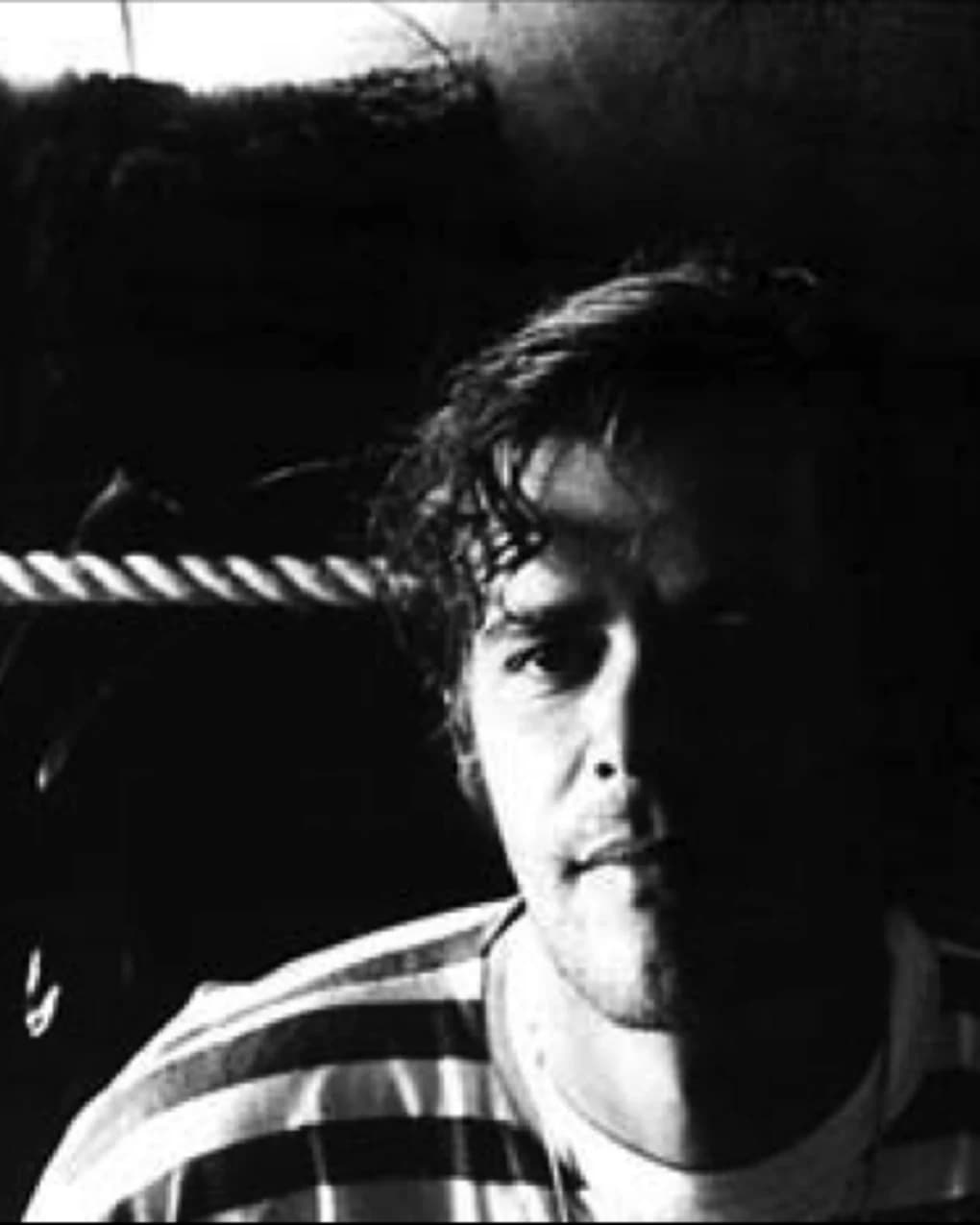
Image
Artist image
Marlboroman23; Wikimedia Commons; CC BY-SA 4.0.
