
15.02.1938–04.01.2018
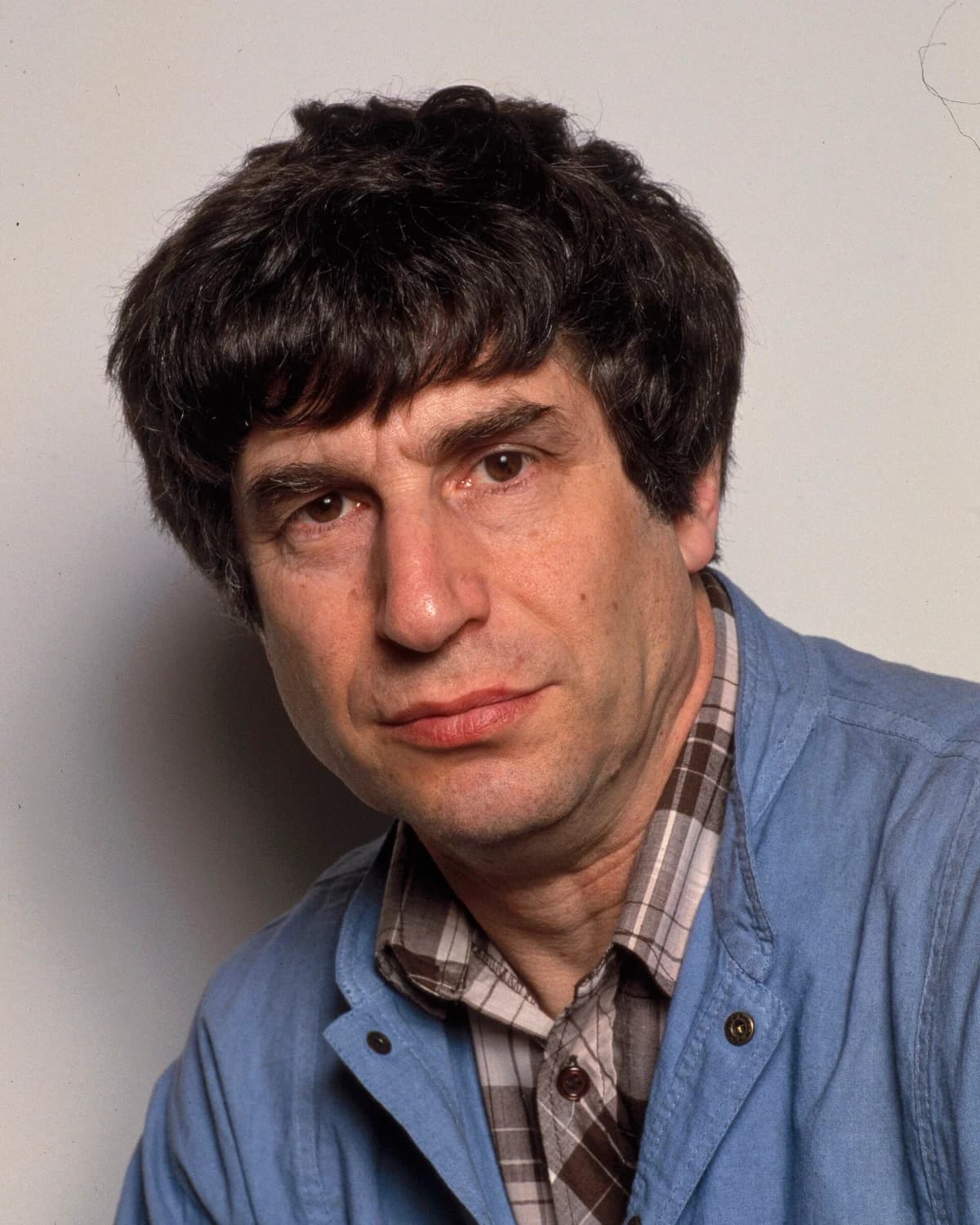
Vladimir Yankilevsky
In November 1962 Vladimir Yankilevsky showed work in an exhibition on Bolshaya Kommunisticheskaya Street, and a few days later his paintings appeared at the “30 Years of the Moscow Artists’ Union” show in the Manezh, where Nikita Khrushchev attacked them. For many years afterwards he earned his living designing books and worked in his studio on triptychs and “existential boxes”. From 1989 he lived in New York, Paris and Moscow, and he died in Paris.
Biography
In the autumn of 1962 Vladimir Yankilevsky found himself in two exhibition stories at once. In November, at the invitation of Elii Beliutin, his former teacher at the Polygraphic Institute, he took part in a show on Bolshaya Kommunisticheskaya Street, in the Taganka district. A few days later his work hung in the exhibition “30 Years of the Moscow Artists’ Union” at the Manezh, and there his paintings were sharply criticised by Nikita Khrushchev. Yankilevsky was twenty-four.
He was born on 15 February 1938 in Moscow, the son of the artist Boris Isaakovich Yankilevsky (1907–1987). His father came from the family of a village-school teacher in Mariupol; his mother, Roza Mendelevna, was the daughter of the cantor of the Moscow Synagogue. During the war his mother was evacuated with her two children, Vladimir and his sister Tamara, to Chuvashia, where she worked as a machine operator at an aircraft factory. He had his first painting lessons from his father.
From 1950 to 1956 Yankilevsky studied at the Moscow Secondary Art School attached to the Surikov Institute. In 1949 he failed the entrance competition for the first year, but a year later he managed to enter directly into the second. In 1962 he graduated from the Polygraphic Institute, a Moscow school for printing and book arts. From 1957 he knew Rimma Solod; in 1959 they married and rented a room in a communal flat.
After the scandal at the Manezh, exhibition halls were closed to him for many years. To make a living he worked as a designer for Moscow publishing houses, and gave most of his time to drawing and painting in his studio. In 1975 he took part in an exhibition in the Beekeeping Pavilion at the VDNKh, the Moscow exhibition grounds, and in 1978 his first retrospective was held in Moscow. In the 1970s he grew close to the circle of Moscow nonconformist artists whom the Czech critic Jindřich Chalupecký, visiting Moscow in 1972, called “Sretensky Boulevard”; it included Ilya Kabakov, Viktor Pivovarov, Eduard Steinberg, Erik Bulatov, Oleg Vassiliev, Ivan Chuikov and Mikhail Roginsky. According to some accounts, the Paris gallerist and collector Dina Vierny noticed him in Moscow, and with her help he later tied his life to Paris. Her gallery in Saint-Germain-des-Prés showed the exhibition “Russian Avant-Garde – Moscow 1973” that year, with his work among it. Sources disagree about when and how exactly he moved, and I would not date that step more precisely than “in the 1970s and later”.
The central idea of his work of the early 1960s took shape in the cycle “Space of Experiences”. These are compositions, abstract at first glance, in which the play of cosmic forces is conveyed through human experience. From them grew his main form, the triptych, in which the feminine and masculine principles interact. These triptychs have been described as nightmarish, disorienting images of confined states of mind, tied to everyday Soviet life and to the human condition in general.
In the 1970s came the “existential boxes”, objects depicting the limited space of human existence, where a dream runs up against the limits set by the social environment. The first and conceptually foundational was “The Door (Dedicated to the Parents of My Parents…)” of 1972: a figure-object placed between an entrance door and the endless horizon.
Yankilevsky’s work was shown in forty solo exhibitions, in Moscow, St Petersburg, New York, Bochum, Paris and London, and in more than 170 group shows, including “RUSSIA!” at the Guggenheim Museum in New York in 2005. His works are held by the Tretyakov Gallery, the Russian Museum, the Pushkin Museum of Fine Arts, the Centre Pompidou, the Ludwig Museums in Cologne and Budapest, the Dresden National Gallery, the National Gallery in Prague and the Zimmerli Art Museum in the United States, where “Pentaptych No. 2: Adam and Eve” is on permanent display.
From 1989 he lived and worked in New York, Paris and Moscow. He died in Paris on 4 January 2018.
Profile notes
Profile and sources
Image
Artist image
Bernard Gotfryd; Wikimedia Commons; Public domain.
