
1745–10.10.1820
Uragami Gyokudō
Uragami Gyokudō (1745–1820) served for almost fifty years as a samurai in the Kamogata domain, then left to wander Japan with a zither and began to paint. In his lifetime he was known above all as a musician; recognition of his painting came after his death. His ink landscape “Snow Sifted Through Frozen Clouds” is a National Treasure of Japan.
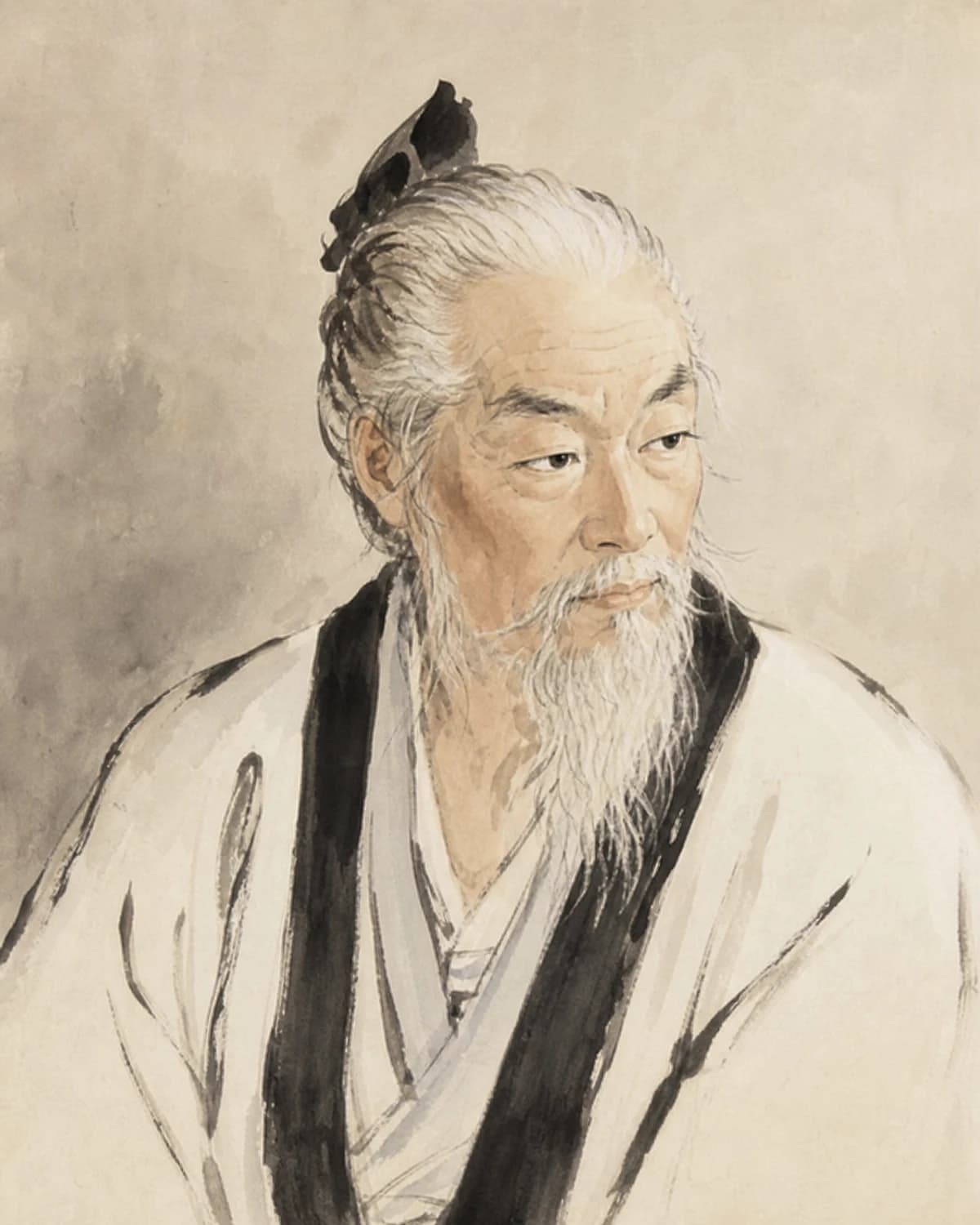
Biography
In 1794 an official of the Kamogata domain, a man of almost fifty, left the domain without his lord’s permission. He never went back. This was later explained as a protest against the Kansei reforms and the ban on the Wang Yangming school of Neo-Confucianism.
He was born Uragami Kohitsu, the future Gyokudō, in 1745 into a samurai family in Kamogata, in what is now Okayama Prefecture, in the old province of Bizen. His father died when the boy was about seven, and he became head of the Uragami family, which served the Ikeda lords. What followed was the ordinary career of a retainer: posts, promotions, and finally the position of senior inspector (ometsuke). At forty-three he was relieved of his inspector’s duties and moved to a nominal post that left him a great deal of free time. He used that time in an unusual way. He went to Edo, began attending lectures on Neo-Confucianism of the Zhu Xi school, soon changed teachers and turned to the Wang Yangming school, and took up the Japanese classics. At the same time he became fascinated by the seven-string zither and became a pupil of the musician Takeya Rankei. From the end of the 1770s he got to know prominent figures of the culture of his day, wrote poetry and tried his hand at drawing. He gave his sons names that echo the zither: “Spring Qin” and “Autumn Qin”.
He spent the rest of his life on the road: travelling around Japan, playing, painting, writing poetry in Chinese. He practised calligraphy in the clerical and running scripts. In the end he settled in Kyoto.
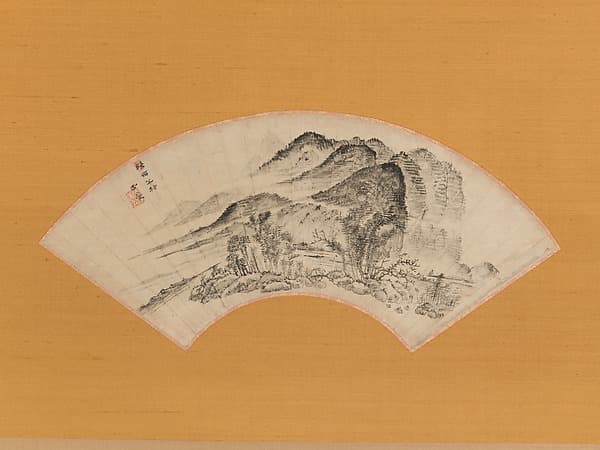
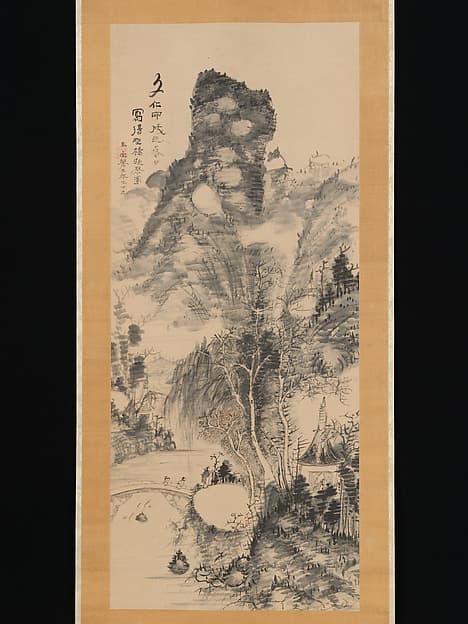
He never attended an art school and taught himself to paint. The works he made between the ages of sixty and seventy are considered the best; it was then that his ink landscapes took shape. In them the mountains, often wintry, are built from dense, repeating strokes that hold a rhythm like a musical phrase. Critics connect this harmony with his study of music, and it seems to me that the link can really be seen with the eye, though it is hard to prove. His best-known works are the winter landscape “Snow Sifted Through Frozen Clouds” and the autumn landscape “Crimson Mountains”. The first is recognised as a National Treasure of Japan.
He also wrote music: a collection of his zither notation survives. Uragami Gyokudō died in Kyoto on 10 October 1820.
Artist works
Works by the artist
Works by Uragami Gyokudō available in this edition of NEOARCA.
Related context
Associations
Works connected through artistic movements, cultural context and period. Priced works available in this market appear first.








Profile notes
Profile and sources
Image
Artist image
На основе открытого изображения: 浦上春琴; Wikimedia Commons; Public domain.
