
1757–21 апреля 1827
Thomas Rowlandson
Thomas Rowlandson (1757–1827) won a silver medal at the Royal Academy for a bas-relief in his early twenties, then lost an aunt’s legacy at the card table and began to earn his living by caricature. His pen drawings with light watercolour washes circulated as prints, and the series of tours of Dr Syntax, with verses by William Combe, became his most popular work.
Biography
In 1777 the Royal Academy of Arts in London awarded the young Rowlandson a silver medal for a bas-relief. He was spoken of as one of its promising students. A few years later the very money that might have secured his career had been squandered at the gaming table.
He was born in Old Jewry, in the City of London. The baptismal record at St Mary Colechurch, made on 23 July 1757, gives his date of birth as 13 July 1757; older biographies more often gave 1756, and some reference works still do. His father, William, was a weaver who then went into trading supplies for the textile industry and was declared bankrupt in 1759. At the end of that year the family moved to Richmond in North Yorkshire. After the death of his uncle James in 1764, James’s widow, Jane, probably provided money and lodging so that the boy could go to school in London. From 1765 or 1766 he attended the academy of Dr Cuthbert Barwis in Soho Square, where one of his classmates was Richard Burke, son of the politician Edmund Burke. According to an account that has come down to us, before he was ten he drew comic portraits of his master and schoolfellows, and the margins of his schoolbooks were covered with drawings. There is no documentary evidence that he was taught drawing at this school, but after leaving in 1772 he became a student at the Royal Academy. According to his obituary in The Gentleman’s Magazine, at sixteen he was sent to Paris, where for two years he studied at a drawing academy, worked on the human figure and went on practising caricature. In all, his studies at the Royal Academy took six years, about a third of which he spent in Paris; he may have studied there under the sculptor Jean-Baptiste Pigalle. Later he often travelled to the Continent and brought back sketchbooks full of people and scenes.
In 1775 a drawing of his, “Delilah Visiting Samson in Prison at Gaza”, was shown at the Royal Academy exhibition. Then an aunt died and left him £7,000. He threw himself into the pleasures of the town and, so it was said, could sit at the gaming table for thirty-six hours at a stretch. The money ran out. It seems to me that the decision to earn a living by caricature was partly forced on him: the example and friendship of James Gillray and Henry William Bunbury, it appears, suggested it.
His drawing “Vauxhall”, shown at the Academy exhibition of 1784, was engraved by Pollard, and the print was a success. Rowlandson worked for many publishers, above all for Rudolph Ackermann, but rarely published his own sheets. He usually drew in outline with a reed pen and washed it delicately with watercolour, then etched it himself on a copper plate; the aquatint was more often added by a professional engraver, and the finished impressions were coloured by hand. His political subjects are fewer than those of the fiercer Gillray; more often he looked at private and public life with a mild smile: elections, race meetings, London streets, the pleasure gardens at Vauxhall, where soldiers, students and fashionable women jostle. To these belong his caricatures of doctors and quacks, which apparently began with his friendship with John Wolcot around 1778. He also had a circle of private clients for whom he made erotic prints; these were not published in his lifetime.
In 1809 Ackermann’s Poetical Magazine carried a series of plates, “The Schoolmaster’s Tour”, with verses by Dr William Combe. In 1812 Rowlandson engraved it again himself, and it appeared as “The Tour of Doctor Syntax in Search of the Picturesque”; by 1813 it had reached a fifth edition. There followed “Doctor Syntax in Search of Consolation” (1820) and “The Third Tour of Doctor Syntax in Search of a Wife” (1821). The same trio of artist, author and publisher produced “The English Dance of Death” (1814–16) and “The Dance of Life” (1817). He also illustrated Smollett, Goldsmith and Sterne, and his designs appear in “The Spirit of the Public Journals” (1825), “The English Spy” (1825) and “The Humorist” (1831). His circle included the patron Matthew Michell, who collected hundreds of his works at his house, Grove House, in Enfield. After Michell’s death the collection was sold over eight days in November 1818. Among Rowlandson’s known paintings are “Hengar House” (1812) and “Glorious Defeat of the Dutch Navy, 10 October 1797”.
Rowlandson died on 21 April 1827 in London, in rented rooms in James Street, Adelphi. He was buried on 28 April at St Paul’s, Covent Garden.
Artist works
Works by the artist
Works by Thomas Rowlandson available in this edition of NEOARCA.
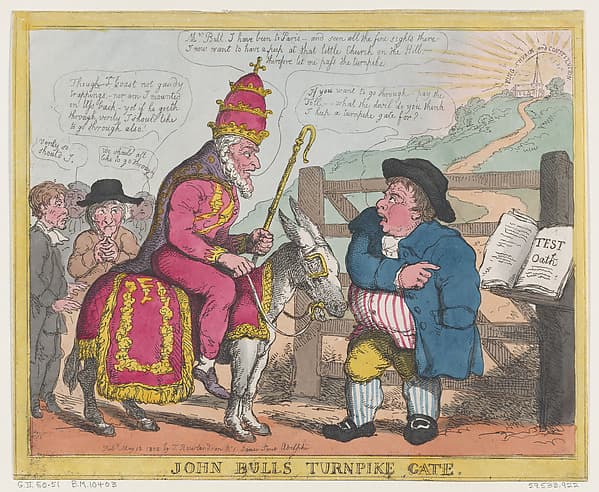
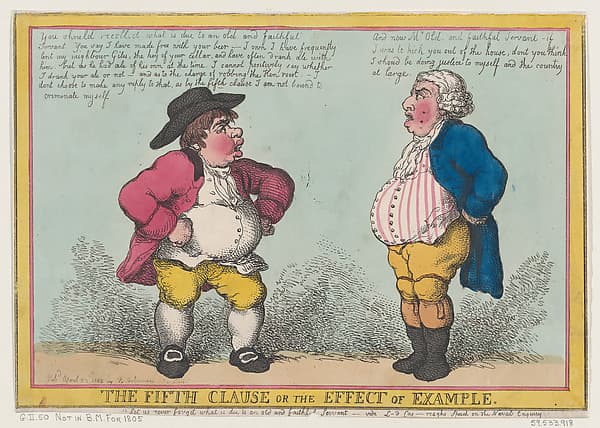
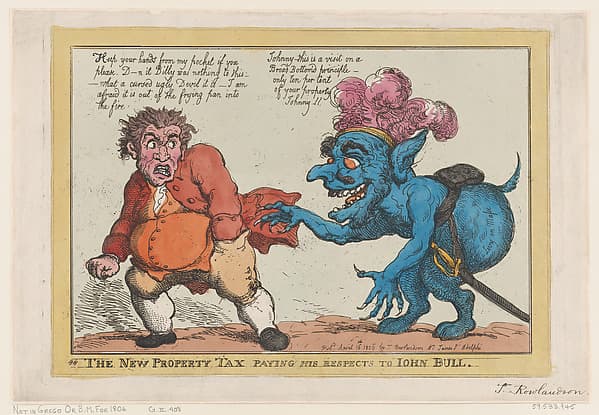
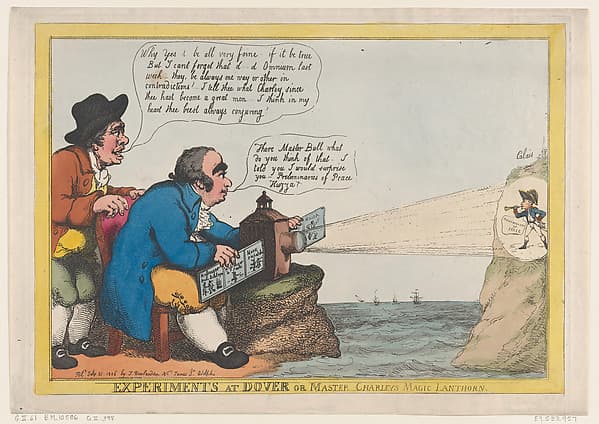
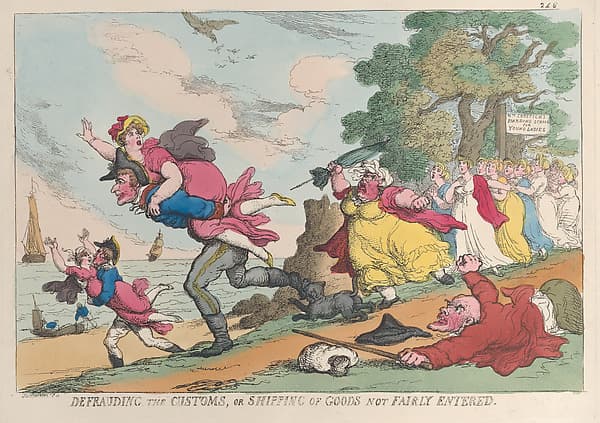
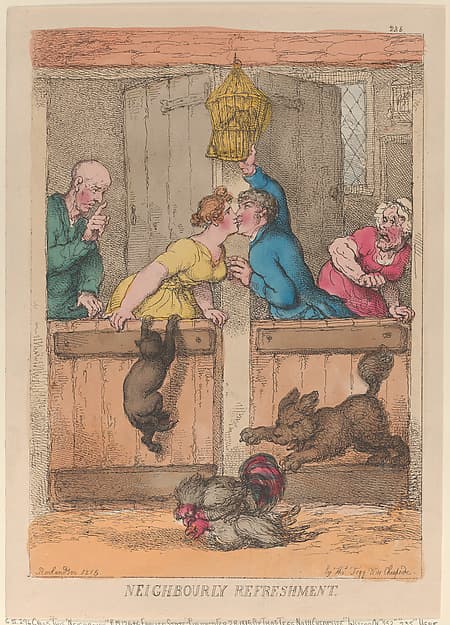
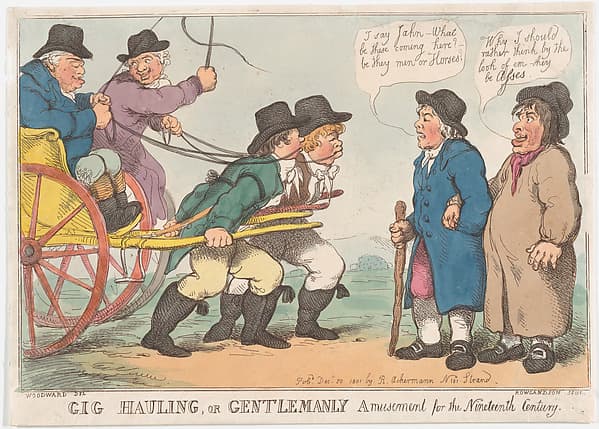
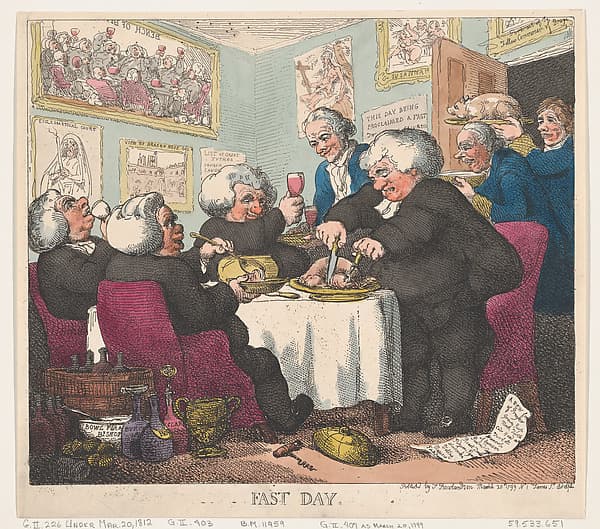
Related context
Associations
Works connected through artistic movements, cultural context and period. Priced works available in this market appear first.
Profile notes