
25.07.1844–25.06.1916
Thomas Eakins
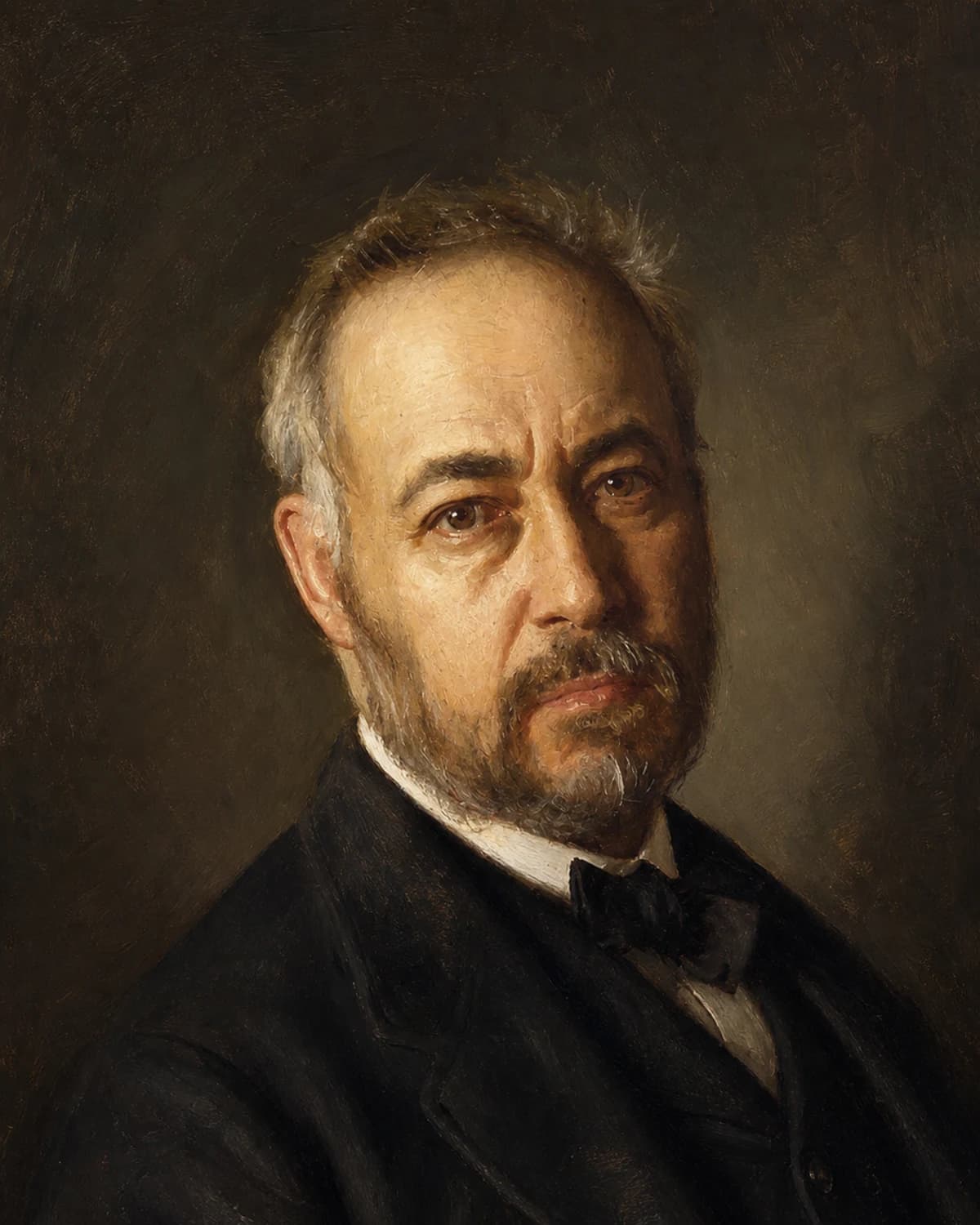
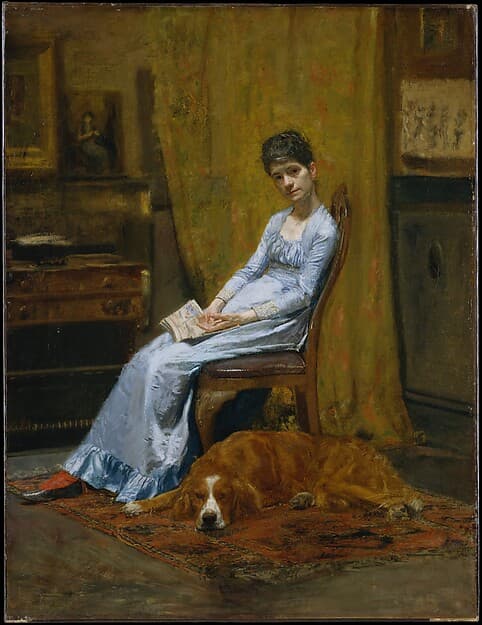
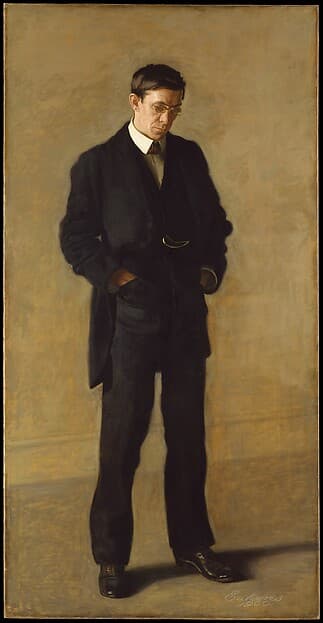
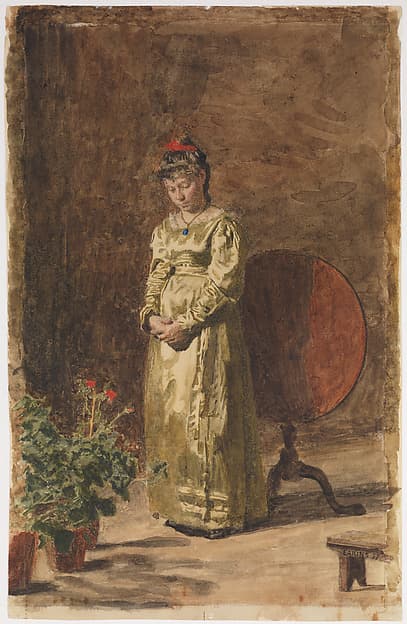
Thomas Eakins (1844–1916) spent almost his whole life in Philadelphia and painted its people: rowers, boxers, surgeons, scientists, friends and pupils. He studied anatomy alongside medical students, was one of the first in America to work with motion photography, and was an influential teacher until in 1886 he was forced out of the Pennsylvania Academy of the Fine Arts. Recognition came mostly after his death.
Biography
The surgeon Samuel Gross stands in the amphitheatre of Jefferson Medical College, crowded with students. His assistants are removing part of a diseased thigh bone from a patient, while Gross, scalpel in his bloodied hand, delivers a lecture. Eakins worked on “The Gross Clinic” (1875) for almost a year and seems to have hoped to show it at the Centennial Exhibition of 1876. The art department rejected it, and it was hung in the pavilion of an army hospital; the reviewer of the New York Daily Tribune wrote that people with weak nerves should not be forced to look at such a thing. In the end it was bought by the college itself.
Eakins was thirty-one. Ten years earlier he had himself attended anatomy classes at that college.
He was born on 25 July 1844 in Philadelphia, the first child of Benjamin Eakins, a writing master and calligraphy teacher, and Caroline Cowperthwait Eakins. Watching his father at work, by the age of twelve he had mastered precise line, perspective and laying out a composition on a grid. As a boy he rowed, skated, swam, wrestled, sailed and did gymnastics; all of this later became subject matter for his paintings. At Central High School he excelled in mechanical drawing; in 1861 he entered the Pennsylvania Academy of the Fine Arts, and in 1864–1865 he studied anatomy and dissection at Jefferson Medical College and for a time thought of becoming a surgeon. For a while the city directories listed him, like his father, as a writing teacher.
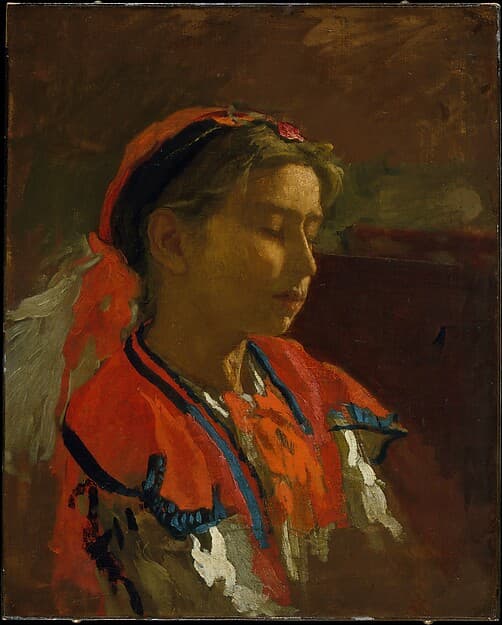
From 1866 to 1870 he studied in Europe: in Paris with Jean-Léon Gérôme, as only the second American in his studio, and then with Léon Bonnat. The Impressionists hardly interested him. In a letter to his father in 1868 he made fun of the waxy goddesses of Salon painting and ended briefly: “I hate affectation.” Six months in Spain confirmed his admiration for Velázquez and Ribera; in Seville in 1869 he painted the seven-year-old Romani dancer Carmelita Requeña and his first large oil painting, a street scene.
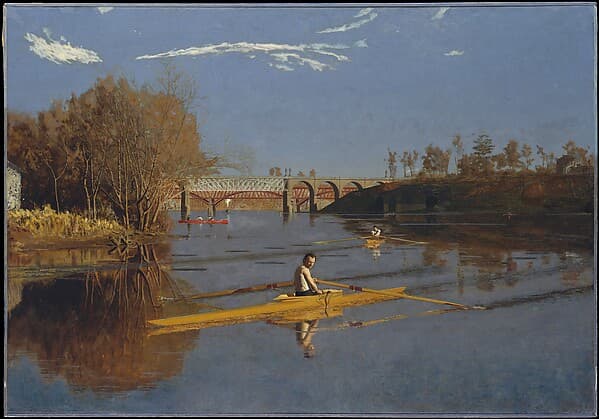
Back home he began with rowing: eleven oils and watercolours, the first and best known of which is “Max Schmitt in a Single Scull” (1871). Eakins himself sits in the scull behind Schmitt, and his name is written on the boat. For each of these works he made perspective plans of the boats on the water. At the same time came dark domestic interiors, such as “The Chess Players” (1876); that picture was praised at the Centennial Exhibition.
From 1876 he taught at the Pennsylvania Academy, from 1878 as a salaried professor and from 1882 as director. His students did not draw from plaster casts of the antique: after a short study in charcoal they went straight on to painting, studied anatomy through dissection and perspective through mathematics, used photography, and he abolished prize competitions. A teacher, he believed, can do very little for a pupil and should be thankful if he does not hinder him. His students included Henry Ossawa Tanner and Thomas Anshutz, who in turn taught Robert Henri and John Sloan. In 1886 Eakins was forced to resign: in a class where women students were present, he removed the loincloth from a male model. Some of his students left with him and founded the Art Students’ League of Philadelphia, where he went on teaching. In 1895 he was dismissed from the Drexel Institute for the same reason, and by 1898 he had given up teaching.
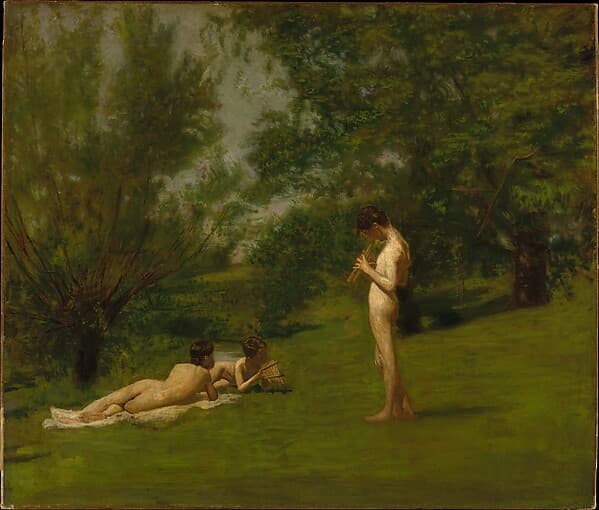
From 1880 he had his own camera. In 1883, together with the patron Fairman Rogers, he arranged a lecture by Eadweard Muybridge at the Academy, and in 1884 he worked with him briefly, but preferred his own method: a single camera and several exposures on one negative, so that movement could be measured on a single image. “Mending the Net” (1881), “Arcadia” (1883) and “A May Morning in the Park”, in which the gait of a team of four horses was worked out from photographs, grew partly out of his photographs. Today some eight hundred photographs are attributed to Eakins and his circle; no other American artist of his time has a comparable body of work.
The nude figure in motion remained his main subject. “The Swimming Hole” (1884–1885) was painted on commission, but the client refused it; among the bathers are the artist’s friends and students and Eakins himself. In the late 1890s he painted boxers: “Between Rounds” (1899), “Salutat” (1898). He made some two hundred and fifty portraits, and many of the sitters or their families rejected them. For “The Agnew Clinic” (1889), his largest painting, he showed the surgeon David Hayes Agnew during an operation; for “The Concert Singer” (1890–1892) he asked Weda Cook to sing so that he could watch the muscles of her throat at work. Walt Whitman considered his portrait of 1887–1888 the best of him. In 1884 Eakins married the painter Susan Macdowell, a former student of his. I think his method shows best in the portrait “Miss Amelia Van Buren” (c. 1890), of a friend and former pupil: none of the glamour or idealisation usual in portraits of women at the time, only the melancholy of a complicated person.
Recognition came late: in 1902 he was elected a full member of the National Academy of Design. Thomas Eakins died on 25 June 1916 in Philadelphia, at the age of seventy-one, and is buried in The Woodlands cemetery next to the University of Pennsylvania. A year later the Metropolitan Museum of Art held a memorial retrospective, and his widow gave more than fifty of his paintings to the Philadelphia Museum of Art.
Artist works
Works by the artist
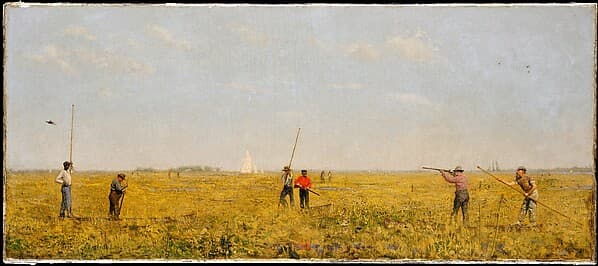
Works by Thomas Eakins available in this edition of NEOARCA.
Related context
Associations
Works connected through artistic movements, cultural context and period. Priced works available in this market appear first.








Profile notes
Profile and sources
Image
Artist image
На основе открытого изображения: Thomas Eakins; Wikimedia Commons; Public domain.
