
1414–1463
Tenshō Shūbun
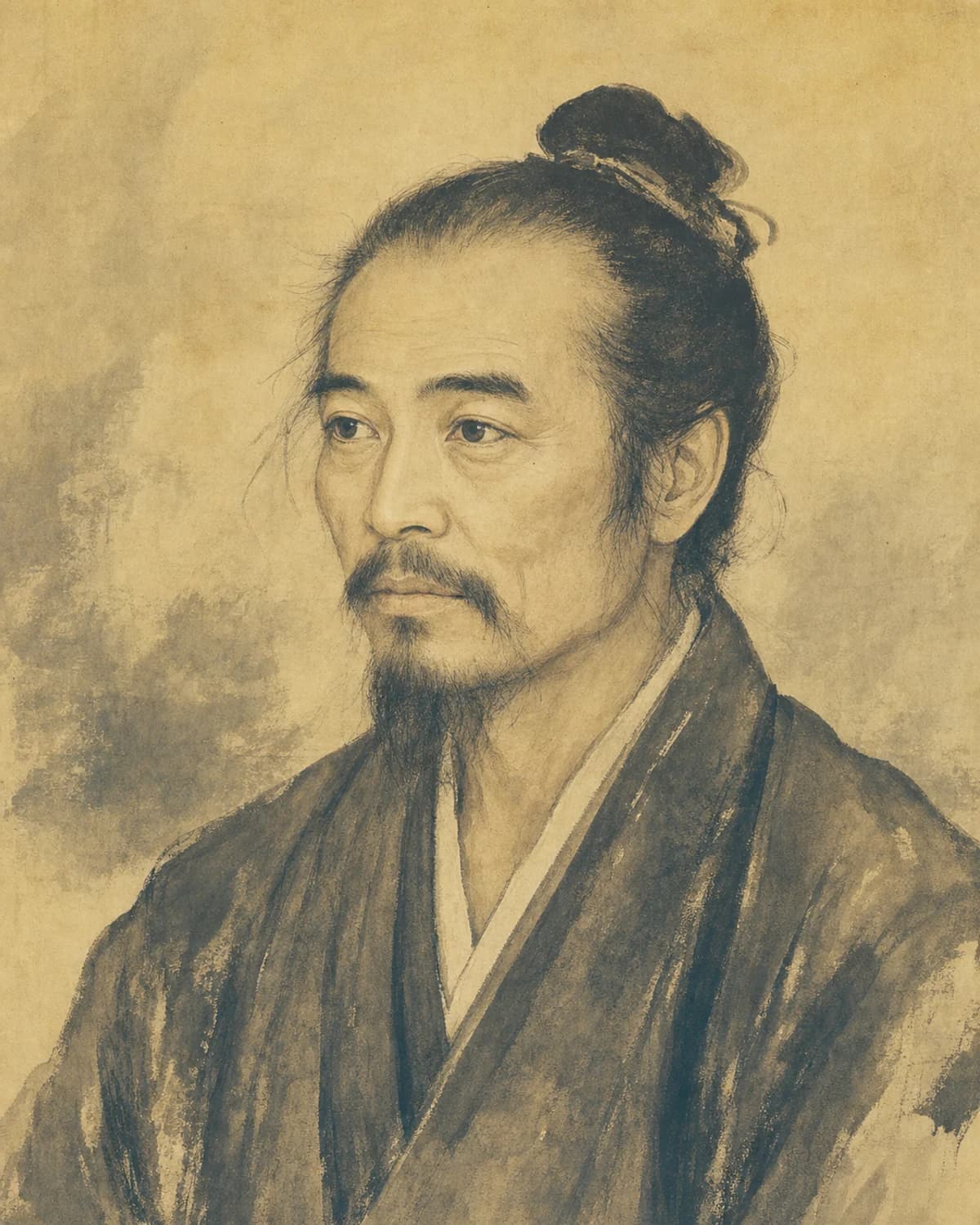
Tenshō Shūbun, a monk of the Zen monastery of Shōkoku-ji in Kyoto, ran the monastery’s affairs in the first half of the fifteenth century and served as a painter to the Ashikaga shoguns. He is regarded as the founder of Japanese ink landscape in the Chinese manner and as the teacher of Sesshū, although none of the paintings attributed to him is signed and there are no exact dates for his life.
Biography
In the Korean chronicle known as the Annals of the Joseon Dynasty, under the year 1423, a Japanese monk named Shūbun is mentioned. He came as a member of an embassy led by the Zen monk Keiji Bonrei, an envoy of the Ashikaga shogunate; the Japanese had come to ask the Joseon court for the printing blocks of the Buddhist canon, the Tripitaka. According to Japanese accounts, Shūbun painted landscapes while in Korea. This record from a foreign country remains one of the few firm dates in his biography.
When he was born and when he died is not known. His real name has not survived either; according to one version, he came from the Fujikura family.
He was probably born in the late fourteenth century in Ōmi Province, east of Kyoto. At first he lived at the Ōmi monastery of Eigen-ji, and Japanese authors connect his art name, Ekkei, with the stream that ran through its grounds. Shūbun and Tenshō are monastic names, though the sources disagree about which of them served which purpose. Almost his whole life was spent in Kyoto, at Shōkoku-ji, one of the principal Zen monasteries of the capital, which enjoyed the patronage of the shoguns. There he held the post of tsūkan, responsible for the monastery’s money, property and buildings. At the same time he drew a stipend as a painter to the shogun’s house, and under Ashikaga Yoshinori (who ruled from 1429 to 1441) he became the official painter of the shogunate, the goyō-eshi. He is generally thought to have studied painting under Josetsu, an immigrant from China who also lived at Shōkoku-ji and had held the same post before him; there are no documents confirming this apprenticeship.
The post of painter to the shogun meant commissions of every kind, statues among them. In 1430 Shūbun painted the seated figure of Bodhidharma at the temple of Daruma-ji in Kataoka, in Yamato Province. In 1435, together with the abbot, he went to Kennin-ji to look at statues that were to serve as models for two figures to be carved for the main hall of Shōkoku-ji. In 1440 he visited Tōdai-ji in Nara, studying models for the statues of the monastery of Ungo-ji, where a new great Buddha with two attendant figures was then being made; the group later burned in the Ōnin War.
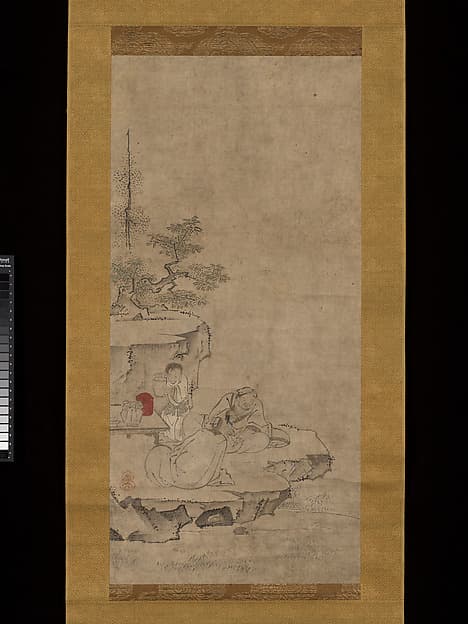
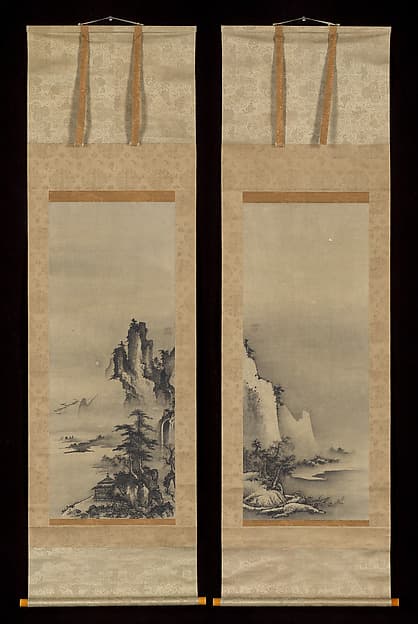
The paintings are a harder matter. The works associated with his name bear no signatures, and the seals were apparently added later, so it is impossible to say what he painted with his own hand. In Japanese scholarship the label “Shūbun” is applied, by convention, to scrolls made during the roughly forty years of his activity and worthy of his reputation. Two of them are designated National Treasures: “Hue of the Water, Light on the Peaks” (“Suishoku rankō zu”), dated 1445 and kept in the Nara National Museum, and “Reading in a Bamboo Grove” (“Chikusai dokusho zu”) in the Tokyo National Museum. Even these two scrolls, the likeliest candidates for originals, differ noticeably in their brushwork. What the works of this group share is a tall vertical format, an emphasis on the height of the mountains, diagonal compositions taken from the Song masters Ma Yuan and Xia Gui, and a firm, strong line. The rocks, trees, mountains and huts are borrowed from Chinese models of the twelfth to fourteenth centuries, but the landscapes themselves are copied neither from nature nor from any single painting: the artist assembled them from remembered motifs, and the result is an almost artificial world, like a dream. To my mind, that is why it is more honest to speak of “Shūbun’s manner” than of his paintings. Several pairs of screens of “Landscapes of the Four Seasons”, kept in Tokyo and in the Seikadō Bunko collection, are assigned by Japanese scholars to the generation of his pupils.
Under him, monochrome ink painting became the official style of the shogun’s court. In the 1440s the young Sesshū studied with him; Gakuō Zōkyū, Ten’yū Shōkei, Bokkei and Oguri Sōtan are also named among his pupils and followers. The sources differ on who succeeded him as painter to the shogun: Oguri Sōtan or Kanō Masanobu, the founder of the Kanō school.
The last records of Shūbun date from about 1454; by other estimates he died as early as the 1440s.
Artist works
Works by the artist
Works by Tenshō Shūbun available in this edition of NEOARCA.
Related context
Associations
Works connected through artistic movements, cultural context and period. Priced works available in this market appear first.
Profile notes
Profile and sources
Image
Artist image
На основе открытого изображения: Tenshō Shūbun; Wikimedia Commons; Public domain.
