
15.10.1763–06.01.1841
Tani Bunchō
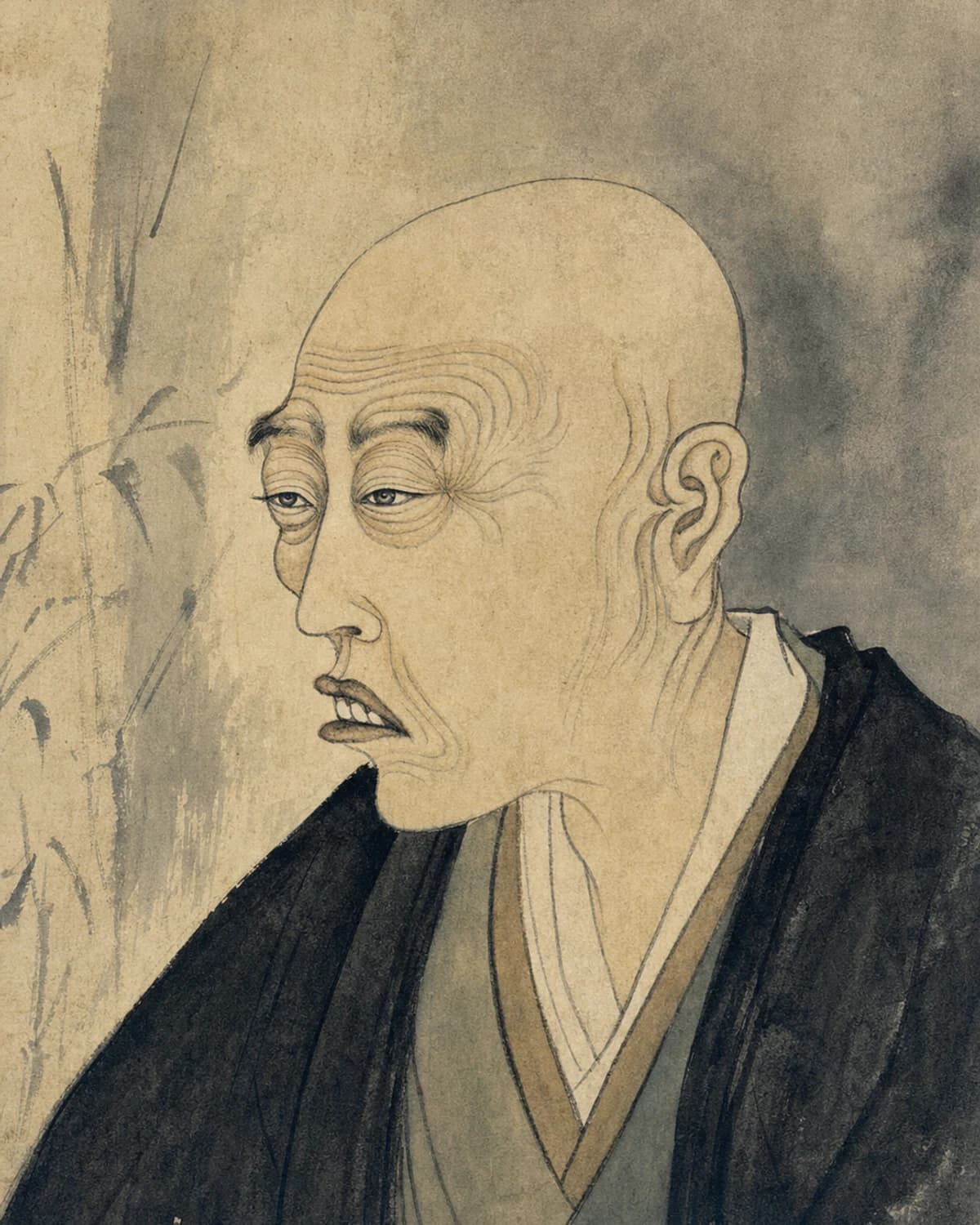
Tani Bunchō (1763–1841) was born into a samurai family in the service of the Tayasu house and became a retainer-painter to Matsudaira Sadanobu. In 1793 he travelled with him along the coast, sketching the terrain so that its defences could be assessed. He painted in Chinese, Japanese and European manners, built a style of his own from them and trained notable pupils.
Biography
In 1793 Tani Bunchō went with Matsudaira Sadanobu to inspect coastal fortifications. The shogunate feared the European powers, Russia above all, which were demanding that Japan open to trade. The painter was told to record the landscape as exactly as possible, so that the drawings could be used to plan possible military action. The series “Kōyō tanshō zu” grew out of such commissions, and many of his landscapes came about in similar circumstances.
He was the eldest son of the poet Tani Rokkoku, who wrote verse in Chinese (kanshi). His birth is given as 15 October 1763 (4 September, Old Style); the place is named variously as Edo or as the Negishi district. The family had served the aristocratic Tayasu house, related to the Tokugawa shoguns, for two generations, and so Bunchō inherited samurai status and a stipend. His childhood name was Masayasu. He studied first with a master of the Kanō school, Katō Bunrei. When Bunrei died (in 1782, according to some sources), he moved to Kitayama Kangen, who worked in the spirit of the Chinese Northern school of landscape. Later the Nanga style, also known as bunjinga, that is, the painting of literati scholars, influenced him. By some accounts he visited Nagasaki and studied Chinese painting of the Ming and Qing periods there, but I have found no confirmation of this. Travel abroad was forbidden under the Tokugawa, so he could not go to China; he studied Chinese and Western art from examples, during many journeys around Japan. In 1788 his personal service to the Tayasu began. In 1792 he became attendant (tsuke) to Matsudaira Sadanobu, later chief senior councillor of the shogunate, and the two developed a relationship that was friendly as much as official. Sadanobu often sent him on journeys, and the material from these trips fed his work.
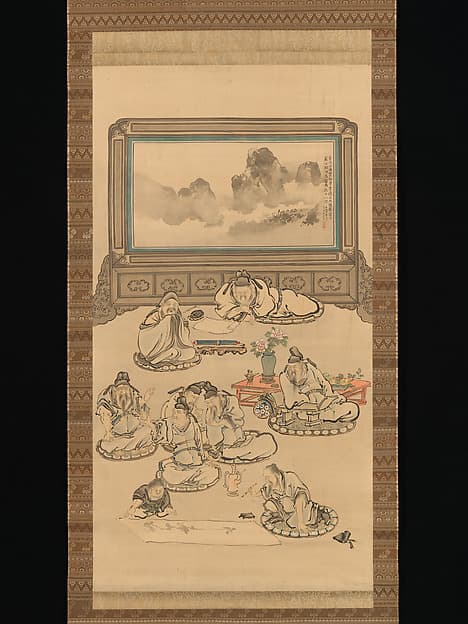
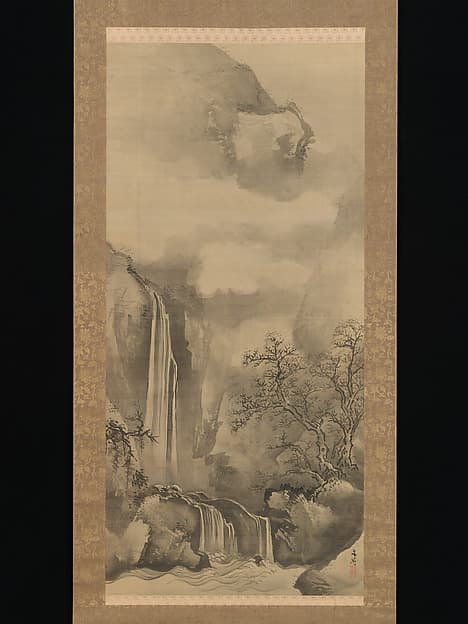
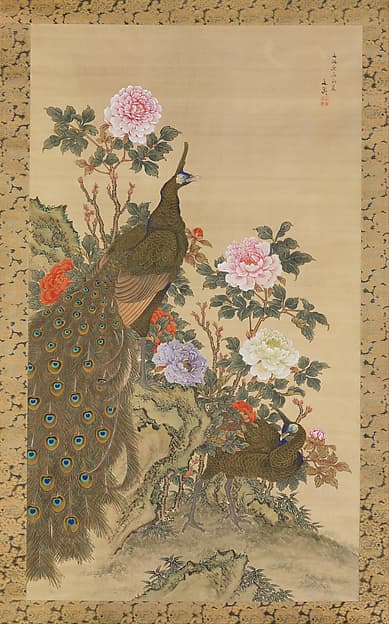
His style can hardly be called pure. He painted idealized Chinese landscapes, views of real places in Japan and traditional scenes inspired by poems; he took up the methods of the Kanō and Tosa schools, of ukiyo-e and of European painting. His brisk, laconic manner suited bunjinga, in which he usually worked in monochrome ink. He also painted portraits of his contemporaries, among them the scholar Ono Ranzan and Kimura Kenkadō, and imagined likenesses of Chinese literati such as Su Shi and Tao Yuanming.
In his mature years he produced a number of portraits in a strict, realistic manner. He is credited with a series of prints of ninety famous and sacred mountains and with a scroll of views of the chief cities of the provinces. He copied and restored old masterpieces, and after his travels he wrote several treatises on the painting of the old masters, among them “Bunchō zatsurokuchō” and “Nihon meizan zue”.
His pupils included Tanomura Chikuden, Aodō Denzen, Watanabe Kazan, Sakai Hōitsu and Takaku Aigai. Tani Bunchō died on 6 January 1841 in Edo, in the Shitaya district.
Artist works
Works by the artist
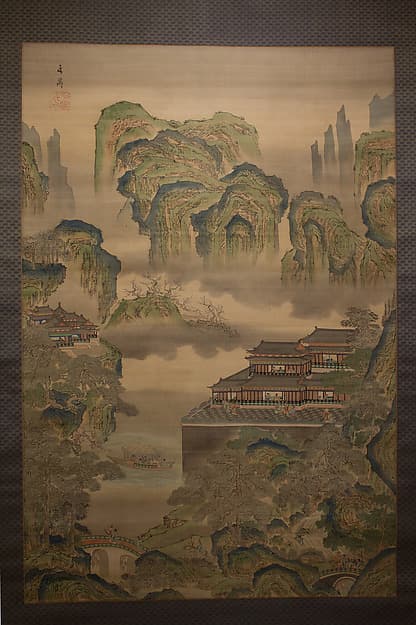
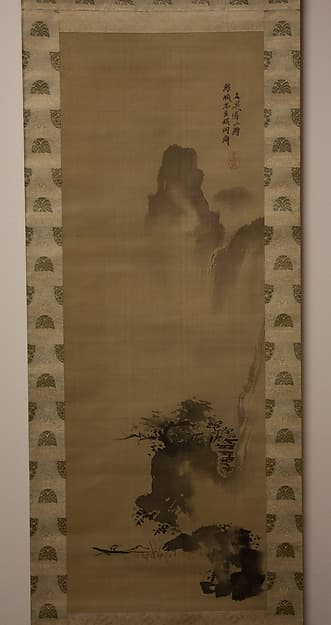
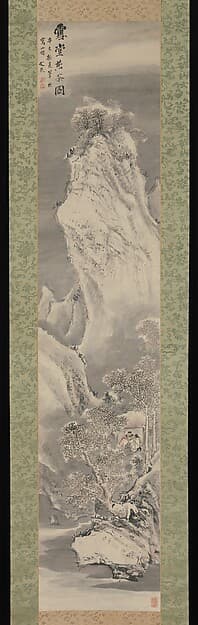
Works by Tani Bunchō available in this edition of NEOARCA.
Related context
Associations
Works connected through artistic movements, cultural context and period. Priced works available in this market appear first.








Profile notes
Profile and sources
Image
Artist image
На основе открытого изображения: 逢坂文雍; Wikimedia Commons; Public domain.
