
06.04.1470–07.01.1524
Tang Yin
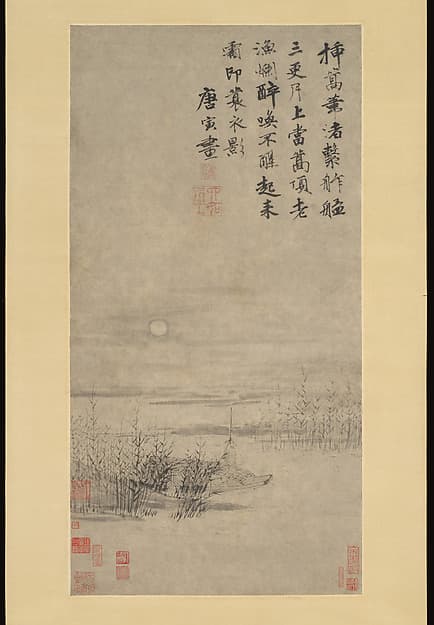
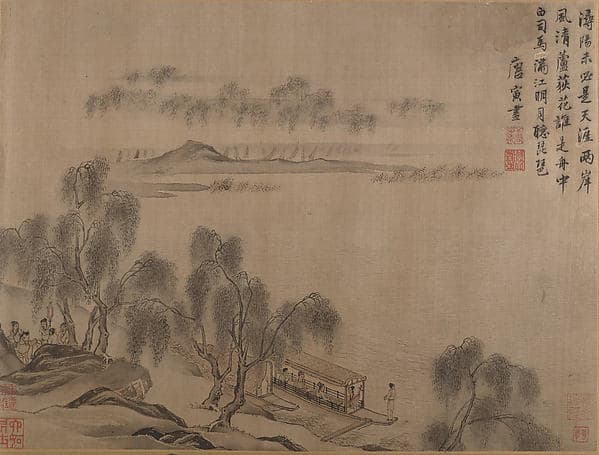
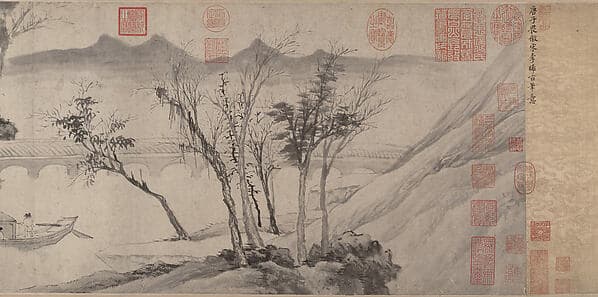
Tang Yin, also known as Tang Bohu, the son of a Suzhou merchant, made a brilliant start towards an official career but after the examination scandal of 1499 returned home and lived by selling his paintings. He painted landscapes, beauties and scenes of court and domestic life, and was a poet and a master of semi-cursive script. He is counted among the “Four Masters of the Ming Dynasty”.
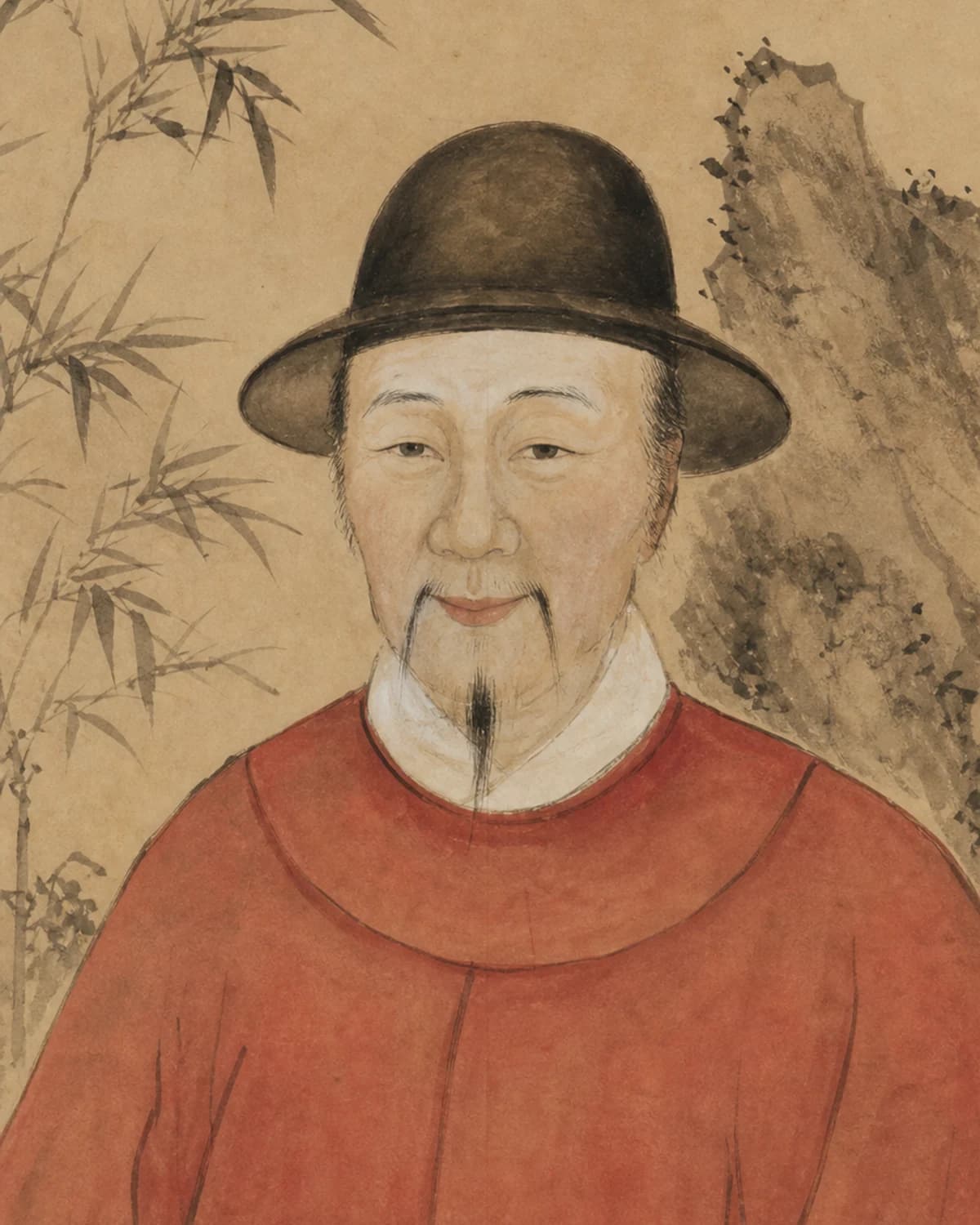
Biography
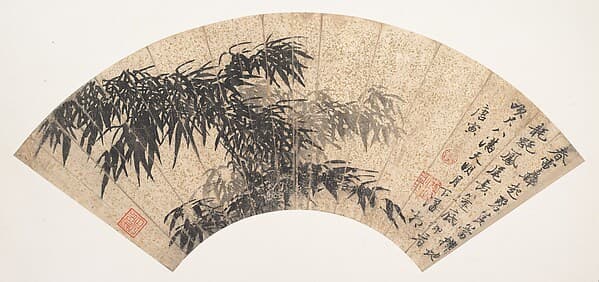
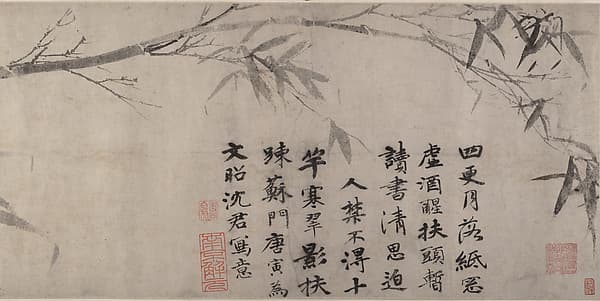
In one short poem Tang Yin wakes after wine in the fourth watch, when the moon is already setting and the paper windows are beginning to grow light. He props his head on his hand and reads a little, tries to think lofty thoughts, but cannot help himself: on the window lie the dense shadows of some ten bamboo stalks, green even in winter. Its title is simply “A Short Verse on Bamboo”.
He wrote few cheerful poems.
He was born in 1470 in Suzhou, into a merchant family of modest means; according to one account, his father kept an eating house. The painter’s courtesy names were Bohu and Ziwei, and he is best known as Tang Bohu. He studied diligently and distinguished himself early: at fifteen he passed the county examinations with brilliance. In 1488 he married, and in 1494 his wife and father died, followed a year later by his mother and younger sister. His talent quickly brought him into the wealthy and educated circles of Suzhou. Wen Zhengming became his friend, and Wen’s father, Wen Lin, acted as the young man’s patron and introduced him to the right people; his friends also included Shen Zhou, Wu Kuan and Zhu Yunming.
In 1498, at the provincial examinations in Nanjing, the second rung on the ladder of state examinations, he took first place and received the title of jieyuan. The following year he went to the capital for the metropolitan examinations, and there he and his friend Xu Jing were accused of bribing the servant of one of the examiners to learn the questions in advance. All those involved were imprisoned. Tang Yin returned to Suzhou in disgrace, and a career in government service was out of the question.
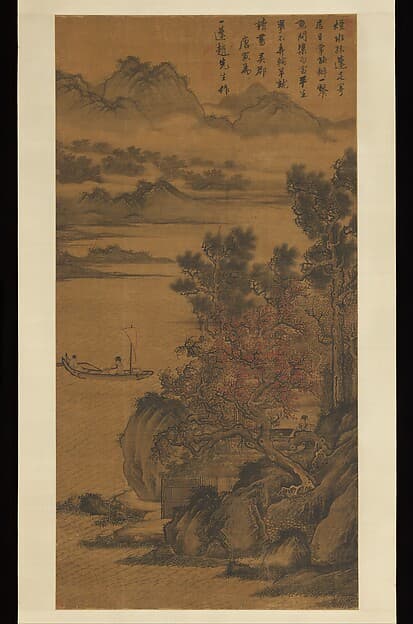
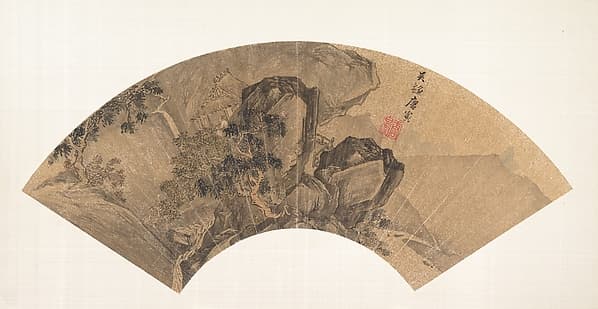
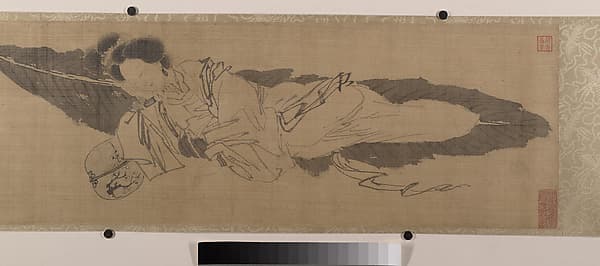
From then on he lived for pleasure and earned his living by selling paintings. Later critics such as Dong Qichang thought such a life unworthy: an artist, they held, needs financial independence in order to follow his own taste. Tang Yin’s name is associated above all with pictures of beautiful women. Yet he also painted landscapes and scenes of domestic and court life, and in his figures he readily borrowed devices from older painting, from before the Tang to the Song. The semi-cursive script in which he wrote is regarded as exemplary. In his poems, unlike Wen Zhengming or the older Shen Zhou, he took on envy, venality and greed, wrote of relentless fate and lost childhood innocence, and even poems that start cheerfully often end in regret. I think his landscapes are worth looking at with these poems in mind.
Together with Shen Zhou, Wen Zhengming and Qiu Ying he is named as one of the “Four Masters of the Ming Dynasty”, and as a poet, together with Wen Zhengming, Zhu Yunming and Xu Zhenqing, he is counted among the “Four Literary Masters of Wuzhong”. His influence on contemporaries, such as Cai Han, is evident.
Tang Yin died on 7 January 1524 in Suzhou. His eccentric way of life made him the hero of popular tales. In the best known of them he sees a maidservant on the boat of an official passing through Suzhou, falls in love, sells himself as a slave into that official’s household and, with the help of friends, at last brings her home. The story was retold by Feng Menglong, and it gave rise to the opera “The Three Smiles” and several films made in Hong Kong between 1953 and 2019.
Artist works
Works by the artist
Works by Tang Yin available in this edition of NEOARCA.
Related context
Associations
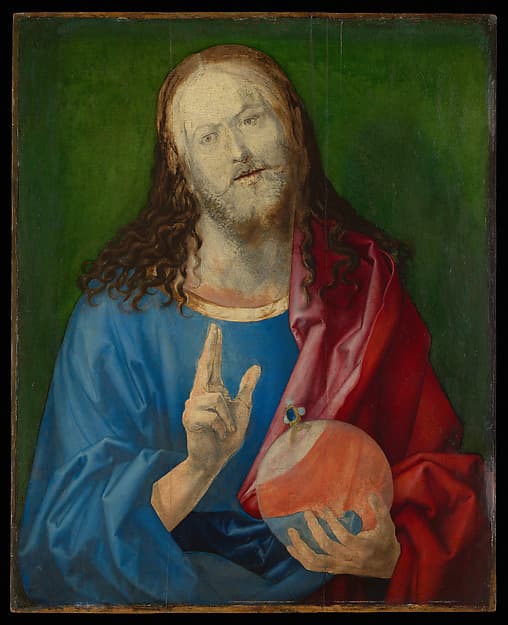
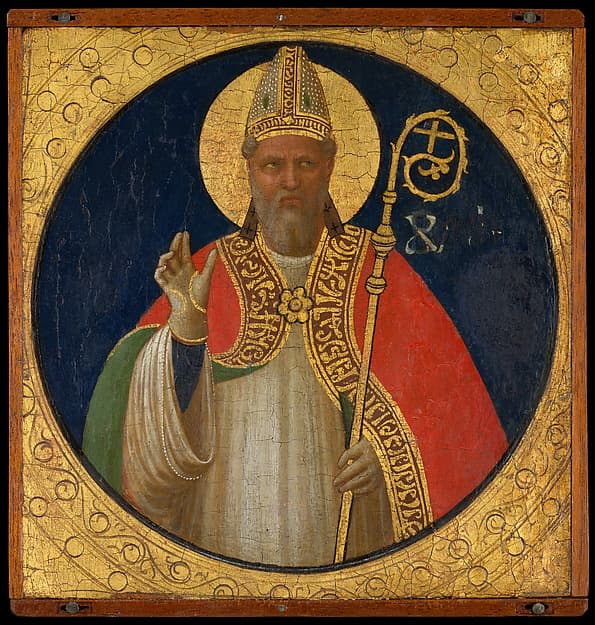
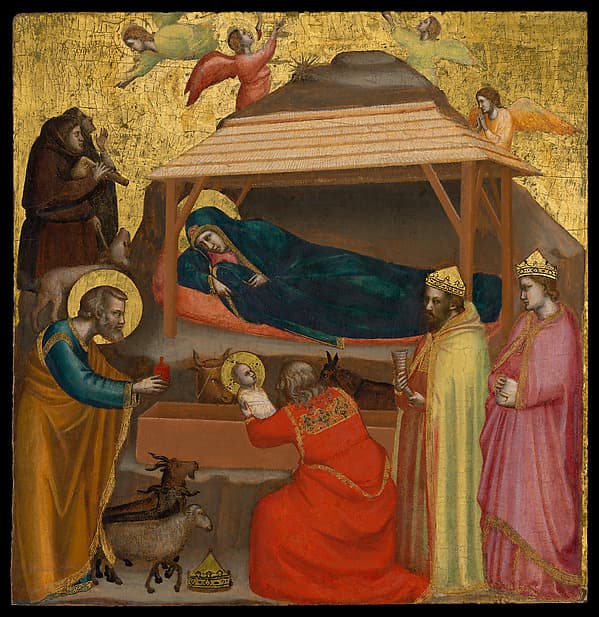
Works connected through artistic movements, cultural context and period. Priced works available in this market appear first.
Profile notes
Profile and sources
Image
Artist image
На основе открытого изображения: 張靈繪; Wikimedia Commons; Public domain.
