
1807–1891
Shibata Zeshin
Shibata Zeshin was apprenticed to a lacquerer at eleven, then studied painting in the Shijō school, a Kyoto-based school of painting, and spent his life combining the two. He devised a way of painting with lacquer sap directly on paper, revived the forgotten wave technique seikaiha, worked for the imperial court and in 1890 became an Imperial Household Artist. His work was shown at the Vienna and Philadelphia exhibitions.
Biography
The name Zeshin means roughly “this is true”. It was taken from an old Chinese tale: a king received painters, all of them bowed, but one arrived half-naked, sat on the floor and licked his brush, and the king exclaimed, “Now, this is a true artist!” The story of how the name was chosen has come down in retellings, and it is hard to check.
He was born on 15 March 1807 in Edo, in the Ryōgoku district, and as a child was called Kametaro. His grandfather and father were shrine carpenters and wood carvers; his father, who had taken his wife’s family name, was fond of ukiyo-e and studied under Katsukawa Shunshō (according to other accounts, under Katsukawa Shuntei). At eleven the boy was sent to learn from the lacquerer Koma Kansai II. Kansai reasoned that a good lacquerer could not be raised without the ability to draw and devise patterns, and sent his pupil to Suzuki Nanrei, a painter of the Shijō school. The art name Reisai was put together from a character in Nanrei’s name and one in Kansai’s. Alongside this the young man studied the tea ceremony, haiku and waka poetry, history and literature. Fan paintings he made early on impressed Utagawa Kuniyoshi, and a friendship began that lasted many years.
In 1830 Zeshin went to Kyoto, where he studied with Okamoto Toyohiko and other masters. He returned to Edo in 1831 or 1832, and Nanrei noted how far he had advanced. After Kansai’s death in 1835 Zeshin inherited the workshop of the Koma school. His pupil Ikeda Taishin, who came to him as a boy, remained at his side until his own death in 1903. Zeshin married in 1849 and soon afterwards lost his mother and his wife.
In the 1830s and 1840s Japan went through an economic crisis, and the law strictly limited the use of gold and silver, which were almost essential for lacquer decoration. Zeshin imitated the look and texture of iron with bronze and added other substances to the lacquer to obtain the colours and consistency he wanted. Very few of his Edo-period pieces survive, but his later works show a simplicity and an almost colourless finish combined with traditional motifs: flowers, reeds.
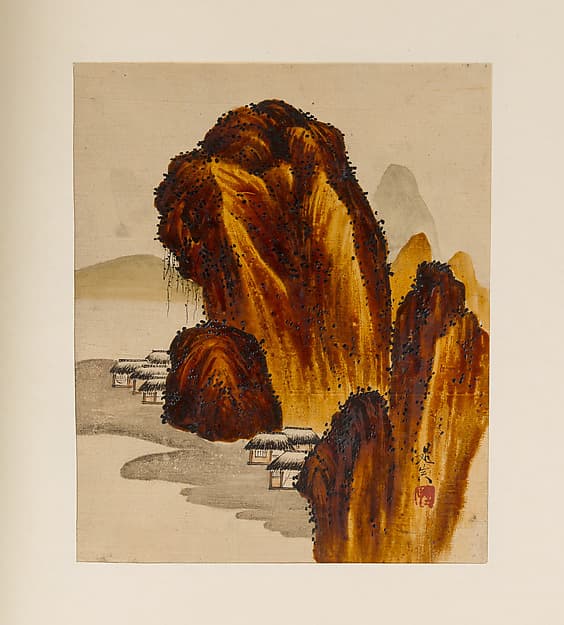
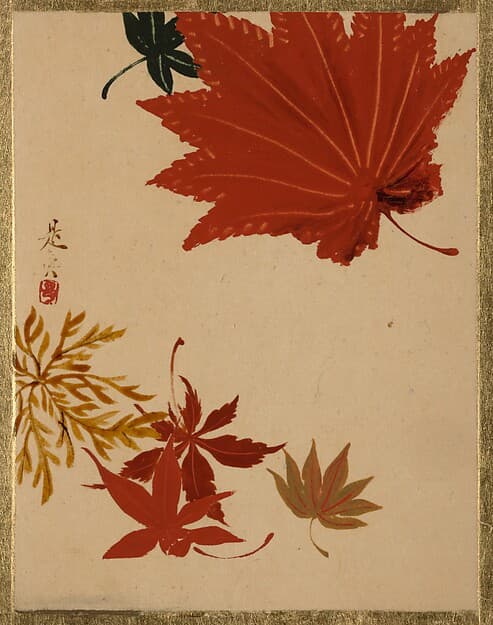
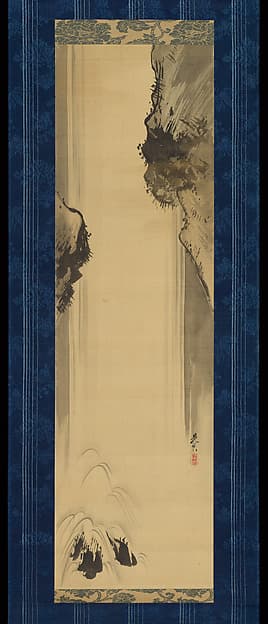
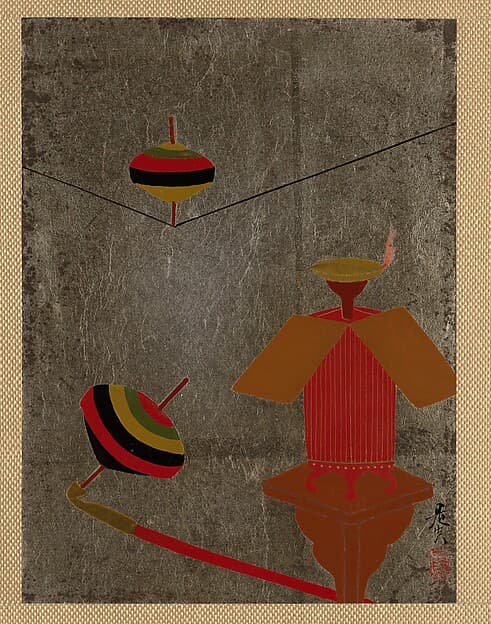
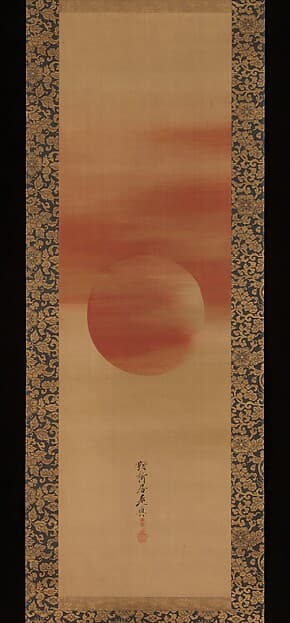
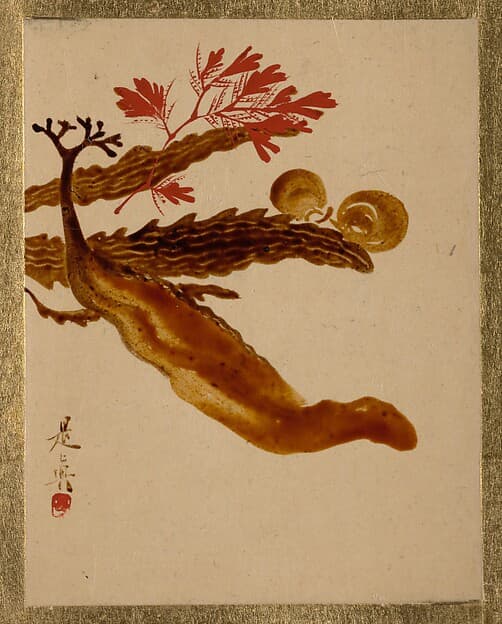
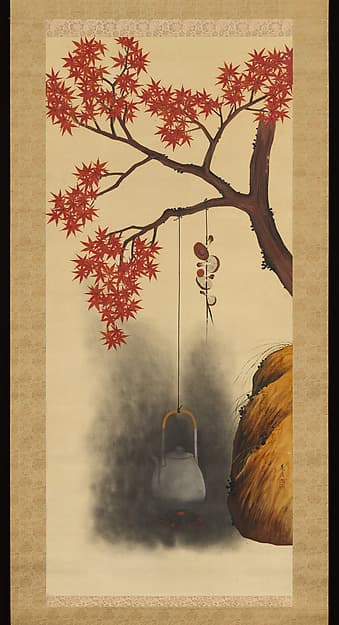
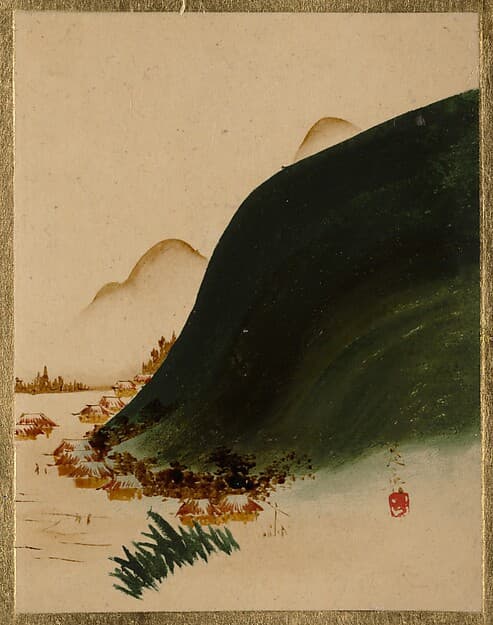
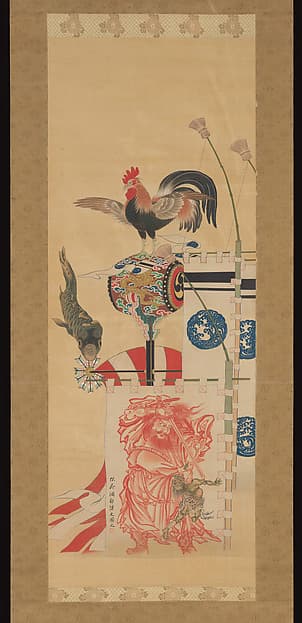
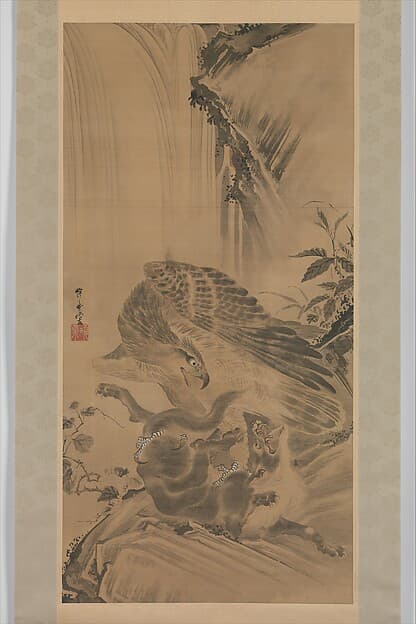
His best-known invention is urushi-e, painting with lacquer sap on paper. So that the lacquer would not flake when a scroll was rolled up, he sized the paper with dōsa, a solution of alum and animal glue. Starch used to thicken the lacquer gave an effect that distantly recalls oil painting. He also revived seikaiha: waves made by drawing a comb through rapidly hardening lacquer, a technique nobody had used for more than a century. At the same time his subjects stayed familiar: birds, flowers, insects, waterfalls, dragons, and a tiger after Maruyama Ōkyo, transferred into lacquer. A picnic set in red, black and gold lacquer looks entirely traditional until you notice the dragonflies and butterflies carved from mother-of-pearl on the tray. On a tsuba (a sword guard) he showed an ant carrying away the character “shin” from his own signature: he liked to play with his signature.
From 1869 Zeshin carried out commissions for the imperial government. Among them were gilded lacquer chairs for the Imperial Palace with a cherry-blossom motif; they have not survived. He was appointed to represent Japan at international exhibitions: Vienna in 1873, Philadelphia in 1874 and Paris (in 1878); he did not travel to any of them. In Vienna his lacquer panel “Mount Fuji and the Shore of Tagonoura” received a medal for progress. In 1886 he painted sliding doors in the Imperial Palace. In 1890 he was made a member of the Imperial Art Committee and an Imperial Household Artist (Teishitsu Gigei-in), in two fields at once: painting and maki-e, the technique of decorating lacquer with gold powder.
He died on 13 July 1891 in Tokyo. He was buried at the Shōfuku-ji temple in Imado, in the Asakusa district. It seems to me that his manner is best conveyed by the word iki: smartness without showy splendour; Japanese writers speak of his work in the same way. More than a hundred of his pieces are held in the Khalili Collections in London.
Artist works
Works by the artist
Works by Shibata Zeshin available in this edition of NEOARCA.
Related context
Associations
Works connected through artistic movements, cultural context and period. Priced works available in this market appear first.
Profile notes