
03.03.1882–28.01.1961
Seiu Ito
Seiu Ito (1882–1961), a Tokyo draughtsman and newspaper illustrator, drew one subject all his life: a woman in distress, bound or suspended, as in kabuki plays and Edo-period prints. He tied up his models, photographed them and drew from the photographs; today he is called the father of modern kinbaku. Most of his work burned in the bombing of Tokyo on 10 March 1945.
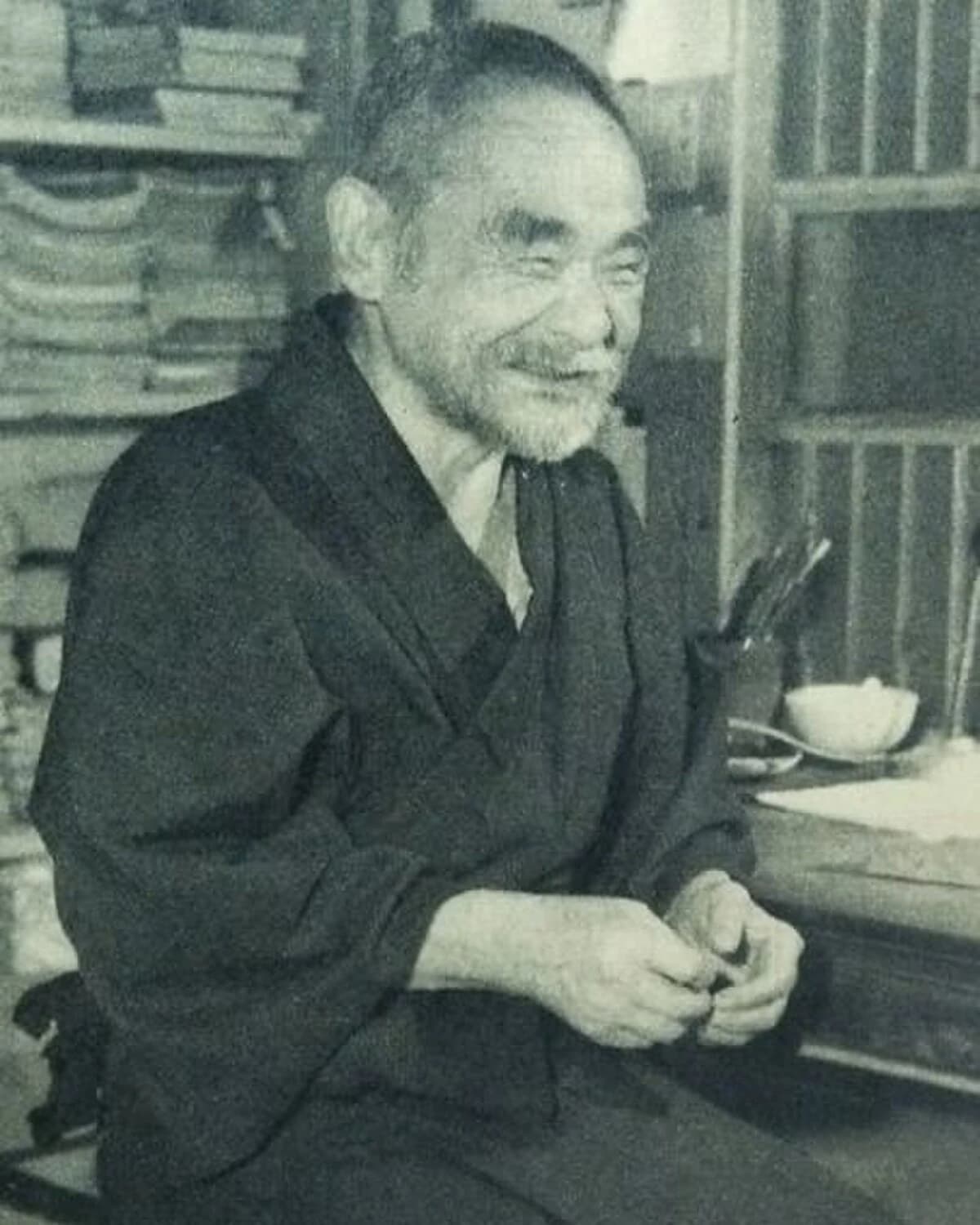
Biography
On the night of 10 March 1945, when Allied aircraft burned the residential districts of Tokyo, most of Seiu Ito’s work burned with them. The artist was sixty-three, and for almost forty of those years he had been drawing the same thing: a woman in distress, bound, suspended, caught in a torture out of the Edo period.
He was born on 3 March 1882 in the Asakusa district of Tokyo; his real name was Ito Hajime. His father worked in metal, and from 1890 the boy was taught painting at the school of Nozawa Teiu, along with bone carving and, later, sculpture. At ten he saw a heroine in peril on the stage and, as he later recounted, never let go of that subject for the rest of his life. The pseudonym Seiu, made up of the characters for “clear” and “rain”, he adopted, by one account, at thirteen, by another only in 1918. Around 1907 Ito began working for newspapers, and by 1909 he was already known as an illustrator.
His method was always the same. He bound a model the way it was done in the old tortures, photographed her and then drew from the photograph; his notebooks show that, while outwardly repeating a torture, he took precautions, and this rule passed on to later masters of rope binding. His best-known experiment dates from 1920–1921: he suspended his pregnant model Kise Sahara, who became his wife, upside down in order to recreate Yoshitoshi’s print “The Lonely House on Adachi Moor in Michinoku Province”.
Edo occupied him as more than a source of subjects: Ito collected the manners and daily life of the old city, and shortly after the earthquake of 1923 his book “A History of Edo and Tokyo Customs” came out. In the 1930s a censorship scandal broke out over his drawings and his fame went into decline; then came the fire of 1945. After the war, when censorship eased, he returned to his genre and in 1946–1952, together with Fujisawa Morihiko, published the three volumes of “An Illustrated History of Crimes and Punishments in Japan”, the most serious of his printed works. In all he wrote, compiled or edited more than twenty books. In 1960 the Japan Artists Federation awarded him a prize for a series of paintings in the ukiyo-e manner.
Seiu Ito died on 28 January 1961 in Tokyo. Sixteen years later the director Noboru Tanaka made a film based on his life, “Beauty’s Exotic Dance: Torture!” (1977), the closing part of his “Showa Era trilogy”.
Related context
Associations
Works connected through artistic movements, cultural context and period. Priced works available in this market appear first.








Profile notes
Profile and sources
Image
Artist image
朝日新聞社; Wikimedia Commons; Public domain.
