
25.06.1923–04.11.1994
Sam Francis
Sam Francis (1923–1994), a Californian, began painting in a military hospital and came into his own in the Paris of the 1950s: first monochrome abstractions, then large canvases in which patches and drips of colour crowd towards the edges and leave a white emptiness in the middle of the picture. He worked in Paris, Tokyo, Bern, New York and Santa Monica, painted murals for the Kunsthalle in Basel and the Chase Manhattan Bank, and kept a lithography workshop of his own.
Biography
In 1945 the painter David Park called in at the hospital where Sam Francis had been lying for months. After that visit Francis began to paint.
He was twenty-two, with Berkeley behind him, where from 1941 he had studied medicine, psychology and botany, and service in the army air forces; ahead lay more years in hospital.
He was born on 25 June 1923 in San Mateo, California, the son of Katherine Lewis Francis and Samuel Augustus Francis. On his discharge he went back to Berkeley, this time for art: BA in 1949, MA in 1950. His models then were Rothko, Arshile Gorky and Clyfford Still, and for the freedom of his hand he owed most to Pollock. Later he was counted among the second generation of Abstract Expressionists, with Joan Mitchell and Helen Frankenthaler and their interest in colour, but he never really fitted into any school and was one of the first artists to work all over the world at once.
The fifties he spent in Paris. His first exhibition was held in 1952 at the Galerie Nina Dausset; he was championed by the critics Michel Tapié and Claude Duthuit, Matisse’s son-in-law, he was classed with Tachisme, and he grew close to the circle of Jean-Paul Riopelle. Between 1950 and 1958 he painted in Paris, the south of France, Tokyo, Mexico City, Bern and New York, and looked closely at Asian art and Zen Buddhism. His manner changed in stages: first near-monochrome abstractions, then large, densely coloured murals and, finally, the “open” paintings in which colour withdraws to the edges and white takes over the middle. The white, to my mind, is not a ground but air. When “Big Red” of 1953 was shown in 1956 at the Museum of Modern Art in New York in the exhibition “Twelve Americans”, fame came quickly: “The New American Painting” in 1958, the São Paulo Biennial and documenta II in 1959, the Venice Biennale of 1964. In 1956–58 he painted the walls of the Kunsthalle in Basel, then the building of the Sogetsu school of flower arranging in Tokyo, and in 1959 the Chase Manhattan Bank in New York. In 1957 he went round the world: Provence, India, Thailand, Hong Kong, Tokyo, Mexico, New York.
In 1962 he returned to California and from then on worked mainly in Los Angeles, with a long Tokyo period in 1973–74; in New York he was represented by the Martha Jackson Gallery. In 1960–63 came the “Blue Balls” series, biomorphic blue forms with drips. From 1965 he painted canvases that were almost empty, with a minimum of colour and a hard line along the edge. In 1971 he began Jungian analysis with James Kirsch and started recording and examining his own dreams; the pictures of the early 1970s, known as the “Fresh Air” paintings, are made like this: wet bands of paint are laid down with a roller, and pools of colour are poured, dripped and spattered onto them. By 1973–74 a grid of crossing tracks of colour had risen over this, sometimes up to twenty feet long.
After 1980 the grid gradually disappeared. More and more time, on the other hand, went into printmaking: etchings, lithographs, monotypes, many of them made in Santa Monica at the Litho Shop, his own workshop. In 1984 he founded the Lapis Press for unusual texts in carefully made books and published his “Aphorisms” there. In 1991 he was elected an associate of the National Academy of Design, and in 1994 an academician. In his lifetime he had 113 solo exhibitions.
In his last year his right hand failed after a fall, and with his left he painted about a hundred and fifty small pictures. Sam Francis died on 4 November 1994 in Santa Monica and was buried in Olema, in Marin County. His foundation’s catalogue raisonné lists 1,855 paintings on canvas and panel, and the foundation is still looking for the missing ones. His canvases are in the Metropolitan Museum, the Museum of Modern Art in New York, the Norton Simon Museum in Pasadena, the Kunstmuseum Basel, the Idemitsu Museum in Tokyo, the San Francisco Museum of Modern Art and the Centre Pompidou.
Profile notes
Profile and sources
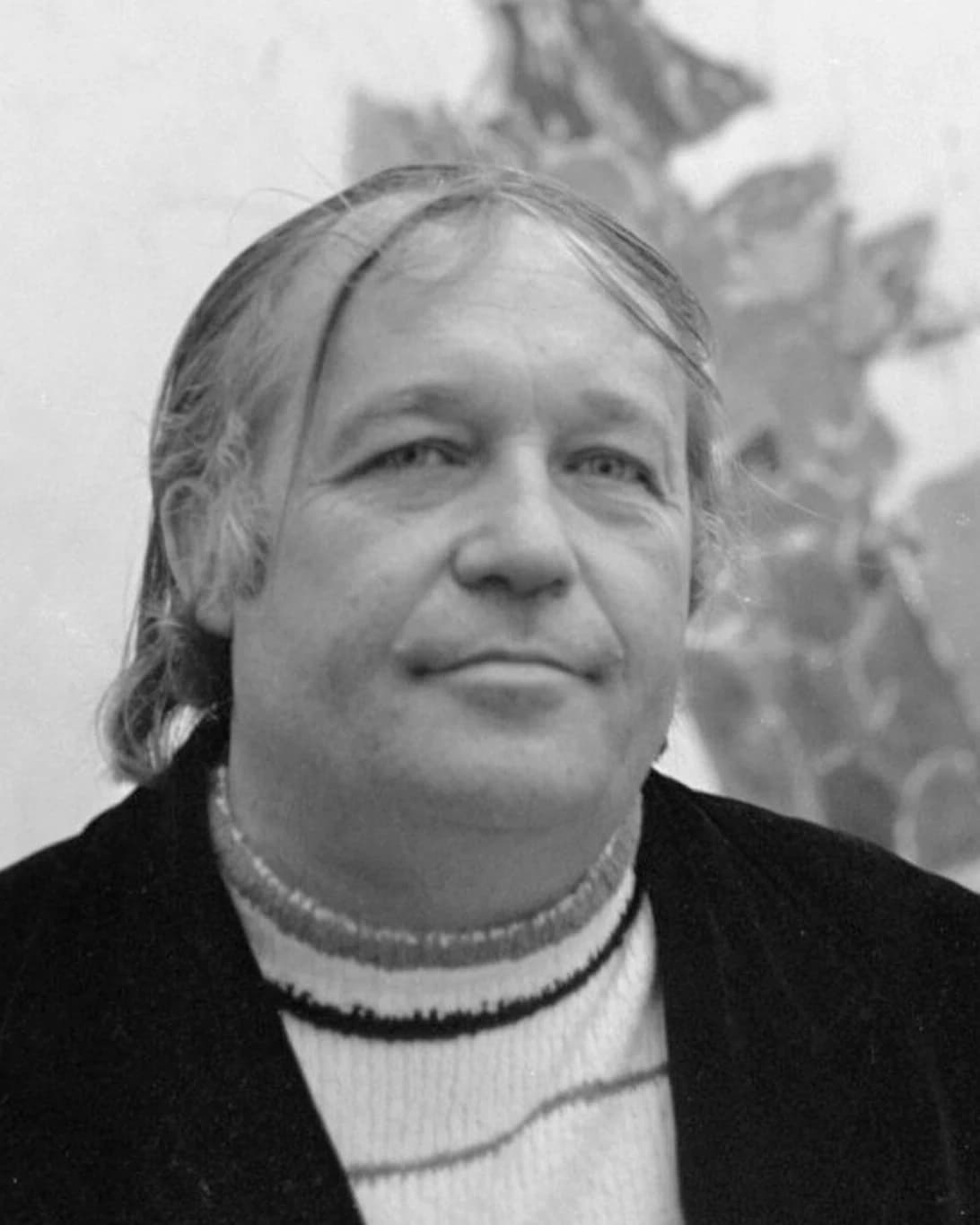
Image
Artist image
Eric Koch for Anefo; Wikimedia Commons; CC BY-SA 3.0 nl.
