
1764–1820
Ryūryūkyo Shinsai
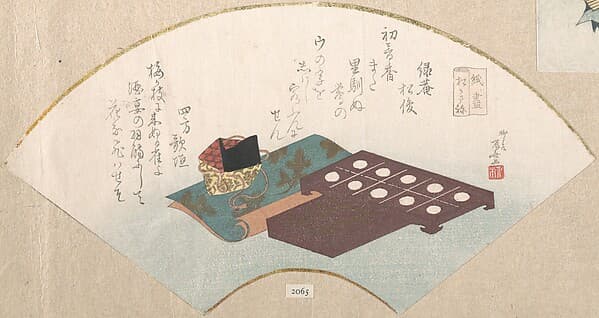
Ryūryūkyo Shinsai worked in Edo around the turn of the nineteenth century and is known above all for surimono, small privately commissioned prints made for poetry circles, with still lifes, landscapes and beauties. A pupil of Tawaraya Sōri and Hokusai, he made views of Edo and the “Eight Views of Ōmi” with European-style shading and perspective. The dates of his life are not firmly established.
Biography
The large print “Great Bridge” (Ōhashi) carries no signature and no seal. Ryōgoku Bridge and the Ekōin temple on the far bank of the Sumida are laid out according to the rules of linear perspective, and it is by this work that Shinsai’s hand is usually recognised. The sheet is in the Museum of Asian Art in Berlin.
The artist’s real name hardly shows in the records. He is known as Ryūryūkyo Shinsai; his given name at birth was Masayuki, his everyday name Hanjirō, and he was sometimes called Mino Handi. He used other art names too, for example Ryūkaen. He was born in Edo; 1764 is the year most often given, but there are no firm data for the dates of his life. The year of his death is also unclear: 1820 and 1825 are both named. In Edo, according to tradition, he owned houses in the Kanda district, on the streets Ogirimachi and Shinishimachi, so he lived as a landlord as well as an artist. His first teacher was Tawaraya Sōri of the Rinpa school, from whom Shinsai received the art name Ryūryūkyo. Later he went to Katsushika Hokusai, at the time when Hokusai signed himself Tasei (by some accounts, in 1799–1810). From Hokusai he took the character “shin” (辰) for the name Shinsai; by one account he adopted the name in 1800. The name Shinsai is recorded from 1794, and his main years of work fall between 1799 and 1823.
Among Hokusai’s pupils he stood out for not copying his teacher. I think this can be seen in the landscapes: Hokusai gave him the European way of rendering shadow and depth, but Shinsai built his compositions in his own way.
He worked most of all for kyōka, the comic poetry circles of Edo. Surimono, prints on fine paper commissioned by the poets themselves, were made for them. He also illustrated books: the kyōka collection “Azuma-shū” (1805), “Rengedai” (1812), the yomihon novel “Tsukiyo no hina monogatari” by the poet Yomo no Utagaki (1808), and “Eiyū gojūnin isshu” (1822). He also made nishiki-e colour prints and painted beauties in ink and colour on silk. The best-known work remains the series “Eight Views of Ōmi”, eight large horizontal sheets, made around 1801–1811. It is the only series of his in which the sheets are signed. The best known is the sheet “Autumn Moon at Ishiyama”: the shadows and distant planes are handled in the European manner, as far as that was possible in Edo. Most of his other prints are unsigned, and attribution rests on style. In the Bunka and Bunsei years he also made views in frames imitating Dutch lettering, like those made by Keisai Eisen: “Shichirigahama Beach in Sagami” and “Sumida”. There are also views of famous places in Edo in frames with floral and Chinese patterns.
In 1812, according to a record in a work by Nishizawa Ippō, Shinsai travelled to Kyoto and Osaka with the poet Yomo no Utagaki. This is almost the only documentary evidence of his life outside the studio.
About ten paintings by hand survive. Among them are a woman with a fan on silk (Tokyo National Museum), a standing courtesan (Ōta Memorial Museum of Art), two beauties out walking (British Museum) and two beauties in the wind (Suntory Museum of Art). There are also votive plaques, ema: Bishamonten at the Saishōji temple in Ashikaga, and Katō Kiyomasa killing a tiger at the Sansho shrine in Fukuoka. Several sheets with views are also held by the Royal Museums of Art and History in Belgium.
Artist works
Works by the artist
Works by Ryūryūkyo Shinsai available in this edition of NEOARCA.
Related context
Associations
Works connected through artistic movements, cultural context and period. Priced works available in this market appear first.








Profile notes
Profile and sources
Image
Artist image
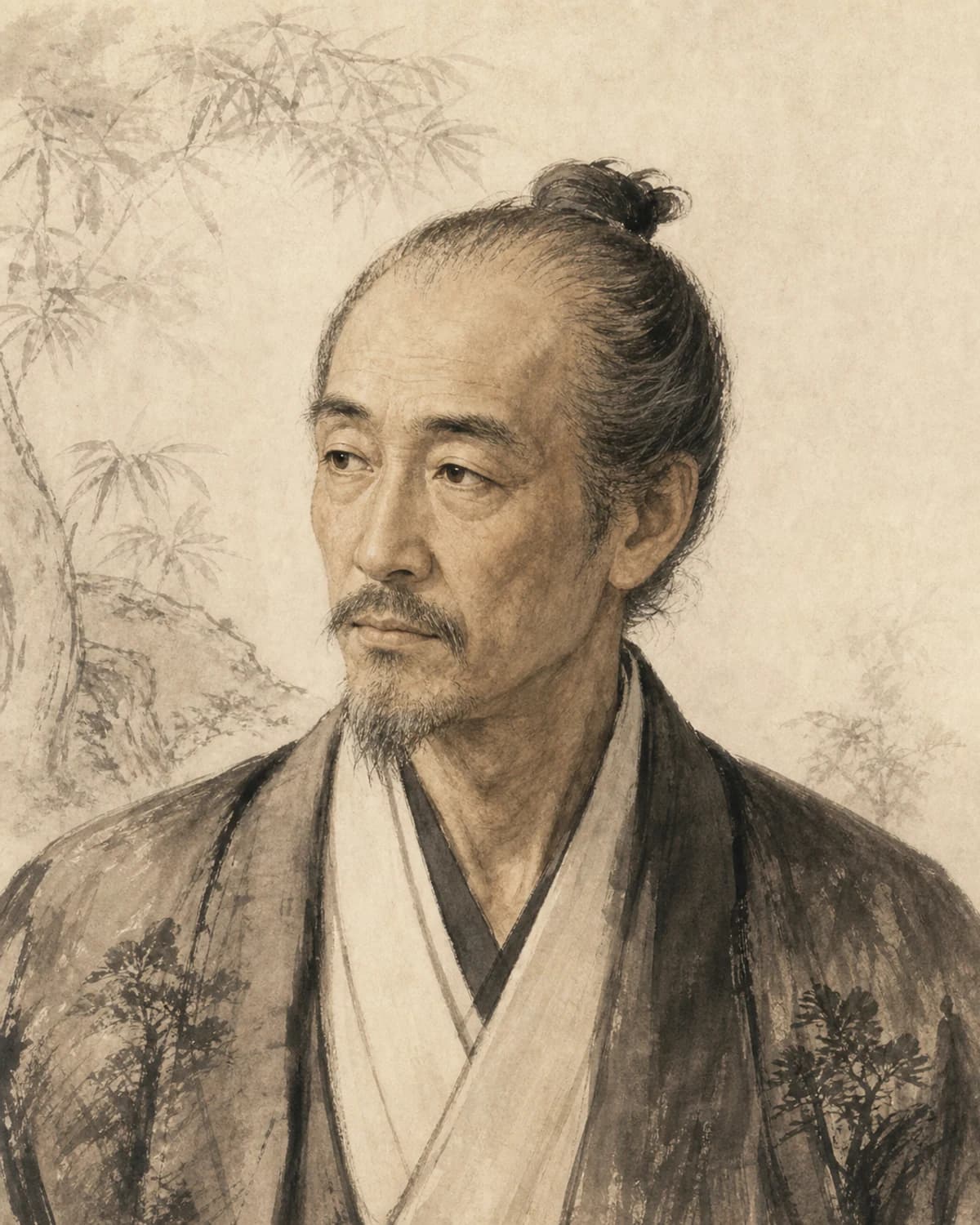
На основе открытого изображения: Attributed to Ryūryūkyo Shinsai (Japan, 1760-1823); Wikimedia Commons; Public domain.
