
26.08.1899–24.06.1991
Rufino Tamayo
Rufino Tamayo, a Zapotec from Oaxaca, painted murals as Rivera and Siqueiros did, but argued with them about the revolution and kept his distance from political art. He spent almost twenty years in New York and Paris, painted murals for UNESCO and the Museum of Anthropology in Mexico City, invented relief “Mixografia” prints with the printer Luis Remba, and founded two museums.
Biography
As a teenager, after his mother's death in 1911, Rufino Tamayo lived with an aunt in Mexico City and spent a great deal of time with her at the city's fruit markets, helping with the small family business. Among his early paintings are Still Life with Corn and Fruit Bowl and Domino (both 1928), and half a century later came Watermelons (1977). I would not build a theory on this, but the coincidence is a nice one.
He was born on 26 August 1899 in Oaxaca de Juárez into a Zapotec family: his father, Manuel Arellanes, was a shoemaker, and his mother, Florentina Tamayo, a seamstress. His Zapotec origins were later constantly cited among the first sources of his art.
In 1917 his aunt enrolled him at the National School of Plastic Arts, the former Academy of San Carlos. As a student he tried out Cubism, Impressionism and Fauvism, but the academic training did not satisfy him, and he began to teach himself. From 1921 he worked in the department of ethnographic drawing under José Vasconcelos and soon became its head.
In 1926, feeling that he could not work freely at home, Tamayo held a solo exhibition in Mexico City and left for New York. A month after his arrival the Weyhe Gallery showed thirty-nine of his works. In 1929 he returned, and his new exhibition in Mexico City was received with enthusiasm. He taught at the School of Contemporary Art, and in 1932 he was appointed director of the department of plastic arts at the Ministry of Public Education. His works of those years have been likened to the German New Objectivity. The painter María Izquierdo, with whom he lived for a time, taught him precision in the choice of colour. He himself explained that Mexicans were not a cheerful people but a tragic one, and chose his colours to suit this land. From the 1930s pre-Columbian art sounds ever more strongly in his painting: he takes ancient symbols and mythical images to speak of loneliness, anger and sorrow.
In 1935 he joined the League of Revolutionary Writers and Artists, and together with Siqueiros and Orozco he was chosen to represent Mexico at the first American Artists' Congress in New York. Tamayo and his wife Olga intended to stay there only for the congress.
They stayed until 1949. Tamayo taught at the Dalton School in New York, where Helen Frankenthaler was among his students, and exhibited at the Valentine Gallery, then at the Knoedler and Marlborough galleries. In 1941 came Animals, one of his best-known paintings, in which the lessons of Picasso and Braque have been seen; in 1942 Lion and Horse, where he drew on images from pre-Columbian ceramics; in 1943 his first fully abstract work, Nature and the Artist. With the “big three” of the muralists, Rivera, Orozco and Siqueiros, he disagreed on the main point: they considered the revolution necessary for the country's future, whereas he thought it would do Mexico harm. In Children Playing with Fire (1947) two people are burning in a fire they have lit themselves. Tamayo said at the time that man was in danger of being consumed by what he had created. For views like these some called him a traitor. He deliberately steered clear of his compatriots' political art, although he painted walls as much as they did.
In 1948 his first large retrospective was held at the Palacio de Bellas Artes in Mexico City. His popularity was high, the arguments did not die down, and in 1949 Tamayo and Olga left for Paris for almost ten years. In 1950 he was given a room of his own at the 25th Venice Biennale, and in 1953 he won first prize at the São Paulo Biennial. Large mural commissions followed: The Birth of Our Nationality (1952) and Mexico Today for the Palacio de Bellas Artes, Man (1953) for a museum in Dallas, America for Houston, Prometheus (1957) for the library of the University of Puerto Rico, and a mural in the UNESCO building in Paris (1958). In 1957 he was made a Knight of the Legion of Honour.
His colour is restrained. He explained to Paul Westheim that the fewer colours you use, the greater the possibilities. Octavio Paz, who wrote a book about him, remarked that his richness of colour is born of sobriety. Another of his inventions belongs to printmaking, which he practised from 1925 to the end of his life: woodcuts, lithographs, etchings. Together with the Mexican printer and engineer Luis Remba he devised “Mixografia”, a way of printing impressions with a three-dimensional texture, and made about eighty such prints, among them Two Characters Attacked by Dogs.
In 1959 Tamayo and his wife returned to Mexico for good, and in his native Oaxaca he built a museum. In 1964, for the National Museum of Anthropology in Mexico City, he painted Day and Night, the struggle between day in the form of a feathered serpent and night in the form of a tiger, and he made his last monumental works for the Mexican pavilions at the exhibition in Montreal (1967) and the fair in San Antonio (1968). In 1981 the Tamayo Museum of Contemporary Art opened in Mexico City, on the Paseo de la Reforma by Chapultepec Park, to house the collections the couple had assembled and handed over to the state. He painted his last picture, Moon and Sun, in 1990, at the age of ninety. Rufino Tamayo died on 24 June 1991 in Mexico City.
Related context
Associations
Works connected through artistic movements, cultural context and period. Priced works available in this market appear first.








Profile notes
Profile and sources
Image
Artist image
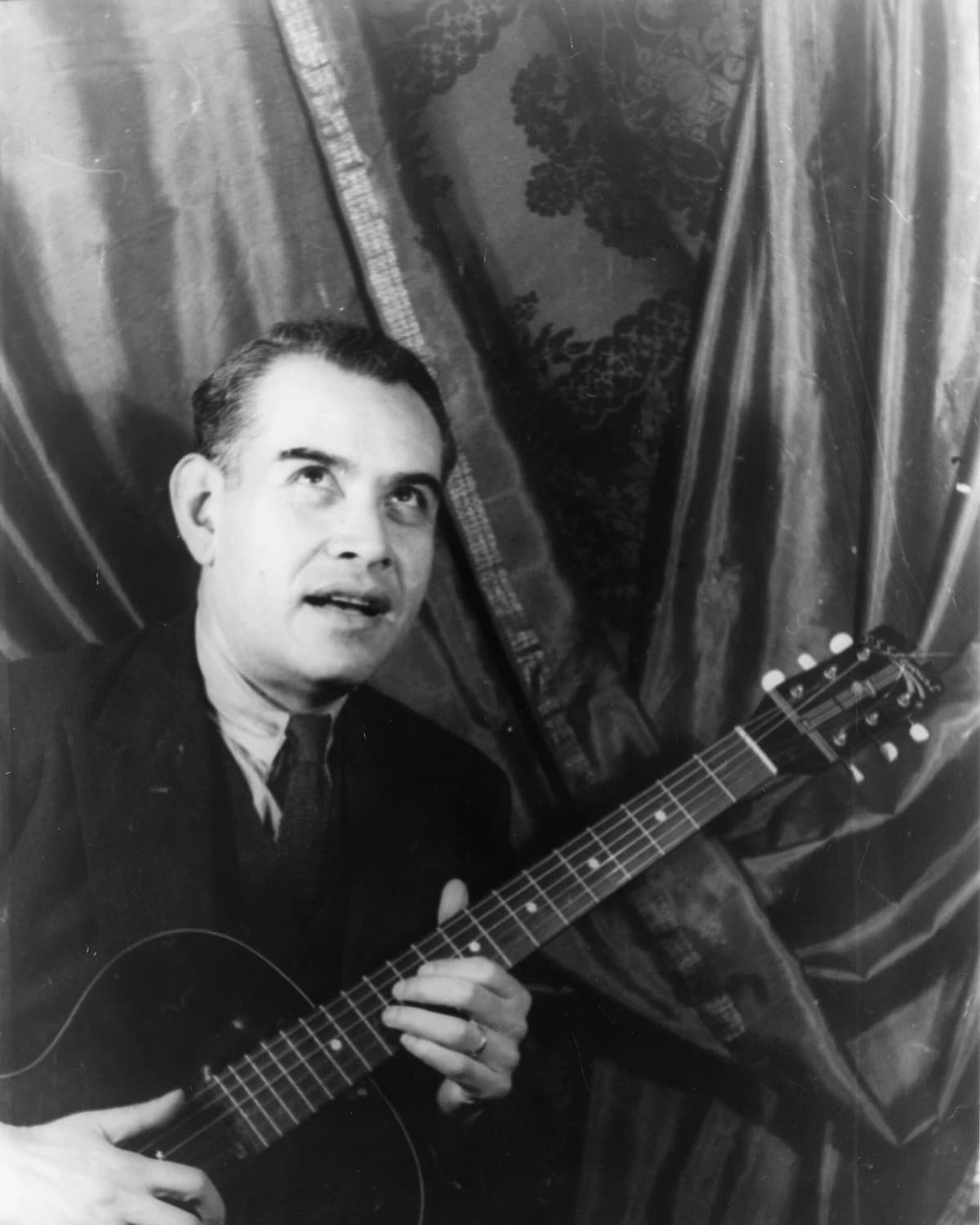
User Steve Eifert on en.wikipedia; Wikimedia Commons; Public domain.
