
06.10.1963–present
Romero Britto
Romero Britto, a native of Recife in Brazil, has lived in Miami since the late 1980s and works in an instantly recognisable manner: bright colours, bold busy patterns, devices taken from cubism, pop art and graffiti. He paints, makes screen prints and sculpture; his designs spread across advertising, consumer goods and public spaces, from a water park in Miami to Hyde Park in London.
Biography
Soon after Romero Britto moved to Miami, Michel Roux, the man behind the Absolut vodka advertising campaign in which artists reinterpreted the bottle, happened to walk into his first studio in Coconut Grove. He at once asked Britto to make his own version. The 1989 campaign became the artist’s first major commission, and after it his name was known far beyond Florida.
From childhood he learned to draw mostly on his own.
Romero Francisco da Silva Brito was born on 6 October 1963 in Recife, the capital of the state of Pernambuco, and grew up in poverty. He became interested in art at about eight and painted on whatever came to hand: newspapers, cardboard, scraps of any material. He did well at school, but was drawn beyond the classroom, and he took his first professional steps at eighteen in his native Pernambuco. In 1983 Britto went to Europe to study art; in Paris he came to know the work of Matisse and Picasso, and both left a clear mark on him. After a few exhibitions in galleries and at private showings he was advised to go to the United States, where pop art was then at its height. In 1988 he settled in Miami, and his studio is still there.
His manner formed quickly and has changed little since: open, bright colours, dense bold patterns, devices from cubism, pop art and graffiti. The artist himself says that he paints for the sake of hope and a feeling of warmth, and his admirers call his work “the art of healing”. Besides painting, he works in screen printing and sculpture. After Absolut came commissions and licences from large companies, from Disney, BMW and IBM to Pepsi and the cruise line Royal Caribbean, and his designs were printed on Barbie dolls and pet collars. He designed the covers of two Michael Jackson singles, and he was invited to speak at the World Economic Forum and to design postage stamps for the United Nations. How many objects have appeared under his name is hard to count. To my mind, the line between painting and design is almost impossible to draw in Britto’s case, and he himself, it seems, does not draw it.
Much of what he has made stands in the open air. In Miami a water park in the Grapeland Heights neighbourhood was laid out to his design and opened in 2008 as the city’s first water park; Miami also has his sculpture “Welcome” at Dadeland North station and his murals in the Miami Children’s Museum and Jackson Memorial Hospital. His works are in Hyde Park in London, at John F. Kennedy Airport in New York, in children’s hospitals in Gainesville, Philadelphia and London, and at the Sheba Medical Center in Israel. Since 2011 his “Friendship Bear”, a gift to the city from Eunice Shriver, has stood in front of the Berlin arena now called the Uber Arena.
In 2005 he was named an arts ambassador of the state of Florida, and in 2005 and 2006 he took part in the Florence Biennale. In 2012 the samba school Renascer de Jacarepaguá, appearing for the first time in the top group of the Rio de Janeiro carnival, dedicated its parade to his life. In 2014 FIFA made him an ambassador of the World Cup in Brazil, and in 2017 Miami unveiled his star on its local walk of fame, designed by the artist himself.
He has two galleries of his own: on Lincoln Road in Miami Beach and in São Paulo, in a building designed by the architect João Armentano. He has supported more than two hundred and fifty charitable organisations, and in January 2010, after the earthquake in Haiti, he designed the emblem for the “Save Haiti” campaign.
Profile notes
Profile and sources
Image
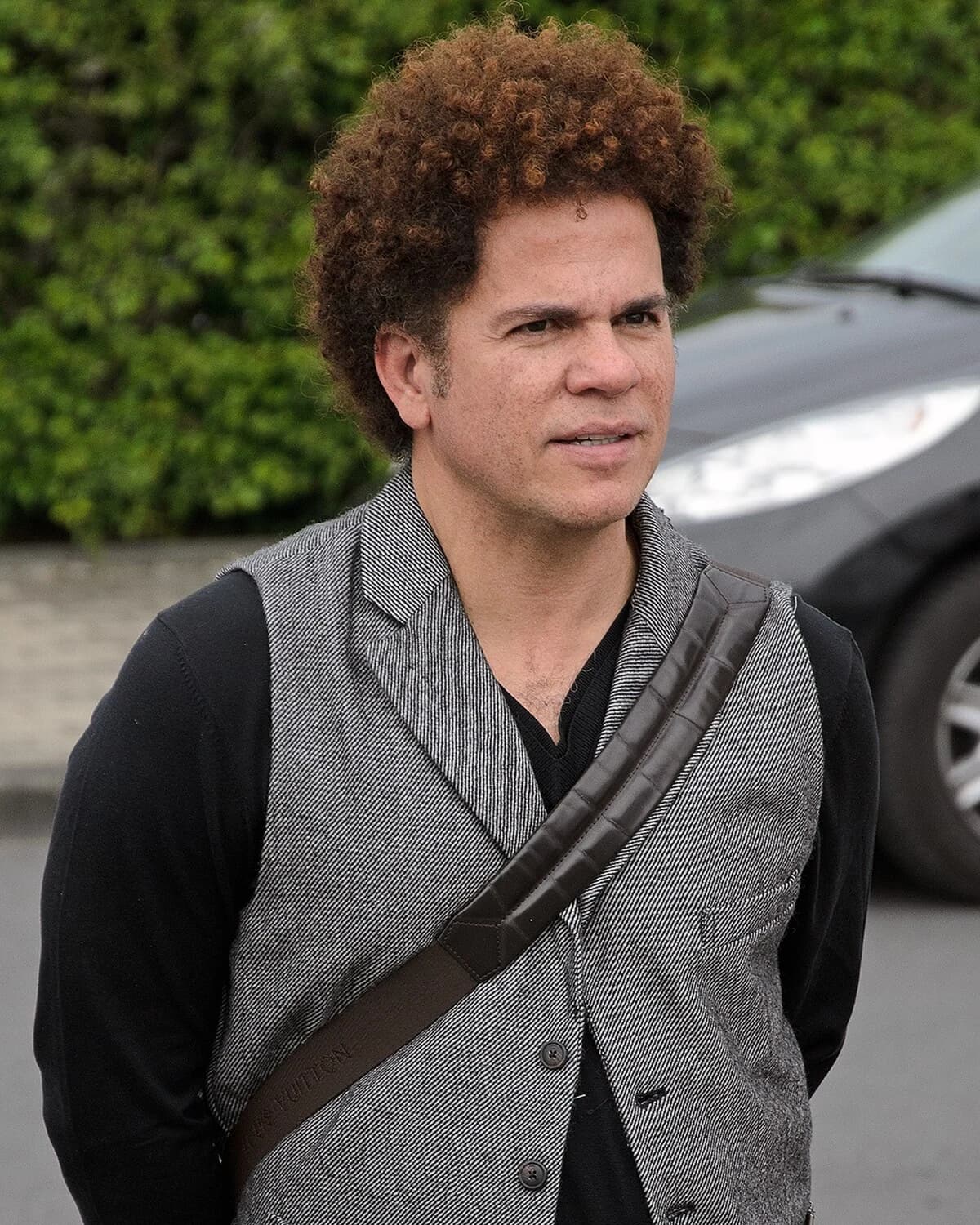
Artist image
Dirk Vorderstraße; Wikimedia Commons; CC BY 2.0.
