
13.11.1893–13.10.1974
Reuven Rubin
Reuven Rubin (1893–1974) was born into a poor Hasidic family in Galați, came to study at the Bezalel school in Jerusalem in 1912, and then left for Paris. In Palestine he developed a bright, near-naive manner, with local landscapes and people. In 1948–1950 he was Israel's first diplomatic envoy to Romania, and in 1973 he received the Israel Prize.
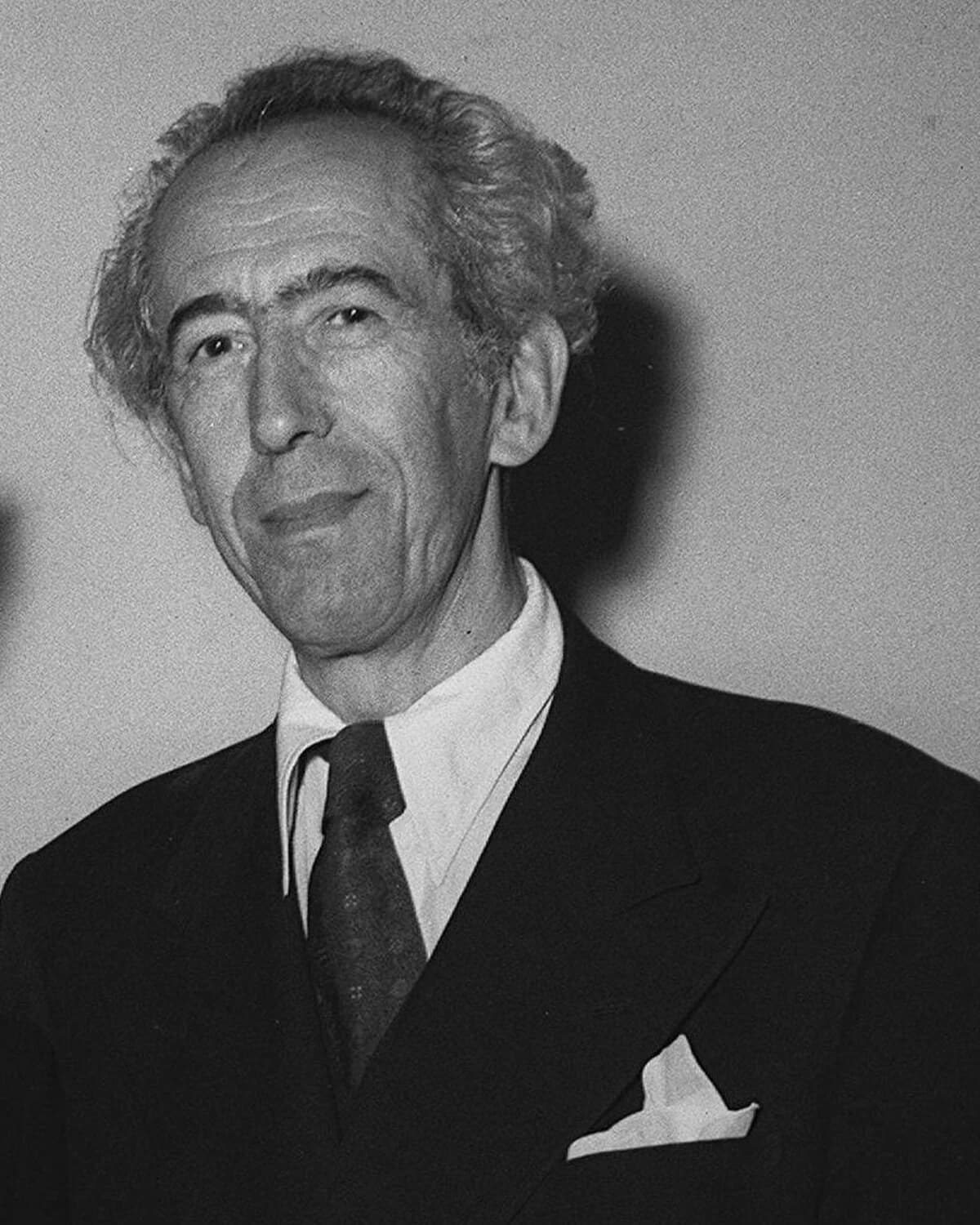
Biography
Rubin signed his paintings in an unusual way: his first name in Hebrew, his surname in Roman letters. The signature shows well how he assembled his artistic language from different sources.
He was born on 13 November 1893 in Galați, Romania, and bore the surname Zelicovici; Rubin came later. His father, according to some accounts, served as a cantor and beadle in a synagogue, and his mother was a rabbi's daughter. Reuven was the eighth of thirteen children, of whom three survived. He began drawing at school, perhaps earlier, though at home his interest was not encouraged. The family then moved to Fălticeni, where his grandmother lived, and things improved. In 1911 a Zionist leader, Adolf Stander, helped him with a scholarship and advised him to study at the Bezalel school in Jerusalem.
In February 1912 Rubin set out for Palestine, which was then part of the Ottoman Empire. He was dissatisfied with the school: he was assigned to an ivory-carving workshop. By 1913 he had left for Paris, where he studied at the École des Beaux-Arts and at the Académie Colarossi. When the First World War began, returning to Palestine became impossible. In 1915 he visited Italy, then lived in Romania, from 1918 in Cernăuți (Czernowitz), and worked there until 1920. In Cernăuți he shared a studio with the artist Arthur Kolnik, with whom he travelled to New York in 1921. Their first American show, at the Anderson Gallery, was arranged with the help of Alfred Stieglitz. After it, in 1922, both returned to Europe. When exactly Rubin settled in Palestine for good, the sources disagree: by some accounts in 1922, by others in 1923. In any case, his life from then on is tied to Tel Aviv, though he travelled a great deal to the end of his days.
The 1920s were the time of his own style. Rubin painted Jerusalem, the Galilee, Yemenite Jews, Hasidim, Arabs and biblical subjects. His colours are bright, his composition clear, the light in his landscapes translucent. Critics see in this traces of Cézanne, of Henri Rousseau, and of neo-Byzantine painting, which he may have seen in Romania. It seems to me that the naivety is partly deliberate: it was his way of painting a country new to a European without looking over his shoulder at Bezalel. In 1922 came the triptych “First Fruits”, one of his best-known works.
In 1924 he was the first artist to hold a solo exhibition at the Tower of David in Jerusalem, and then showed work at the Herzliya Gymnasium in Tel Aviv. In the same year he was elected chairman of the Association of Painters and Sculptors of Palestine. In 1926 a solo exhibition was held at the Galerie Bernheim in Paris, and that year he received the Lord Plumer Prize. In 1929 he married an American, Esther Davis. From the 1930s he designed sets for the Habima Theatre, the Ohel Theatre and others. In 1933–1934 his exhibition was the first at the newly opened Tel Aviv Museum of Art.
In 1948 Rubin became Israel's first diplomatic representative in Romania. By some accounts, David Ben-Gurion asked for the appointment. He held the post until 1950 and then returned to Tel Aviv.
In the 1940s and 1950s his manner changed noticeably: he moved away from strictly figurative painting and began to paint in a way closer to Symbolism. In 1945 he received an honorary doctorate in New York. In 1964 he was given an honorary award of the Dizengoff Prize. Major retrospectives were held in 1966–1967 in Tel Aviv and Jerusalem. In 1969 his autobiography, “My Life – My Art”, was published, and in the same year he made stained-glass windows for the reception hall of the new residence of the President of Israel in Jerusalem. In 1973 Rubin was awarded the Israel Prize for painting.
He died on 13 October 1974 in Tel Aviv and was buried in the old Trumpeldor Cemetery. He bequeathed his house at 14 Bialik Street and the core of his paintings to the city, and in 1983 the Rubin Museum opened there.
Related context
Associations
Works connected through artistic movements, cultural context and period. Priced works available in this market appear first.








Profile notes
Profile and sources
Image
Artist image
Hans Pinn; Wikimedia Commons; Public domain.
