
15.07.1606–04.10.1669
Rembrandt
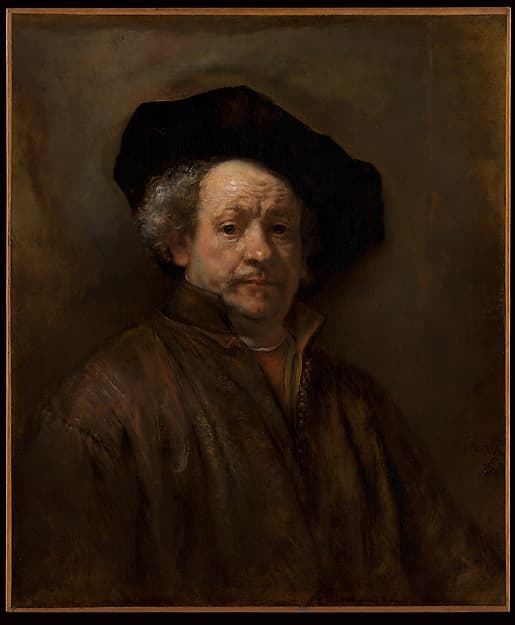
Rembrandt van Rijn, the son of a Leiden miller, never travelled abroad, though he learned a great deal from the Italians; his chiaroscuro became proverbial. In the 1630s he was the most sought-after portraitist in Amsterdam, and in 1656 he declared himself insolvent. He left about three hundred paintings, almost as many etchings and some forty painted self-portraits; Danaë and The Holy Family have been in the Hermitage since 1772.
Biography
The first signatures on his works look like this: “R”, the monogram “RH”, and from 1629 “RHL”, where the “L” apparently stands for Leiden. In 1632 he briefly tries “RHL-van Rijn”, then keeps his first name alone, “Rembrant”, and in 1633 adds a “d” to it and never drops it again. Why he wanted the extra letter is unknown. It seems to me the first sign of a man who knew for certain that his name would be read.
He was born on 15 July 1606 in Leiden, the ninth child in the prosperous family of the miller Harmen Gerritszoon van Rijn; his mother, Neeltgen, was a baker's daughter. He attended the Latin school and in 1620 was enrolled at Leiden University, but painting drew him, and he was apprenticed to Jacob van Swanenburg. Then came six months, short but important, with the history painter Pieter Lastman in Amsterdam.
In the mid-1620s he returned to Leiden and opened a shared studio with his friend Jan Lievens. They so often took up the same subjects and so readily borrowed each other's discoveries that art historians still find it hard to separate their works of 1628–1632. In The Stoning of Saint Stephen (1625) he put himself into the crowd. From 1627 he had pupils, the first known of them Gerrit Dou. In 1629 he caught the eye of Constantijn Huygens, secretary to the Prince of Orange, who compared Judas Returning the Thirty Pieces of Silver with the best that Italy, and even antiquity, had known. Through Huygens came court commissions: for the stadtholder Frederick Henry, Rembrandt painted The Raising of the Cross and The Descent from the Cross. In one of his letters to Huygens he explained, for the only time, what he was striving for: “the greatest and most natural movement”.
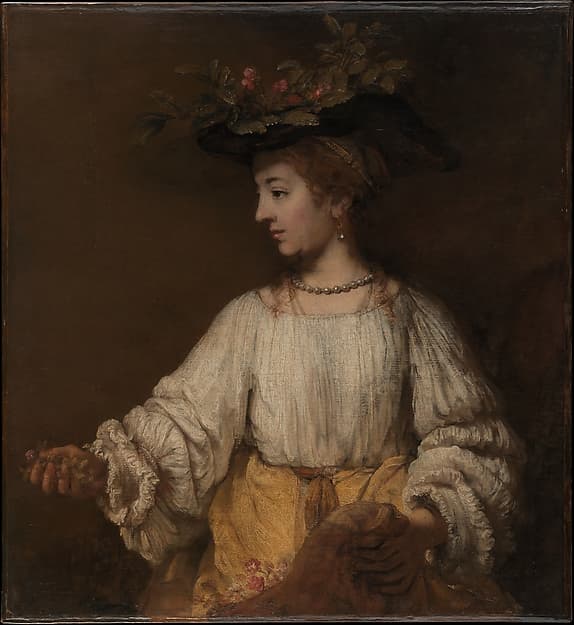
At the end of 1631 he moved to Amsterdam and lodged with the art dealer Hendrick van Uylenburgh. Fame came with The Anatomy Lesson of Dr Nicolaes Tulp (1632). Instead of standing in rows of faces turned towards the viewer, the surgeons are gathered around the body in a pyramid, each busy with his own concern. In 1634 he married his host's cousin, Saskia van Uylenburgh, daughter of a former burgomaster of Leeuwarden, and that same year became a citizen of Amsterdam and a member of the painters' guild. Ferdinand Bol and Govert Flinck joined the studio. He painted Saskia constantly, including as Flora (1634). In 1639 the family bought a house on the Breestraat, in a quarter that was becoming Jewish; neighbours posed for his Old Testament scenes. The house filled up with things: Italian paintings, prints, antique busts, weapons, musical instruments. These years also produced Danaë (1636/1643), which Catherine II bought for the Hermitage in 1772 from the Crozat collection, together with six more of his paintings.
Three children died in infancy; only Titus, born in 1641, survived. Saskia died in 1642; the drawings of her lying ill are among his most bitter sheets.
In that same year, 1642, The Night Watch was finished, officially The Company of Captain Frans Banninck Cocq. It is one of six group portraits commissioned for the new hall of the civic guard. In place of a sedate row of figures Rembrandt showed movement: the company is setting out, a musket goes off, light catches some, others sink into shadow. There is no night in the picture, which had darkened from varnish and soot and until the restoration of the 1940s looked like a night scene; and it is not a watch at all, but a ceremonial march-out. The legend that the painting was a failure appears to have no serious basis. I would put the cooling of his patrons in the 1640s down rather to the fashion for meticulous detail, from which Rembrandt was moving away towards a broad brushstroke.
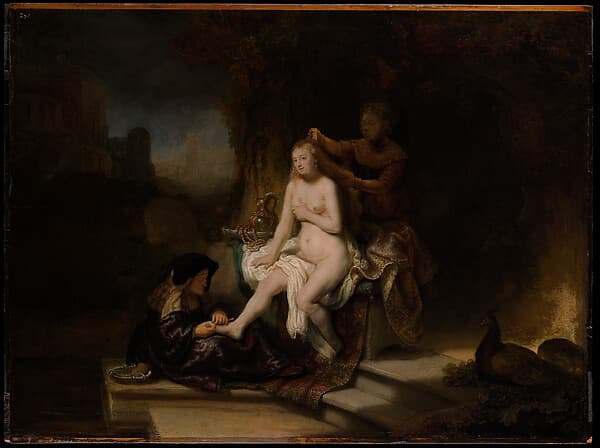
In the 1640s there were fewer paintings, but many etchings and drawings with landscapes, such as The Three Trees (1643). Etching earned him no less than painting, and outside the Netherlands he was long known above all as a printmaker. He pulled the impressions himself and reworked the plates, so that a single print could go through ten or twelve states. From 1649 Hendrickje Stoffels, a former servant, was at his side. In 1654 the church council censured her for living with the painter, and in October their daughter Cornelia was born. Bathsheba at Her Bath and the portrait of Jan Six pulling on a glove are dated to the same year, and a year earlier he had painted Aristotle with a Bust of Homer for the Sicilian Antonio Ruffo.
He lived beyond his means; the house on the Breestraat had been bought on credit. In July 1656 Rembrandt himself declared insolvency and voluntarily handed his property over to his creditors. In 1657–1658 everything was sold at auction. The inventory of 363 items survives: busts of Roman emperors, two globes, armour, Asian porcelain, two lion skins, a bird of paradise. The family moved to modest lodgings on the Rozengracht. In 1660 Titus and Hendrickje set up an art-dealing firm that formally employed the painter, and he was able to go on working. Because of the debts and lawsuits some eighty notarial documents about him survive, more than for most artists of his century.
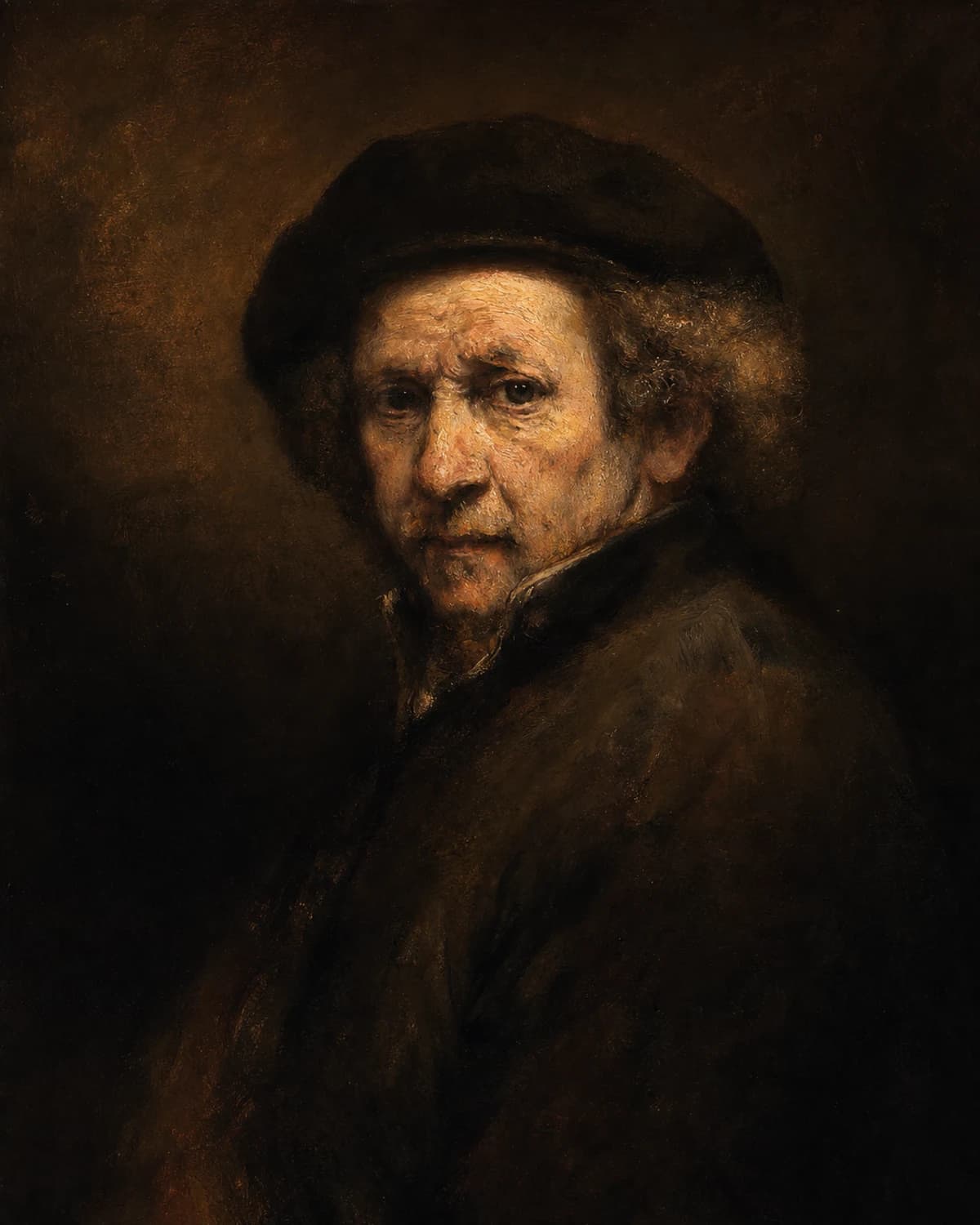
The late years brought The Conspiracy of Claudius Civilis (1661) for the new town hall; the burgomasters returned the picture within a few weeks, and a quarter of it survives, now in Stockholm. The Syndics (1662), on the other hand, satisfied those who ordered it. Then came The Jewish Bride and the unfinished Return of the Prodigal Son, thick paint, in places laid on with a palette knife. Cosimo III de' Medici visited him twice and took a self-portrait back to Florence. More than forty painted self-portraits are now counted, and thirty-one etched ones; in the Cologne picture of 1662 he smiles bitterly, in the last ones, from 1669, he simply looks.
Hendrickje died in July 1663, Titus in September 1668. Rembrandt died on 4 October 1669 in Amsterdam and four days later was buried in the Westerkerk.
Artist works
Works by the artist
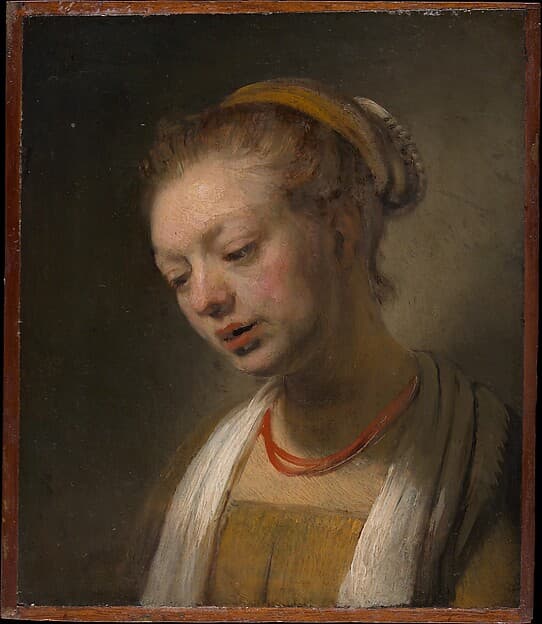
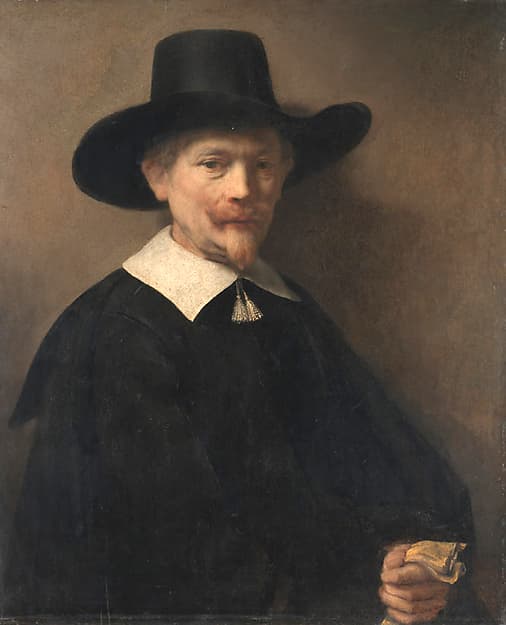
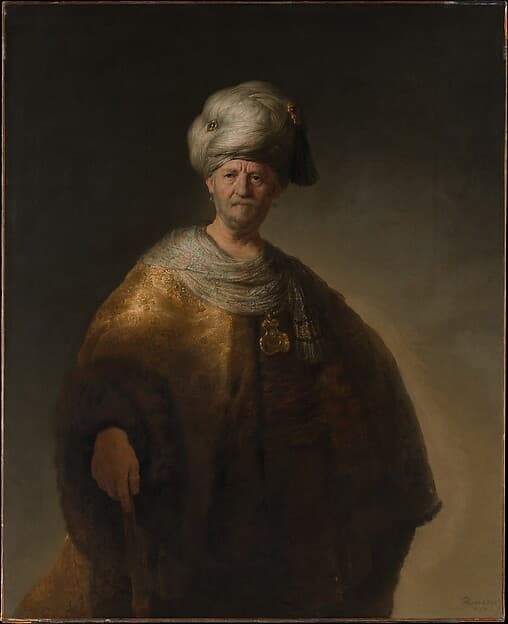
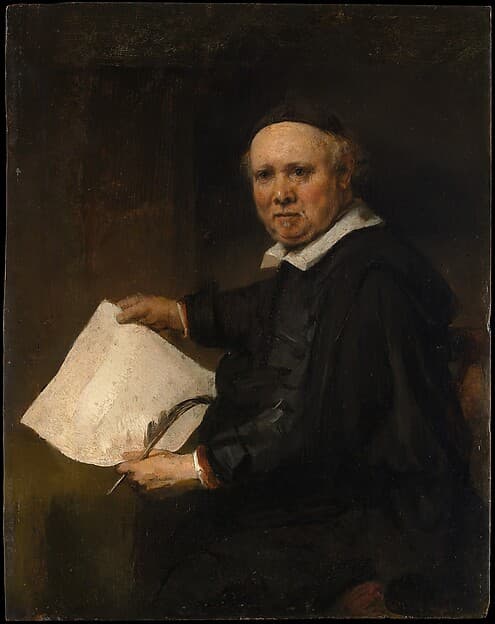
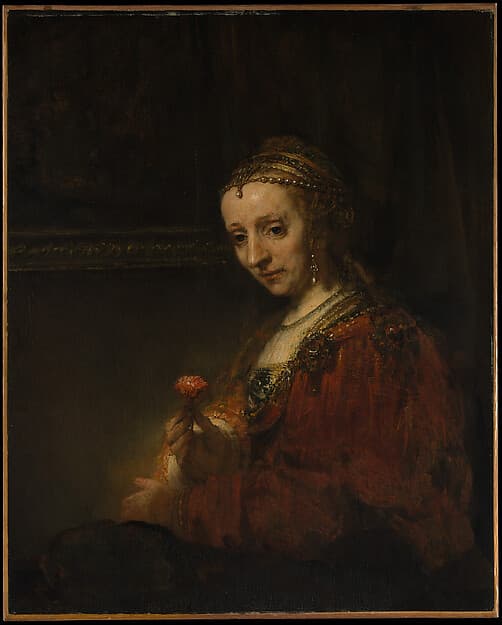
Works by Rembrandt available in this edition of NEOARCA.
Related context
Associations
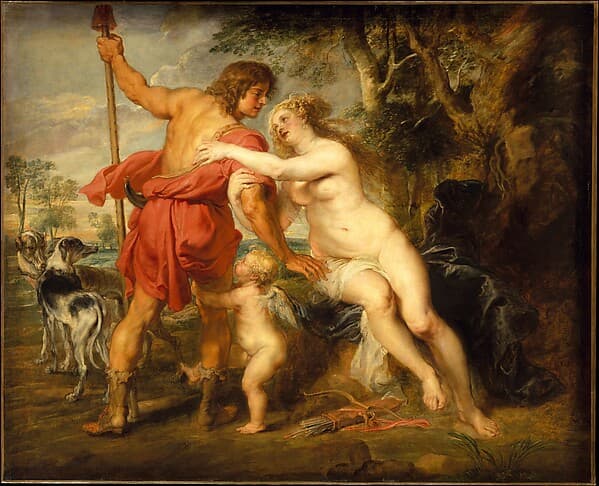
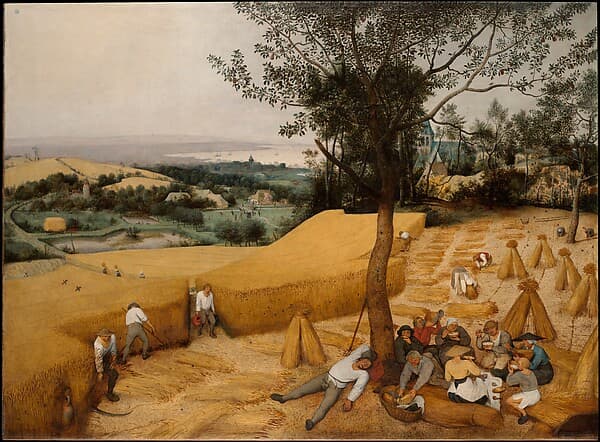
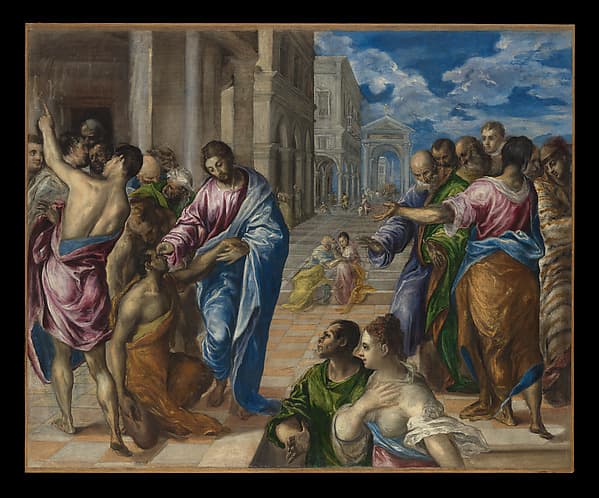
Works connected through artistic movements, cultural context and period. Priced works available in this market appear first.
Profile notes
Profile and sources
Image
Artist image
На основе открытого изображения: Rembrandt; Wikimedia Commons; Public domain.
