
06.04.1483–06.04.1520
Raphael
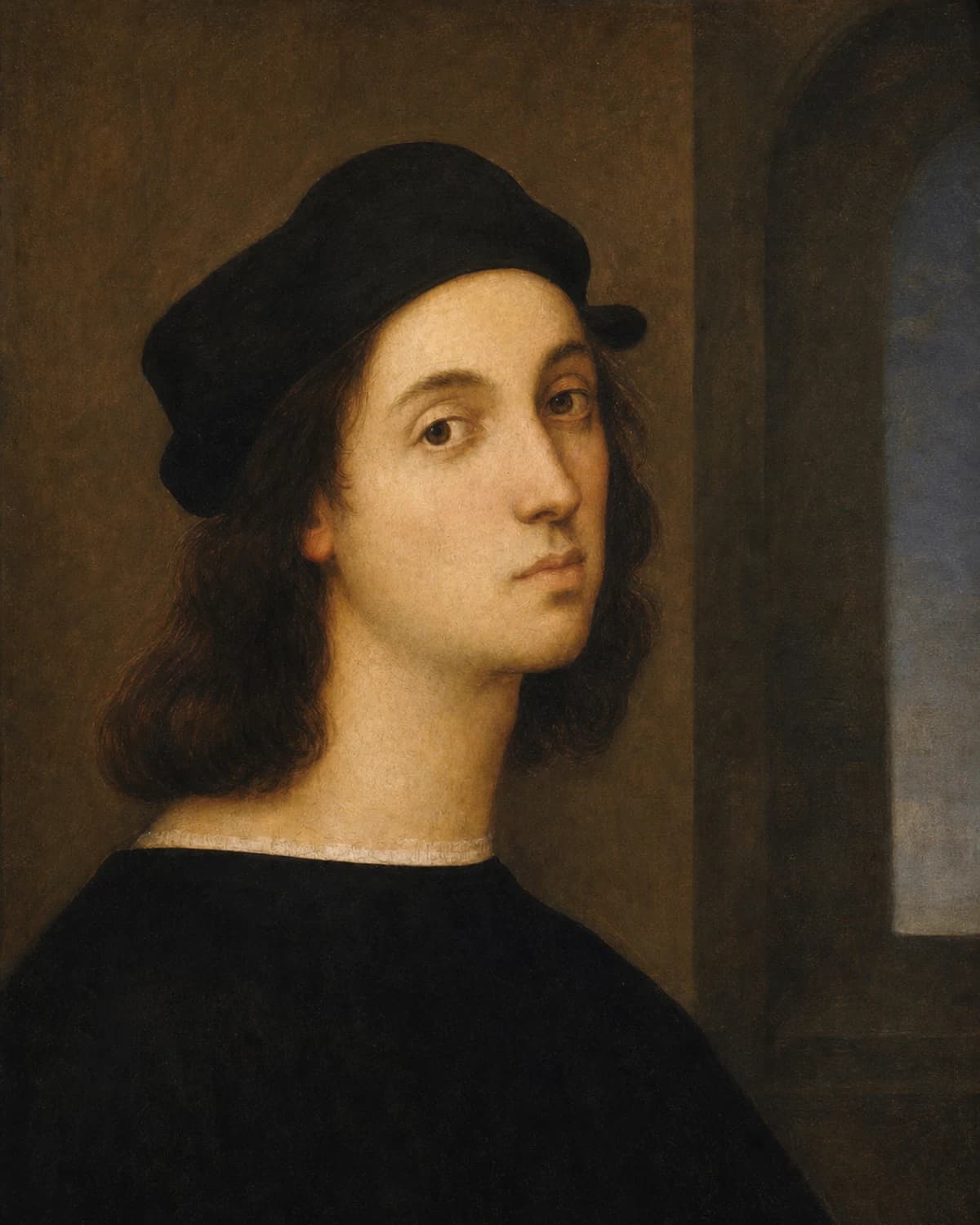
Raphael, the son of a court painter to the dukes of Urbino, in twelve years in Rome painted the Vatican Stanze, made cartoons for the Sistine Chapel tapestries and directed the building of St Peter's Basilica. His Sistine Madonna has been in Dresden since 1754. He died at thirty-seven and, at his own wish, was buried in the Pantheon.
Biography
In April 1520, while mourners were taking leave of the dead man in Raphael's Roman house in the Borgo quarter, the unfinished Transfiguration stood at the head of his bed. The lower part of the picture, with the apostles and the possessed boy, was later completed from his sketches by Giulio Romano. Raphael died on 6 April, Good Friday. It may have been his thirty-seventh birthday.
His date of birth is not entirely clear. Vasari writes that Raphael was also born on a Good Friday, which in 1483 fell on 28 March; 26 March and 6 April are given as well. The city is known for certain: Urbino, the small but highly cultivated capital of the Montefeltro dukes, part of the Papal States. His father, Giovanni Santi, was court painter there and wrote verse, including a rhymed chronicle of the life of Duke Federico. His mother, Magia, died in 1491, his father on 1 August 1494, and the eleven-year-old boy was left an orphan in the care of an uncle who was a priest. The court milieu gave him the manners that Vasari later praised so warmly; he did not, however, receive a full humanist education, and it is not even clear whether he read Latin fluently.
According to Vasari, his father placed him with Pietro Perugino “despite his mother's tears”. This touching detail seems doubtful to me: his mother died when he was eight, and historians dispute the early apprenticeship itself. What is reliable is this: around 1500 he was working as Perugino's assistant and had absorbed his manner so fully that, in Vasari's words, their hands could not be told apart. In December 1500 a document already calls him a master. His first documented work, an altarpiece for the church of Sant'Agostino in Città di Castello (1500–1501), survives only in fragments. In 1502 Pinturicchio called him to Siena to help with the cartoons for the frescoes of the Piccolomini Library. The Marriage of the Virgin (1504) repeats Perugino's composition, but its figures are drawn more freely than his teacher's.
From about 1504 he spent long periods in Florence. A letter of recommendation from October of that year survives, in which a patroness from Urbino calls him a sensible and well-mannered young man. His main lesson there was Leonardo: pyramidal groups, soft chiaroscuro, sfumato. Raphael made a drawing of Leonardo's lost Leda, and built his portrait of Maddalena Doni on the scheme of the recently painted Mona Lisa. In his Florentine years he painted some twenty Madonnas, among them the Madonna del Granduca (1505), the Madonna of the Goldfinch (1506) and La Belle Jardinière (1507–1508).
In the second half of 1508 he moved to Rome, where he lived for the rest of his life. He was summoned by Pope Julius II, probably on the advice of the architect Donato Bramante, his countryman and a distant relative. The first room he was given is now called the Stanza della Segnatura. On one wall is The School of Athens: Plato has the features of Leonardo, and Heraclitus, sitting on the steps, is painted from Michelangelo, who was then at work on the Sistine Chapel ceiling. On the others are the Disputation and Parnassus, with Apollo and the Muses. Then came the Stanza di Eliodoro, where in The Deliverance of Saint Peter (1513–1514) he joined three successive episodes, and the Stanza dell'Incendio del Borgo (1514), where Aeneas carries the old Anchises out of the fire. More and more of the work was done by pupils from his drawings. Michelangelo accused him of imitation and many years later wrote that Raphael owed all his art to him. Almost three centuries later, in 1824–1828, Karl Bryullov copied The School of Athens for the St Petersburg Academy of Arts.
In 1513 Leo X, a Medici, became pope, and he was warmer still towards Raphael. After Bramante's death in 1514 Raphael took charge of building St Peter's Basilica; from 1515 he oversaw all the antiquities being found in Rome, proposed measures to the pope against the destruction of ancient monuments, and conceived a measured plan of the ancient city, which he did not live to make. He completed Bramante's Vatican loggias, built the Chigi Chapel in Santa Maria del Popolo and began the Villa Madama. For the Sistine Chapel he made ten cartoons for tapestries on subjects from the Acts of the Apostles; the tapestries themselves were made in Brussels, and the seven surviving cartoons are now in the Victoria and Albert Museum in London. The workshop, according to Vasari, grew to fifty pupils and assistants. He did not engrave himself, but he gave drawings to Marcantonio Raimondi, and the engravings carried his compositions far beyond Italy.
Among the altarpieces of the Roman years are The Ecstasy of Saint Cecilia and the Sistine Madonna (1512–1513), painted for the church of San Sisto in Piacenza on the commission of Julius II; it has been in Dresden since 1754. The legend that Margherita Luti, La Fornarina, was the model for the Madonna is not supported by documents. The portrait of Julius II (1512), Vasari says, was so lifelike that people trembled before it as before the pope himself. The portrait of his friend Baldassare Castiglione (1514–1515) was later copied by Rubens and drawn by Rembrandt.
The illness lasted fifteen days. Raphael had time to make his confession and dictate his will; he left the workshop to Giulio Romano and Francesco Penni. He asked to be buried in the Pantheon, by the altar with a statue of the Madonna that he had commissioned from his pupil Lorenzetto.
Where exactly his remains lay was long unclear.
On 14 September 1833 the slab in the Pantheon was opened before seventy-five witnesses, among them Thorvaldsen, Overbeck and the Russian painters Karl Bryullov, Fyodor Bruni and Alexander Ivanov. The remains were shown to the public for a month and then moved into an ancient Roman sarcophagus given by Pope Gregory XVI. On it was carved a Latin couplet by Pietro Bembo: while he lived, nature feared he would surpass her, and when he was dying, she feared she would die with him.
Artist works
Works by the artist
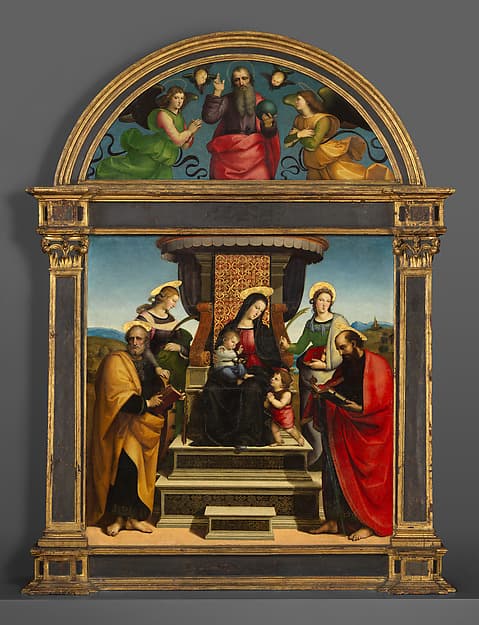
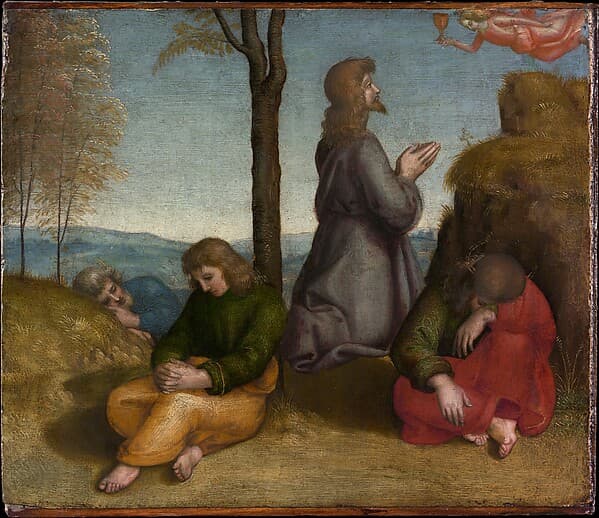
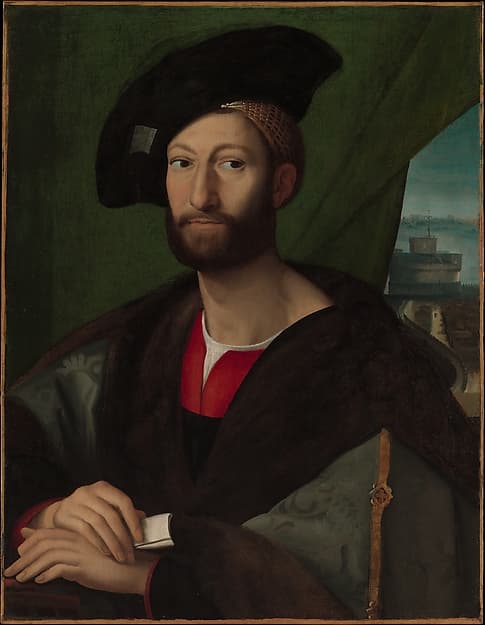
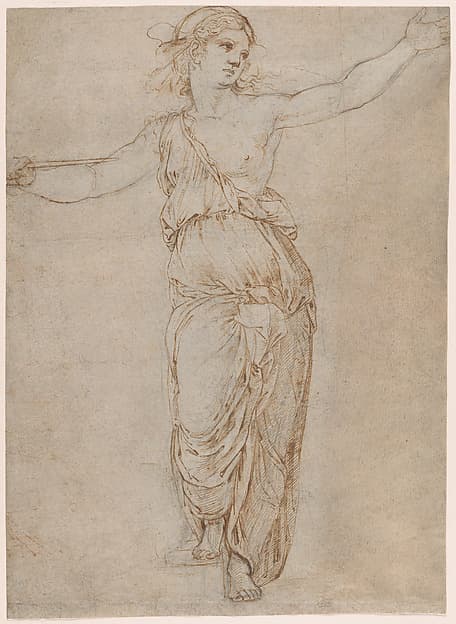
Works by Raphael available in this edition of NEOARCA.
Related context
Associations
Works connected through artistic movements, cultural context and period. Priced works available in this market appear first.
Profile notes
Profile and sources
Image
Artist image
На основе открытого изображения: Raphael; Wikimedia Commons; Public domain.
