
22.01.1886–21.06.1965
Piotr Buchkin
Piotr Buchkin (1886–1965) grew up in Uglich, studied under Vasily Mate at the Academy of Arts and in 1912–1914 travelled around Europe as an Academy pensioner. In 1918–1921 he served in the Baltic Fleet, and from 1921 he ran the technical department of the Raduga publishing house. He painted portraits, among them Chaliapin, taught, and published a book of memoirs, “About That in Memory”.
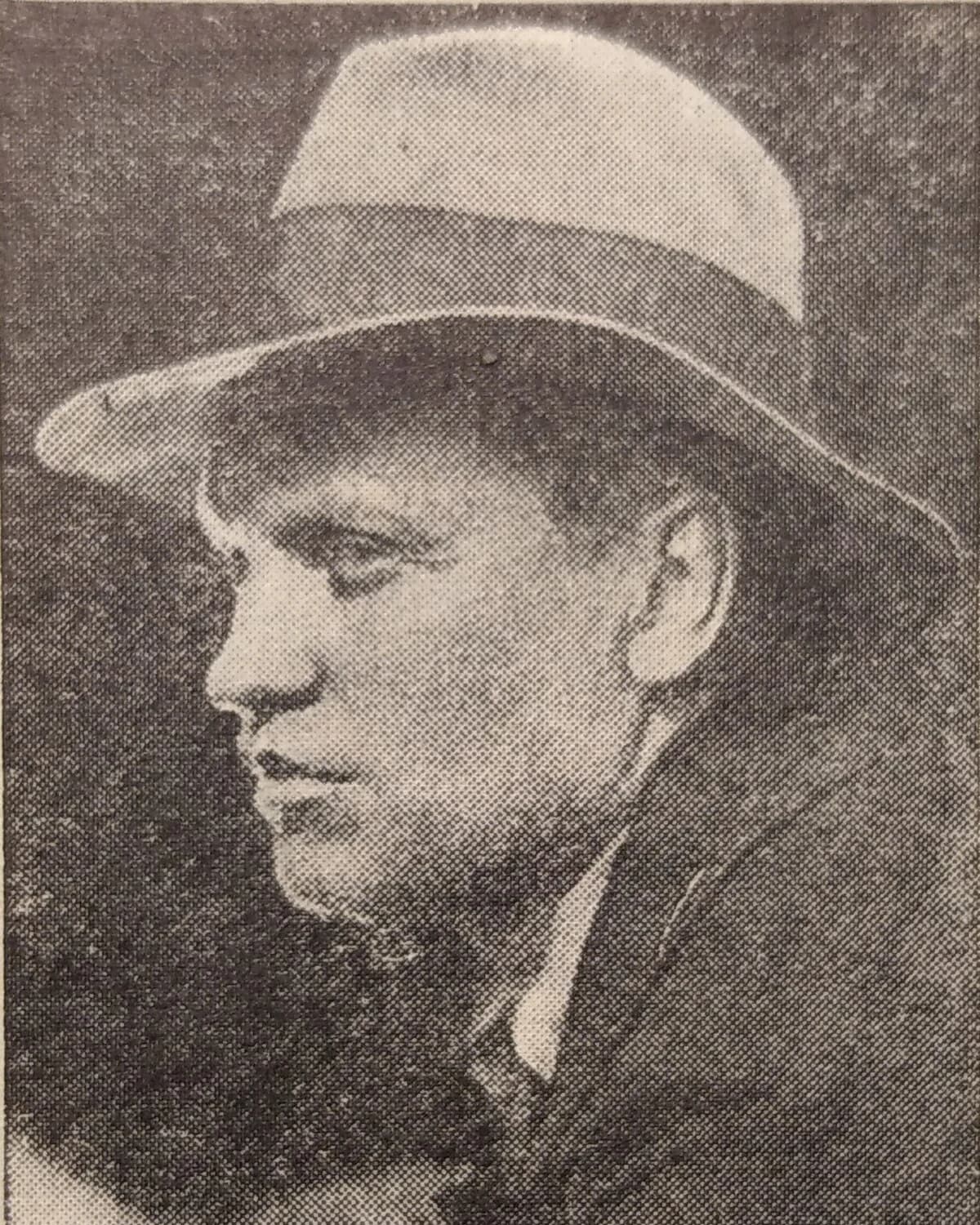
Biography
In 1937 Buchkin was arrested under Article 58, the political article of the Soviet criminal code, and ended up in Tyumen with his family. He had just been confirmed as professor of drawing at the Leningrad Institute of Painting, Sculpture and Architecture. A year later he was released and went home to Leningrad.
He was born on 22 January 1886 in the village of Sofronovo in Tver Governorate (now Bolshoye Sofronovo in Kashin urban district). In 1891 the family moved to Uglich. There he finished a three-year school, and he took his first drawing lessons from local icon painters. In 1899 he was sent to St Petersburg, to the Central School of Technical Drawing of Baron Stieglitz, to study under Nikolai Koshelev.
From 1904 he studied at the Higher Art School of the Academy of Arts, under Vasily Mate and Vasily Savinsky. In 1912 he graduated from Mate’s studio with the title of artist and the right to teach. As an Academy pensioner, that is, a graduate funded to study abroad, he spent two years, until 1914, travelling in Italy, France, Germany, Spain and other countries. Buchkin had been exhibiting since 1907. He painted portraits, genre scenes and landscapes, illustrated magazines and books, and worked in watercolour, red chalk, pastel, etching, oil and tempera. In 1914 he was admitted to the Kuindzhi Society of Artists, and in 1918 he was elected to the Society of Russian Watercolourists.
After the revolution, in 1918–1921, he served as a gunner in a submarine division of the Baltic Fleet. Then for fifteen years, from 1921 to 1936, he headed the technical department of the Leningrad publishing house Raduga and illustrated books for Leningrad and Moscow publishers. In the 1920s he designed children’s books: “Aeroplane” (1926, by an author hiding behind the pseudonym Yakovlev), “Two Ivans”, and “The Bear” by Mikhail Andreev. From 1932 he was a member of the Leningrad Union of Soviet Artists. In 1936–1940 he taught drawing at the Institute of Painting, Sculpture and Architecture of the Academy of Arts.
The list of his paintings brings very different subjects together. There are “On the Volga. Bathers” (1922), “Village under Snow” (1929) and “Autumn Fishing Season” (1931). There are “The Underground Meeting” (1937), “Lenin Speaking at the April Conference” (1939) and “Sailors Received by Mikhail Kalinin in 1940”. Later came “On the Threshing Floor” (1947), “The Collective-Farm Shepherd Boy” (1951) and “Pensioners” (1964). But he was best known for his portraits of people in the arts. He painted Lenin and Feodor Chaliapin from life; “Feodor Ivanovich Chaliapin” and a double portrait of Gorky and Chaliapin are dated 1957. He was regarded as a talented draughtsman. It seems to me that his choice of means really did depend on the kind of picture: portrait, landscape and narrative scene are each handled differently.
From 1947 Buchkin taught at the Mukhina Higher School of Art and Industry in Leningrad. He became a professor in 1952 and headed the department of monumental and decorative painting, that is, murals and mosaics for public buildings, in 1951–1955 and 1962–1965. In 1956 he received the title of Honoured Art Worker of the Russian Federation. In 1962 his book “About That in Memory: Notes of an Artist” was published; it was reissued in 1963 and 2006.
Buchkin died in Leningrad on 21 June 1965 and was buried in the Bogoslovskoye Cemetery. The gravestone carries a bust by Igor Krestovsky.
He left about 150 paintings to Uglich, and in 1968 a gallery bearing his name opened there. In the 1990s the building was handed to the Russian Orthodox Church and the gallery was closed. His works are in the State Russian Museum and the State Tretyakov Gallery, and in 1989–1992 they were shown in France at exhibitions and sales of the “Leningrad School”.
Related context
Associations
Works connected through artistic movements, cultural context and period. Priced works available in this market appear first.








Profile notes
Profile and sources
Image
Artist image
Unknown; Wikimedia Commons; Public domain.
