
13.07.1933–06.02.1963
Piero Manzoni
Piero Manzoni (1933–1963), in barely seven years of work, made the white “Achromes” of gesso, kaolin, cotton wool and bread rolls, lines kilometres long, the inflatable “Bodies of Air” and ninety cans of “Artist’s Shit”. His ironic experiments with the very notion of a work of art anticipated Conceptual art and influenced Italian Arte Povera.
Biography
On 4 July 1960, at the Angli shirt factory in Herning, Denmark, Piero Manzoni drew his longest line: 7,200 metres on paper. It was sealed in a zinc cylinder clad in sheets of lead. He planned to leave such lines in all the great cities of the world, so that together they would equal the length of the equator.
Manzoni was twenty-six. He had less than three years to live.
He was born on 13 July 1933 in Soncino, in the province of Cremona, the eldest of the five children of Count Egisto Manzoni and Valeria Meroni, whose family owned a textile mill. He grew up in Milan, completed the classical course at the Jesuit Istituto Leone XIII, where he studied alongside the poet Nanni Balestrini and the future publisher Vanni Scheiwiller, and enrolled in the law faculty of the Catholic University of the Sacred Heart. What brought him into contact with the avant-garde were the summer months his family spent in Albissola, where Lucio Fontana was working. As an artist Manzoni was self-taught and began with conventional landscapes and portraits in oil. In 1956, at twenty-three, he exhibited for the first time at a fair in the castle of Soncino and issued his first manifesto, “For the Discovery of a Zone of Images”. A year later came the manifesto “For an Organic Painting” and his signature, together with Enrico Baj’s Milanese Nuclear Art group, under the “Manifesto Against Style”.
Everything changed in January 1957, when Yves Klein showed his “Blue Epoch”, eleven identical blue monochromes, at the Galleria Apollinaire in Milan. That autumn Manzoni began making white paintings, which a little over a year later he named “Achromes”, that is, colourless. The first were rough, gesso on jute sacking. In 1958 he began dipping light canvas into a mixture of gesso, glue and kaolin, the white clay used for porcelain, and creasing it into folds. Later came cotton wool, fibreglass, rabbit fur, straw, polystyrene, phosphorescent paint and cobalt chloride, which changes colour over time, Milanese bread rolls, stones, and parcels of newspaper tied with string and sealed with wax like postal packages.
In the summer of 1958 he went to Rotterdam, made friends with the artist Gust Romijn and the dealer Hans Sonnenberg, and on 10 September opened an exhibition there of seventeen “Achromes”.
In 1959 Manzoni left the Nuclear Art group and with Enrico Castellani founded the magazine Azimuth, and at the end of the year a gallery of the same name, Azimut, in Milan. Its first exhibition, in December, was “12 Lines”: cardboard tubes with lines of different lengths inside, the label giving the length and the date. Next came the “Bodies of Air”, forty-five balloons on tripods: depending on the price, the buyer either blew up the balloon himself or received it inflated with the artist’s breath. Hence “Artist’s Breath” of 1960, red, white and blue balloons on a wooden base. On 21 July 1960 he invited the public to take a direct part in consuming his works: he pressed his thumbprint onto hard-boiled eggs, and the visitors ate them on the spot.
1961 was his busiest year. Manzoni made the “Magic Bases”: anyone who stood on such a plinth became a work of art. He signed his name directly on people and issued them certificates of authenticity; among the seventy-three he signed were Umberto Eco, Marcel Broodthaers and the right shoes of the artists Franco Angeli and Mario Schifano. In May he filled and sealed ninety thirty-gram cans labelled “Artist’s Shit” and priced them by the weight of gold, and in August he showed them for the first time in Albissola. What is really inside is unknown: to open a can is to destroy the work, and there have been many theories, down to plaster. In the autumn he returned to Herning and set up in the factory park the “Base of the World”, a block of iron and bronze measuring 82 by 100 by 100 centimetres, placed upside down and dedicated to Galileo. To my mind, this is his most exact joke: the plinth stands on its head, and the exhibit on it turns out to be the whole globe.
In 1962 his work was in the exhibition “Nul” at the Stedelijk Museum in Amsterdam, and Scheiwiller published the portfolio “8 Tables of Verification”, eight photolithographs in an edition of sixty. On 6 February 1963 Manzoni died suddenly in his studio on Via Fiori Chiari in Milan; he was twenty-nine. That same year the publisher Jes Petersen brought out the book “Piero Manzoni: The Life and Works”, a hundred transparent plastic sheets with nothing on them but the title page. In 1967 the critic Germano Celant gathered young Italian artists in the first Arte Povera exhibition in Genoa; Manzoni did not live to see it, but his work had anticipated the group. Retrospectives followed at the Musée d’Art Moderne de la Ville de Paris (1991), the Castello di Rivoli near Turin (1992), the Serpentine Gallery in London (1998), the MADRE museum in Naples (2007) and the Palazzo Reale in Milan (2014). Milan named after him the lane by the Bar Jamaica in Brera, where he would often linger over conversation and cards.
Profile notes
Profile and sources
Image
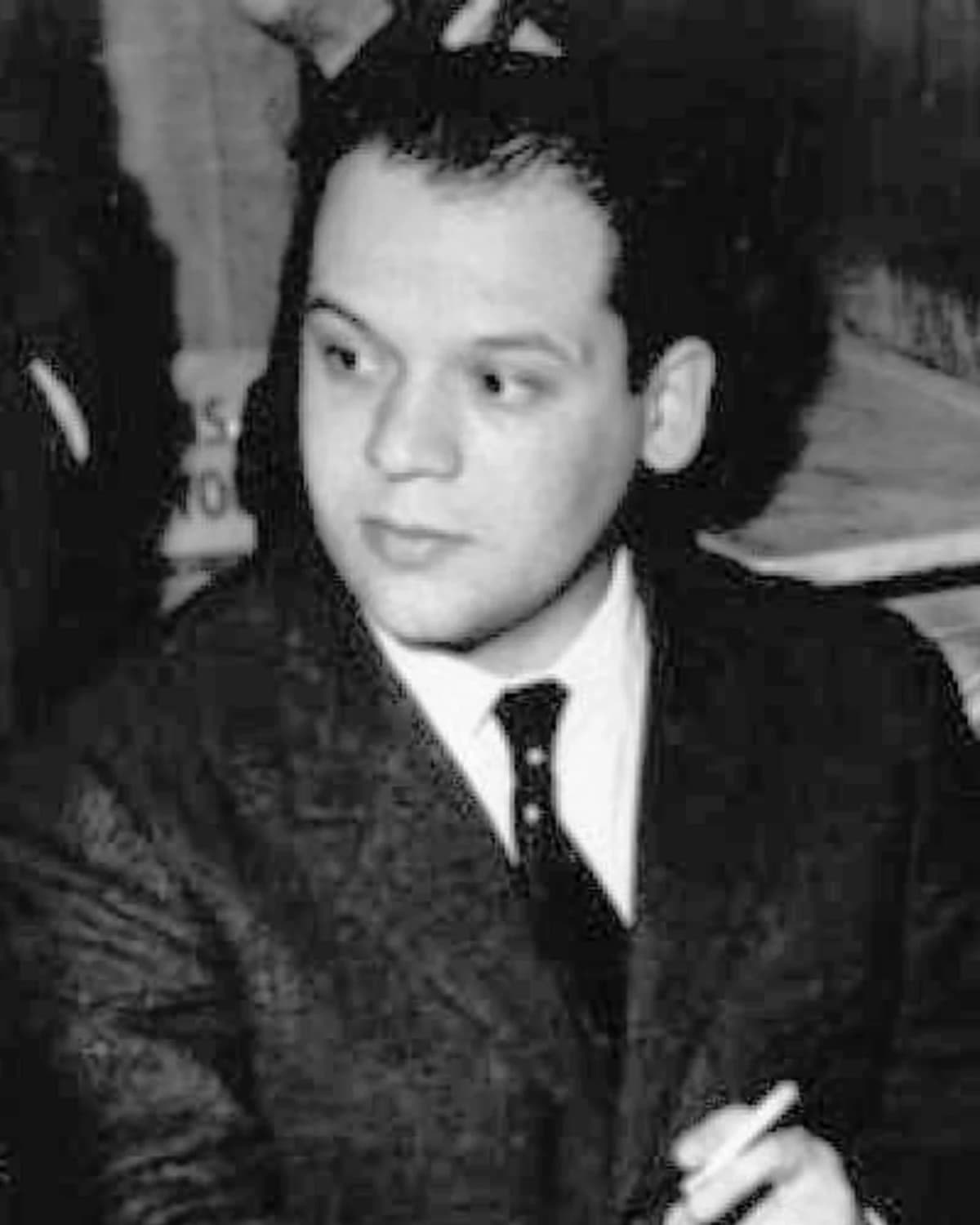
Artist image
Gianfranco; Wikimedia Commons; Public domain.
