
21.06.1921–27.11.2009
Peter Kravchenko
Peter Kravchenko was born in the Podil district of Kyiv, graduated from the Shevchenko art school, found himself in Germany after the war and lived in Sydney from 1949. He made props at the ABC television studio for twenty years and for forty years served as secretary of the Ukrainian Artists Society of Australia. In 1997 the Museum of History of Kyiv held his exhibition “Burden of Ukraine through the Ages”.
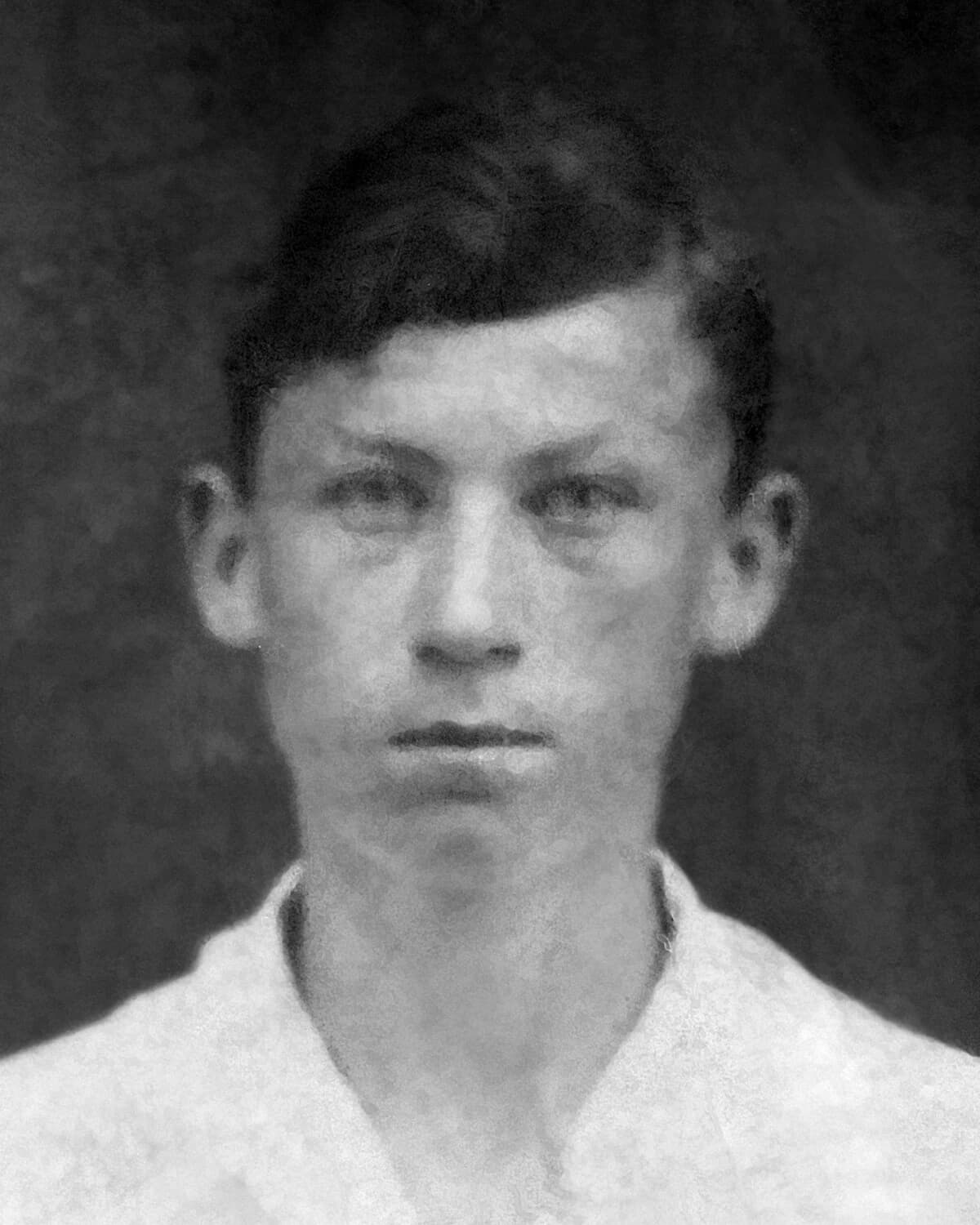
Biography
Peter Kravchenko’s father, Mitrofan Hryhorovych, made and sold ice cream in the summer and worked in glass from autumn. The son was born into this family on 21 June 1921 in the Podil district of Kyiv.
In 1940 he graduated from the Taras Shevchenko State Art School in Kyiv. During the war he was a German prisoner. What happened to him in those years, there is no information, and it is hard to check. After the war he stayed in Germany and worked as a set designer. In 1949 he went to Australia and settled in Sydney.
The start was slow: under a state employment contract he was sent to a brick factory, and when the contract ended he took a job on the railway. At the same time he went on studying and graduated from the Institute of Commercial Arts and the School of Television Training. These courses shaped his next job: for twenty years he worked at the ABC Television studio in Sydney, in the wardrobe department, making props for shows and television series. He is credited with the bandolier, belts and badges for the period police uniforms in the series “Ben Hall”.
Alongside this went work within the Ukrainian community. He designed sets for plays and concerts, made artistic programmes for national celebrations and concerts, drew the diploma of the Australian Federation of Ukrainian Organisations and the award of the Foundation for Ukrainian Studies in Australia (FUSA), and illustrated books.
In 1967 he became one of the founders of the Ukrainian Artists Society of Australia and from 1967 to 2007 served as its acting secretary. In 1975 he took part in founding FUSA and remained a permanent member, and in 1991–1998 he sat on its directorate.
Kravchenko showed his paintings at the society’s exhibitions in Lidcombe, Wollongong, Sydney, Adelaide and Melbourne. In 1992 a solo exhibition of 65 works was held in Sydney. In the same year three of his works, “On Ivan Kupala”, “Pereyaslivska Rada” and “Princess Olga”, were shown at the exhibition “Unity” in Kyiv. He donated a portrait of Taras Shevchenko, “My Thoughts”, to the Taras Shevchenko National Museum, where it is on display. In 1994 he was accepted as an honorary member of the National Union of Artists of Ukraine. In 1997 the Museum of History of Kyiv organised his solo exhibition “Burden of Ukraine through the Ages”, timed to coincide with the 2nd World Forum of Ukrainians. Two years later an album of the same name appeared: 65 examples of Ukrainian folk costume. To my mind, this is the most coherent of his works, because the exhibition and the book share a single theme.
A noticeable part of his activity concerned the post office and diplomacy. In 1996 he organised an exhibition in Kyiv for the 150th anniversary of Nicholas Miklouho-Maclay and secured the issue of a postage stamp by Ukrposhta marking the date. In 1998 a stamp for the 50th anniversary of the Ukrainian settlement in Australia was issued thanks to his efforts. In 2000 he arranged for a delegation of the Kyiv City Council to come to Sydney to establish ties between the two cities; the delegation brought as a gift to Sydney’s Ukrainians a sculpture-monument, “Shevchenko’s Dumas”.
He was an honorary member of the International Charitable Foundation “Spiritual Heritage” (Kyiv) and an accredited correspondent of the newspaper “The Free Thought”. He received diplomas and medals from the Australian Federation of Ukrainian Organisations and the Union for the Liberation of Ukraine, the gold medal “For Patronage” of the International Charitable Foundation “Ukrainian House” (Kyiv), awards from the “Spiritual Heritage” foundation, and certificates of merit from the Ukrainian Autocephalous Orthodox Church in Australia and the Ukrainian community of Sydney. In 2003 the Ministry of Culture and Arts of Ukraine awarded him its Diploma.
Peter Kravchenko died in Sydney on 27 November 2009.
Profile notes
Profile and sources
Image
Artist image
Unknown author Unknown author; Wikimedia Commons; Public domain.
