
15.01.1949–present
Pedro Pablo Oliva
Pedro Pablo Oliva (born 1949) studied at the art school of his native Pinar del Río and at the National School of Art in Havana, and has exhibited since 1974. His painting “The Great Blackout” (1994) is about the Cuban years of the “Special Period”. He began a series of portraits of Fidel Castro, “The Great Grandfather”, in 2003, and since 2005 has also worked in bronze.
Biography
In 1998 Pedro Pablo Oliva founded a studio-house in Pinar del Río with his own money. Its purpose was practical: to support the art, literature and culture of his native province. It bears his name.
He was born on 15 January 1949 in Pinar del Río. From 1961 to 1964 he studied at the provincial school of plastic arts there, then specialised in painting and drawing at the National School of Art in Cuba, in the Cubanacán district of Havana. He graduated in 1970. Since 1974 his work has been shown in solo and group exhibitions in Cuba and abroad. It is held in the National Museum of Fine Arts in Havana, the José Martí National Library, the Bacardí Museum in Santiago de Cuba, the art museum in Pinar del Río, the headquarters of the Food and Agriculture Organization of the United Nations (FAO) in Rome, the Oswaldo Guayasamín Foundation in Quito and the San Diego Museum of Art in California. There are also pieces in private collections in Canada, France, Italy, Spain, Brazil, Switzerland, Mexico, Germany and the United States. He is a member of the National Union of Writers and Artists of Cuba (UNEAC), the state-recognised association of Cuban writers and artists, and of the International Association of Art (AIAP).
Critics see the influence of Neo-Expressionism in Oliva’s manner: an intense palette and a great deal of colour. Children, animals and fantastic figures often appear in his paintings. The Cuban critic Hortensia Montero wrote that he “mythologises lived experience and strips false myths of their sacredness”. I would add that this move is easy to see in his large narrative works. The best known of them, “The Great Blackout” (1994), conveys the uncertainty in which the island lived in the 1990s, during the “Special Period” after the collapse of the socialist bloc. In 2000, at the Acacia gallery in Havana, he showed the exhibition “I Want to Paint in Peace…” and a work called “The Unfinished Miracle of the Loaves and Fishes”, a chronicle of the visit of John Paul II to Cuba. From 2003 Oliva painted a series of portraits of Fidel Castro under the title “The Great Grandfather”, in which he tried to give a personal, domestic image of the country’s leader at the time. In 2005 he began working in bronze.
In 2011 Oliva was removed from his seat as a delegate of the National Assembly of People’s Power for the province of Pinar del Río. The occasion was a letter of his published on the blog of Yoani Sánchez, and remarks made on the programme of Edmundo García in Miami. The decision was explained as a violation of the code of ethics.
He continues to work in Cuba. In 2014 an exhibition, “Utopias and Dissent”, was held in his studio in Pinar del Río; later, during the tenth Havana Biennial, he showed work in a studio in Old Havana.
Awards: the Distinction for National Culture from the Council of State of Cuba (1987), the Alejo Carpentier Medal (1994), the Medal of Honorary Members of the FAO in Rome (1997) and the National Prize for Plastic Arts (2006).
Profile notes
Profile and sources
Image
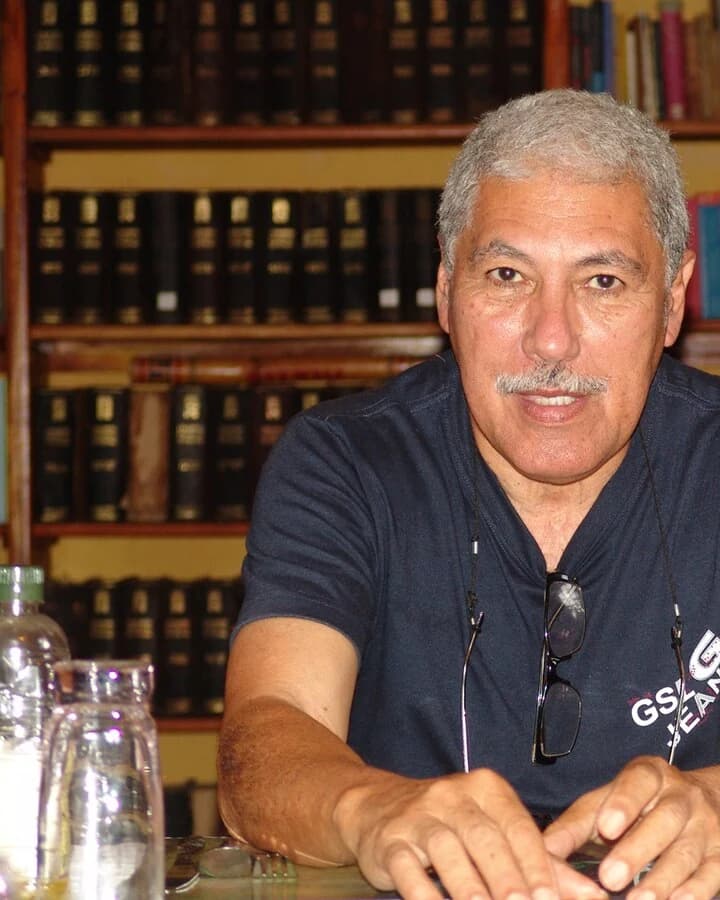
Artist image
Silvia Elena Oliva Sainz; Wikimedia Commons; CC BY-SA 4.0.
