
23.07.1851–21.11.1909
Peder Severin Krøyer
Peder Severin Krøyer was born in Stavanger, grew up in Copenhagen in the household of his zoologist uncle, and from 1882 worked in Skagen, on the northern tip of Jutland, almost every summer. The circle of the Skagen Painters formed around him. He painted fishermen, bathers on the beach, group portraits and summer evenings by the sea; his canvases are in the Skagens Museum and the Hirschsprung Collection.
Biography
The story that “Summer Evening on Skagen’s Southern Beach” was painted right on the shore was confirmed by the conservation of 2005: grains of sand were found in the paint layer all over the canvas. The painting measures about 100 by 150 centimetres, and the artist, it seems, carried it out onto the beach. The figures of Anna Ancher and Marie Krøyer may have been painted from photographs: two pictures survive in which both women walk along the water’s edge.
Krøyer was born in Stavanger on 23 July 1851 to an unmarried mother, Ellen Cecilie Gjesdal. She was judged unfit to raise a child, and the boy was taken in by her sister Bertha Cecilie, the wife of the Danish zoologist Henrik Nikolai Krøyer. He moved to Copenhagen, took his foster father’s surname and showed an early gift for drawing: in the early 1860s he illustrated one of his foster father’s publications on marine life. From 1864 to 1870 he studied at the Royal Danish Academy of Fine Arts, and Frederik Vermehren is named among his teachers. In 1871 he made his debut at the Charlottenborg exhibition with a portrait of a friend, the painter Frans Schwartz, and he went on exhibiting there all his life. In 1874 the collector Heinrich Hirschsprung bought his first works, four watercolours of fishermen. This began a friendship and a patronage that lasted many years. Hirschsprung’s collection forms the basis of the Hirschsprung Museum in Copenhagen, which still holds many of Krøyer’s works.
In 1877 Krøyer received a two-year travel scholarship from the Academy, and Hirschsprung’s help allowed him to extend the journeys by another two years. Until 1881 he lived and studied in Germany and France; in Paris he worked with Léon Bonnat and saw the work of the Impressionists: Monet, Sisley, Degas, Renoir, Manet. In 1878 he visited Spain and Italy (Florence, Siena, Rome) and painted a large social-realist picture, “Italian Village Hat Makers”. The Danish public received it with indignation: the sweating, dirty craftsmen were thought a repellent subject. Whether it was a success in Paris, and whether it was shown at an international exhibition in Vienna in 1882, the sources report differently, and I would not insist on the details.
In 1882, back in Denmark, he spent the months from June to October in Skagen, then a remote fishing village at the very north of the country. He later pointed to his meeting with Anna and Michael Ancher in Paris, and to the accounts of Skagen given by Laurits Tuxen and Holger Drachmann, as the reason for the trip. That first summer Drachmann, Ancher and a Swedish painter, Björck, worked alongside him; in a letter to his mother of 2 August 1882 Krøyer wrote of the pleasant companionship, because of which he had hardly read the books he had brought. After that, summers in Skagen became a fixture; he spent the winters in Copenhagen, where he painted large commissioned portraits, or travelling. The very notion of the Skagen Painters took shape around him.
In 1888 in Paris he met Marie Triepcke, whom he had known in Copenhagen. They married on 23 July 1889, the artist’s birthday, at her parents’ house in Germany, and then travelled in Italy for more than two years. Marie was also a painter and often posed for her husband. In 1894 the couple took over a house in Skagen Plantation, named “Krøyer’s House”, and in 1897 a villa on Bergensgade in Copenhagen was built to a design by Ulrik Plesner. Their daughter Vibeke was born in January 1895. The marriage was dissolved in 1905.
Many of his best-known works were painted in the 1890s, among them various subjects of summer evenings on the Skagen shore. He painted so many portraits that he became a man of means. Most of his group canvases are five works with areas of between two and a half and fourteen square metres. The catalogue of his oil paintings compiled in 1923 lists 803 pictures. Honours followed one after another: a gold medal in London (1884), the Grand Prix at the Exposition Universelle in Paris (1889), a gold medal in Berlin (1891), a medal in Chicago (1893), the Grand Prix and a gold medal in Paris (1900). In 1906 he finished “Midsummer Eve Bonfire on Skagen Beach”: around a huge fire gather people of the arts and public figures from the Skagen circle.
For the last ten years of his life Krøyer’s eyesight weakened until he went completely blind, but he kept on painting and made his last works while seeing almost nothing. He was several times in hospital. He died in Skagen in the night of 21 November 1909 (by other accounts, 20 November) and was buried in the cemetery at Skagen.
Artist works
Works by the artist
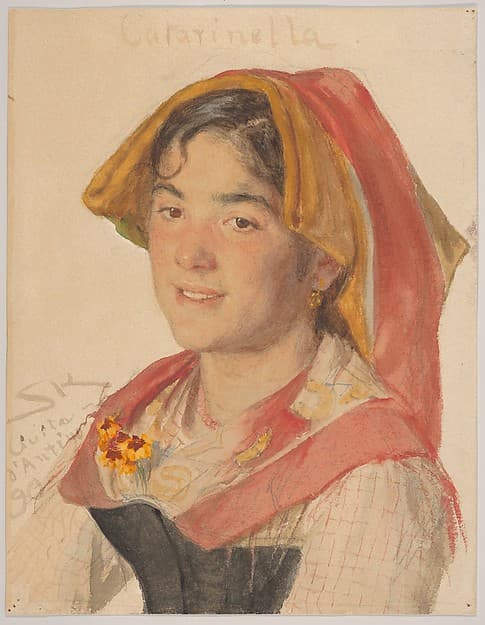
Works by Peder Severin Krøyer available in this edition of NEOARCA.
Profile notes