
07.06.1848–08.05.1903
Paul Gauguin
Paul Gauguin (1848–1903) worked as a stockbroker for more than ten years and painted on Sundays with Pissarro, and at 35 decided to live by painting alone. By way of Pont-Aven, Martinique and Arles, where he worked beside Van Gogh, he came to the flat pure colour of “The Yellow Christ”. From 1891, with a two-year break in France, he lived on Tahiti, and he died in the Marquesas Islands.
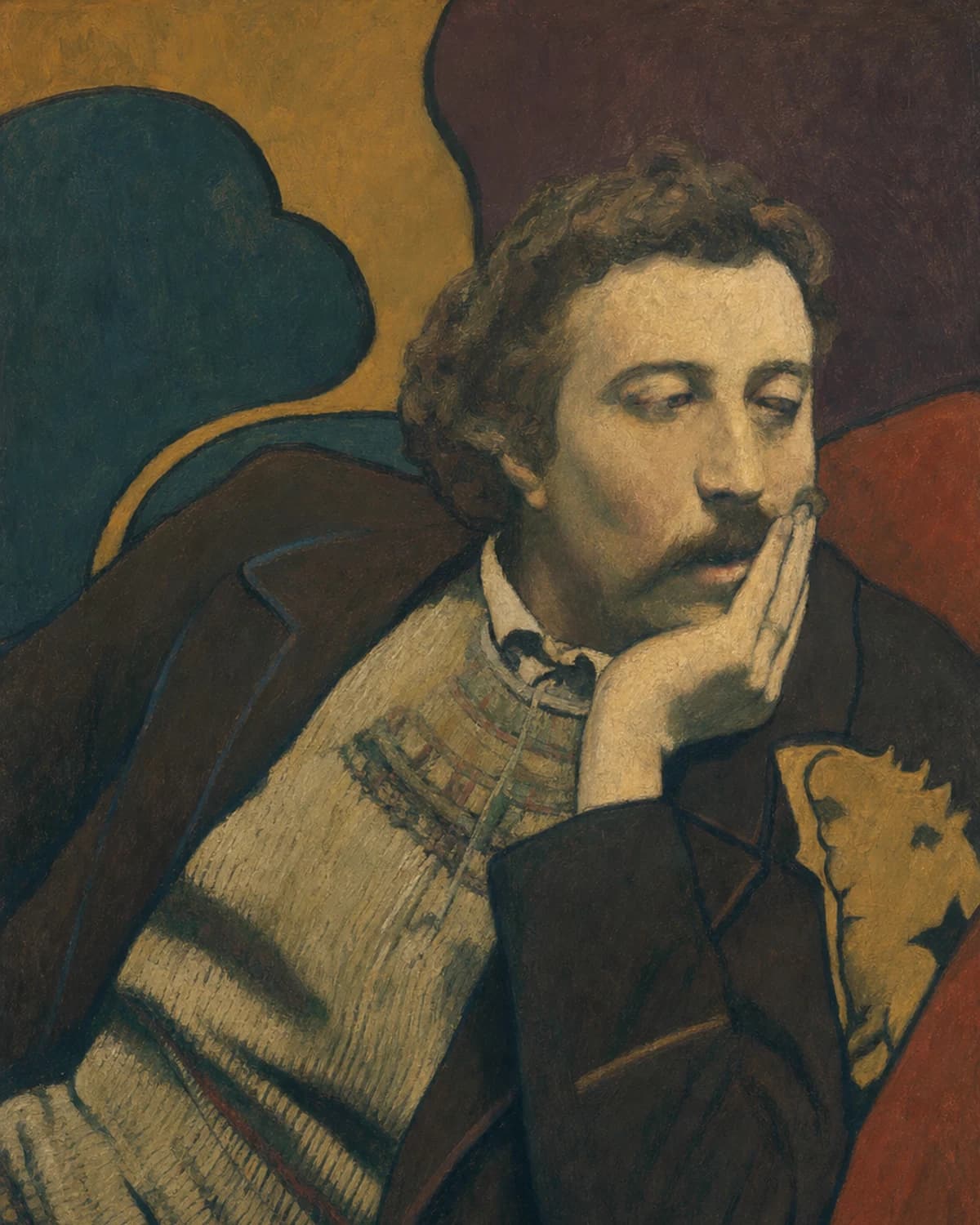
Biography
“I dig from half past five in the morning until six in the evening, under the tropical sun and in the rain,” Paul Gauguin wrote to his wife from Panama in 1887. He had gone there with the young painter Charles Laval, dreaming of buying land on the little island of Taboga and living on fish and fruit, but in Colón he ran out of money and hired himself out as a labourer on the building of the Panama Canal. At night, he complained, the mosquitoes ate him alive. Buying land came to nothing. From June to November the two friends lived on Martinique, near Saint-Pierre, in a hut that leaked when it rained, and Gauguin brought back from there about a dozen bright paintings of people in the open air.
He was born on 7 June 1848 in Paris. His father, Clovis Gauguin, was a liberal journalist; his mother, Aline, was the daughter of the writer and socialist Flora Tristan. Gauguin worshipped his grandmother and kept her books with him to the end of his life. The family set off for Peru, to his mother’s wealthy relatives, his father died on the way, and until the age of six the boy grew up in Lima among nurses and servants. He remembered Peru all his life. After political upheavals in Peru his mother went back to France, and Paul was left with his grandfather in Orléans.
As a young man Gauguin went to sea, first as a pilot’s assistant on merchant ships, then in the navy; he learned of his mother’s death in 1867 only several months later, in India. In the early 1870s a family friend, the collector Gustave Arosa, found him a post at the Paris Bourse. In 1873 Gauguin married a Dane, Mette-Sophie Gad, and over ten years they had five children. At the same time he began painting in his spare time, bought Impressionist paintings and became friends with Camille Pissarro, whom he visited on Sundays to paint in his garden. Pissarro brought him into the circle of artists, and Edgar Degas bought his work and urged the dealer Durand-Ruel to buy it too. At the fourth Impressionist exhibition, in 1879, the only sculpture was a bust of his son Emil, and later Gauguin showed paintings with the group as well. In 1882 the stock market crashed, and in October 1883 he wrote to Pissarro that he would live by painting whatever it cost. Attempts to support the family in Rouen and then in Copenhagen failed, and in 1885 he returned to Paris on his own, taking only his six-year-old son Clovis.
In the summer of 1886 he went to Pont-Aven for the first time, because Brittany was cheap.
He went back there after Martinique as well, together with Émile Bernard, Laval and Schuffenecker. Under the influence of folk art and Japanese prints he arrived at Cloisonnism: in “The Yellow Christ” (1889) the image is reduced to planes of pure colour within heavy dark outlines, without classical perspective or fine gradations of tone. The Martinique paintings were seen by the Van Gogh brothers; Theo bought three, and in the autumn of 1888, again at Theo’s instigation, Gauguin spent nine weeks working with Vincent in the Yellow House in Arles. On the evening of 23 December it all ended in a violent quarrel. Gauguin left, and they never saw each other again, but they went on writing to each other.
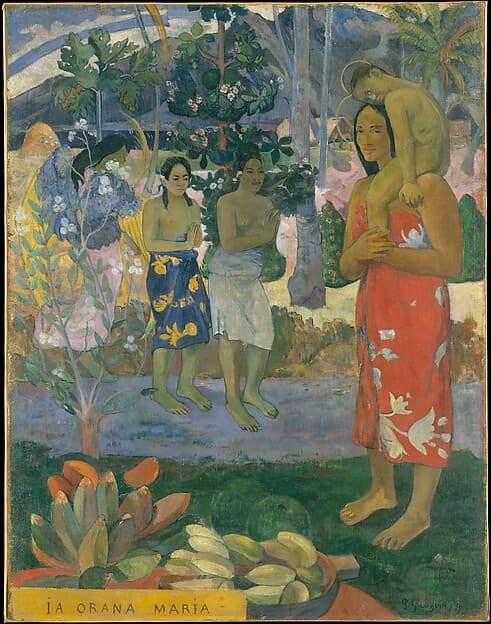
In February 1891 an auction at the Hôtel Drouot gave him the money for the journey, and on 1 April he sailed for Tahiti, to get away, as he put it, from everything artificial and conventional. Papeete disappointed him, and he settled in a hut in Mataiea. There he painted “Ia Orana Maria” (“Hail Mary”), which he valued above his other Tahitian works, and “Woman with a Flower”. In his book “Noa Noa” he himself told how he took thirteen-year-old Teha’amana as his wife; she posed for the painting “Spirit of the Dead Watching” (1892). He gave his pictures Tahitian titles, sometimes with such mistakes that Tahitians themselves could hardly make them out.
In August 1893 Gauguin returned to France. His exhibition at Durand-Ruel’s in November was ridiculed by Monet, Renoir and Pissarro, while Degas praised it and bought a painting. In 1894 he painted “Nave Nave Moe” (“Sacred Spring, Sweet Dreams”), which is now in the Hermitage. In the spring of 1895 he sent the ceramic figure “Oviri” to the Salon of the Société Nationale des Beaux-Arts; whether it was accepted or thrown out, witnesses later remembered differently. On 28 June Gauguin left Europe for good.
On Tahiti he built a house at Punaauia, edited the opposition paper “Les Guêpes” (“The Wasps”) and put out a broadsheet of his own, “Le Sourire” (“The Smile”). In April 1897 news came of the death of his beloved daughter Aline. By the end of the year he had finished the enormous canvas “Where Do We Come From? What Are We? Where Are We Going?” and regarded it as his artistic testament. In November 1898 Vollard showed it in Paris together with eight paintings close to it in theme. The critics praised Gauguin’s new serenity but received the large canvas itself with reserve; I think it still reads better surrounded by these smaller works.
On 16 September 1901 Gauguin landed at Atuona on the island of Hiva Oa. His house, the “House of Pleasure”, with its carved lintel (four pieces of which are now in the Musée d’Orsay), he built on land bought from the Catholic mission, and he soon quarrelled with Bishop Martin, putting up by the porch a sculpture that caricatured him. Living with him was fourteen-year-old Vaeoho. Here he painted “Still Life with Exotic Birds” (1902, Pushkin Museum of Fine Arts), “Girl with a Fan”, “Barbarian Tales”, “Riders on the Beach”. He urged the settlers not to pay their taxes and waged war on the gendarmes, and on 27 March 1903 the local court sentenced him, for libelling a gendarme, to a fine and three months in prison. Gauguin appealed.
He died on the morning of 8 May 1903 and was buried the next day in the Catholic Calvary Cemetery in Atuona. In 1973 a bronze cast of “Oviri” was placed on his grave, as he had wished. His nearest neighbour in the cemetery is Bishop Martin.
Artist works
Works by the artist
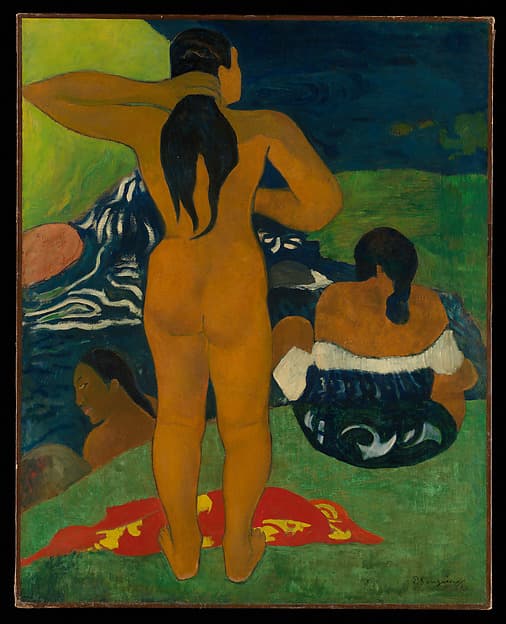
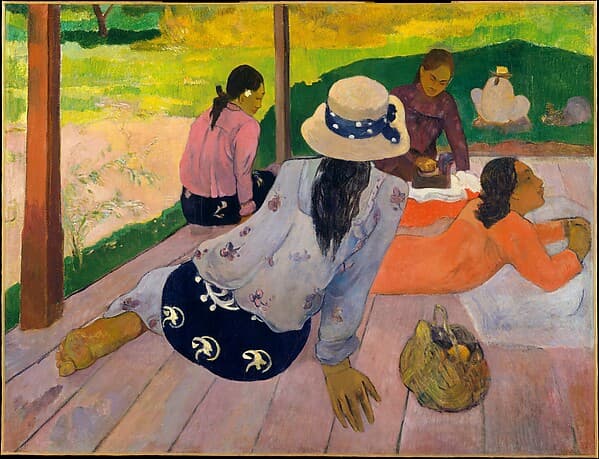
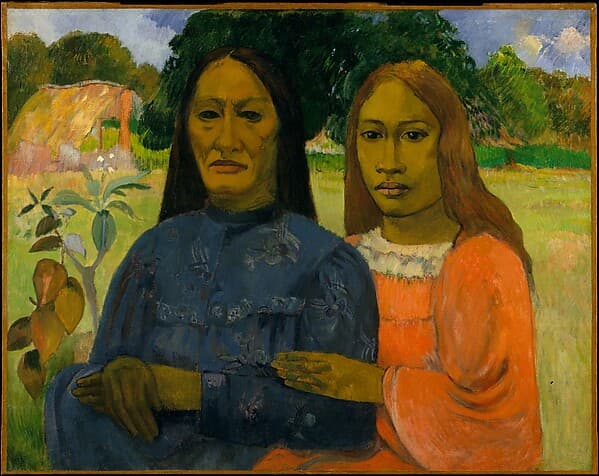
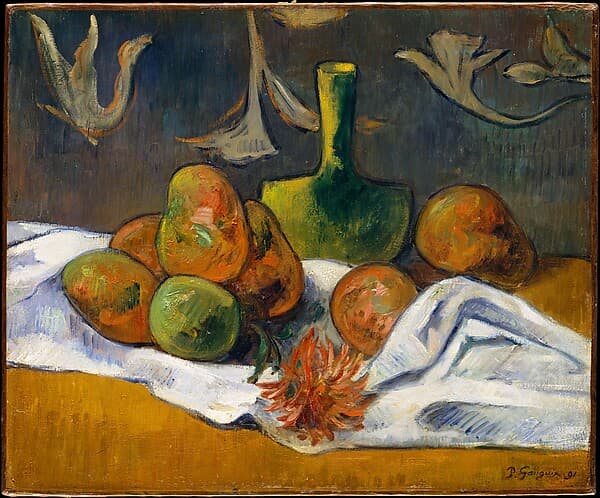
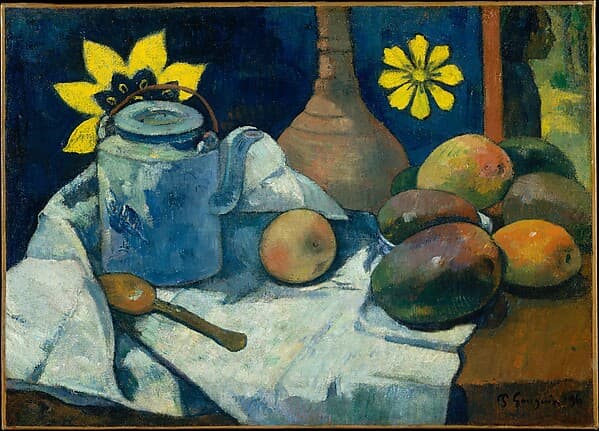
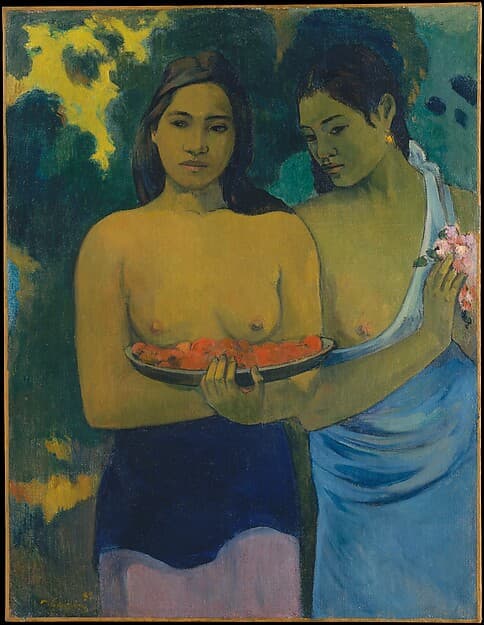
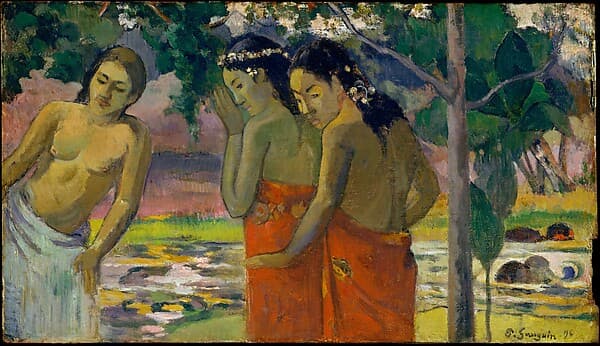
Works by Paul Gauguin available in this edition of NEOARCA.
Related context
Associations
Works connected through artistic movements, cultural context and period. Priced works available in this market appear first.








Profile notes
Profile and sources
Image
Artist image
На основе открытого изображения: Louis-Maurice Boutet de Monvel; Wikimedia Commons; Public domain.
