
19.01.1839–22.10.1906
Paul Cézanne
The son of a banker from Aix-en-Provence, Paul Cézanne was turned down by the Salon for almost twenty years and only in 1895, at fifty-six, had his first solo exhibition, at Ambroise Vollard's. He painted Mont Sainte-Victoire, card players, apples and bathers dozens of times, and his advice to see in nature the cylinder, the sphere and the cone was taken up by the Cubists.
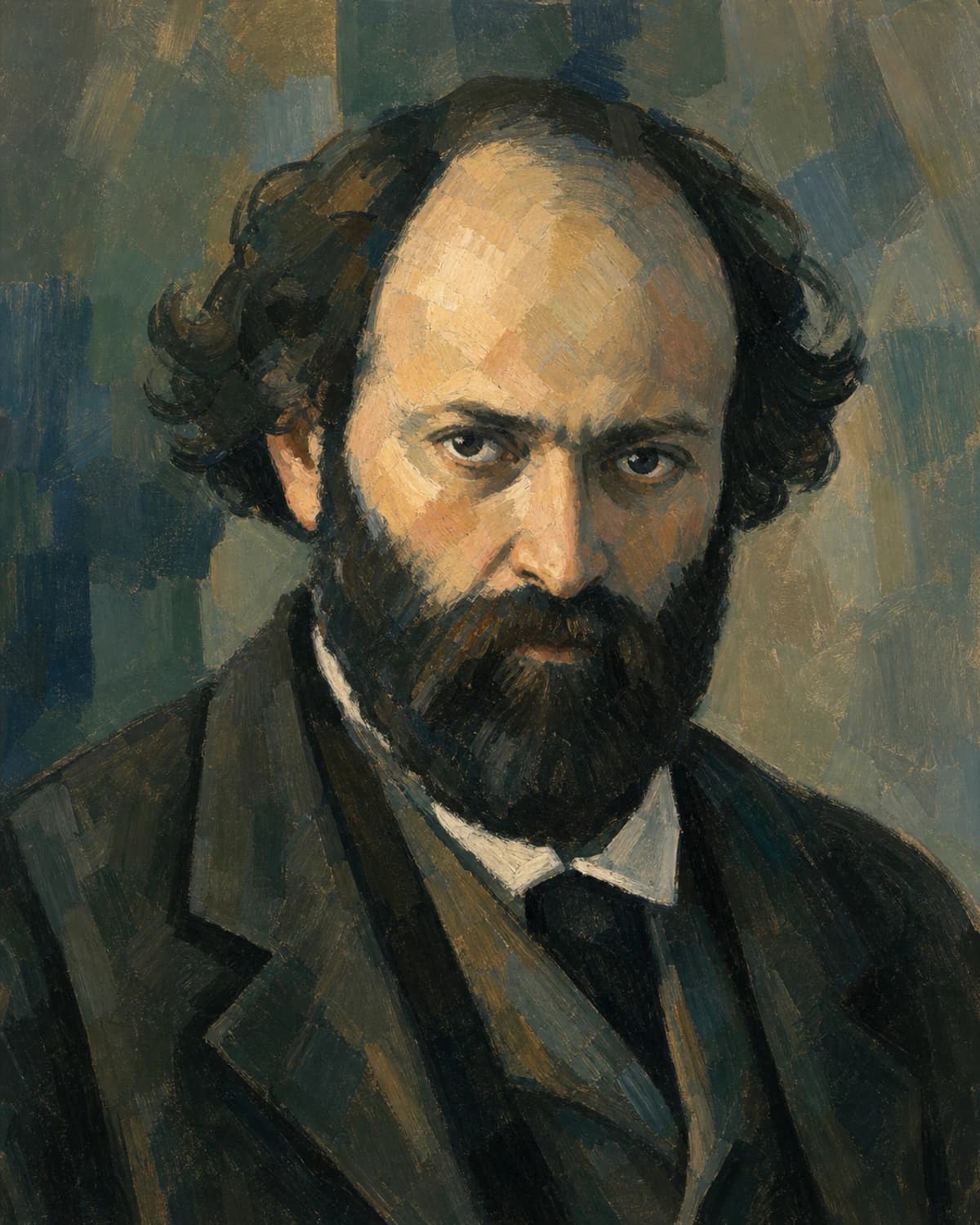
Biography
In 1860 his father allowed the twenty-year-old Paul to paint the walls of the salon in the newly bought Jas de Bouffan estate outside Aix. The son painted four large allegories of the seasons and signed them “Ingres”, although he did not like Ingres, and on “Winter” he also put the date 1811, an allusion to “Jupiter and Thetis”, which hung in the local museum. These panels are now in the Petit Palais in Paris. It seems to me that the whole young Cézanne is in this joke: mockery of academic fame and a secret longing for it.
He was born on 19 January 1839 in Aix-en-Provence. His father, Louis-Auguste, started out as a hat dealer and later founded a bank whose income in time freed his son from money worries. At the Collège Bourbon Paul became friends with Émile Zola and Baptistin Baille; the three were called “the inseparables”, they swam in the river Arc, read Homer and Virgil and wrote poetry, Cézanne most readily in Latin. He won prizes in mathematics, Latin and Greek, while the school prize for drawing in 1857 went to Zola. At his father's insistence Paul enrolled in the law faculty at Aix in 1859, but spent more and more time at the municipal drawing school under Joseph Gibert, and on 25 August 1859 won second prize there for a study of a head.
In April 1861, against his father's wishes and at Zola's urging, he went to Paris. The École des Beaux-Arts did not accept him; he worked at the free Académie Suisse, where he met Camille Pissarro, and copied in the Louvre. Zola wrote to Baille that Paul had barely arrived before he began talking about going back. In September Cézanne did return to Aix and sat down at a desk in his father's bank. In the autumn of 1862 he was in Paris again, was again rejected by the École, again went to the Suisse, now alongside Monet, Renoir and Sisley.
In 1863 his paintings hung in the Salon des Refusés. The official Salon rejected him every year from 1864 to 1869, and he went on submitting until 1882, when a friend on the jury, Antoine Guillemet, passed him off as his pupil. The portrait of his father reading a newspaper was hung under the ceiling in a dark room, and nobody noticed it. The Salon never accepted Cézanne again. The works of the 1860s are dark and thick, with black and Prussian blue; in 1866–1867 he painted a series of portraits with the palette knife, including portraits of his uncle Dominique, and he himself called these pieces by a coarse word.
In 1869 he met Hortense Fiquet, and in 1872 their son Paul was born. For years his father was not told, for fear of losing the allowance. From the end of 1872 Cézanne worked beside Pissarro in Pontoise and Auvers. Pissarro persuaded him to give up dark colours and to build form through gradations of colour instead of contour. For many years afterwards Cézanne called himself his pupil and said that they had all come out of Pissarro.
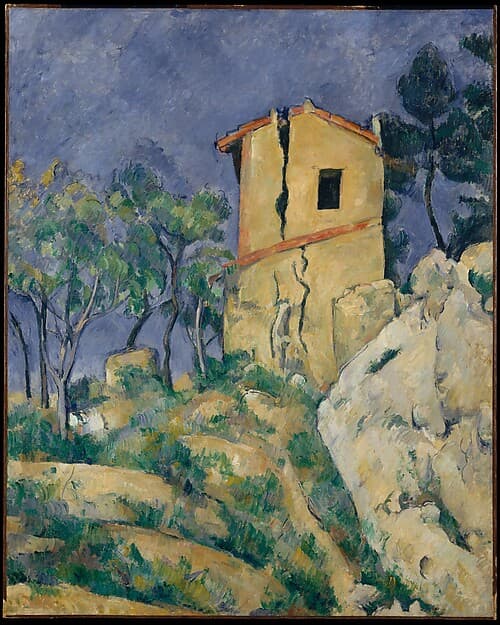
At the first Impressionist exhibition in 1874 his “A Modern Olympia” and his landscapes drew more ridicule than anyone else's. Manet spoke of him as a mason who paints with a trowel. Even so, “The House of the Hanged Man” became one of the few pictures sold there. In 1875, through Renoir, he met the customs official Victor Chocquet, his most faithful collector. At the third exhibition in 1877 he had sixteen works, and this was his last appearance at the group's exhibitions.
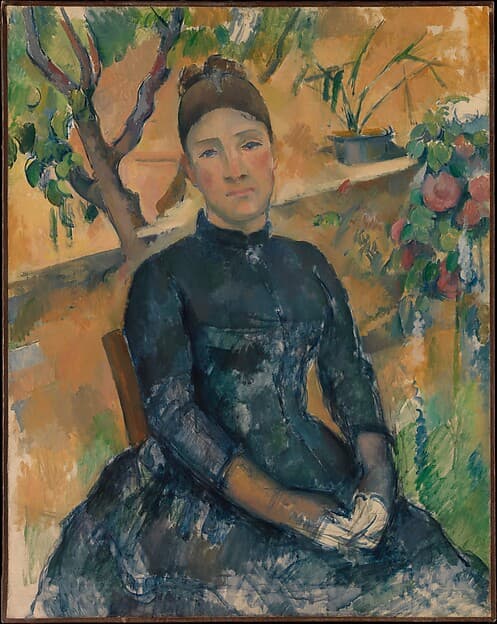
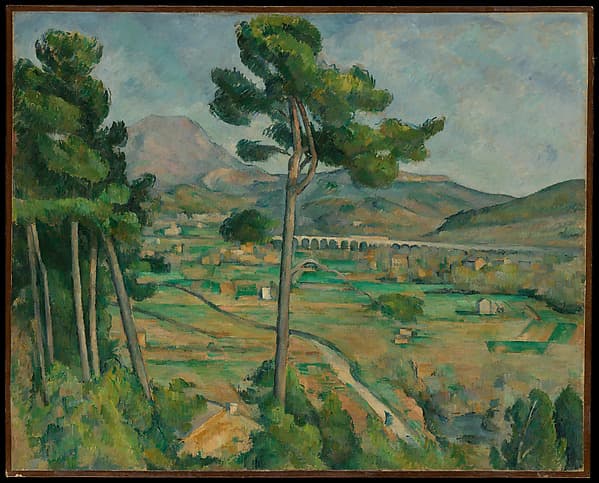
On 14 April 1878 he wrote to Zola about Mont Sainte-Victoire, seen from the window of the Aix–Marseille train: “What a beautiful motif.” The viaduct of this line across the Arc valley appears more than once in his pictures. From the early 1880s the family settled in Provence for good. In March 1886 Zola published the novel “L'Œuvre”, in which the painter Claude Lantier cannot realise what he has conceived and takes his own life. Cézanne recognised himself in many details and politely thanked him for sending the book. For a long time it was believed that the friendship ended there, but a letter of 1887 disproves this. On 28 April 1886 Cézanne married Hortense, largely for the sake of his son's rights, and in October his father died and left him an inheritance. He painted Hortense more than anyone else: twenty-six portraits of her are known.
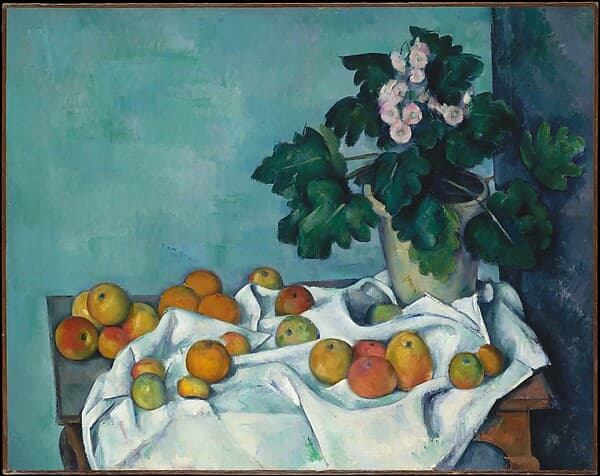
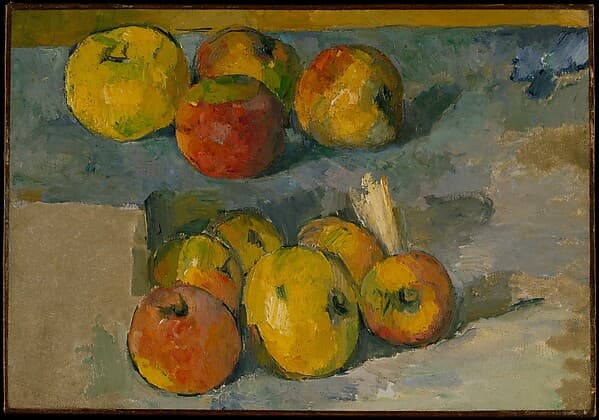
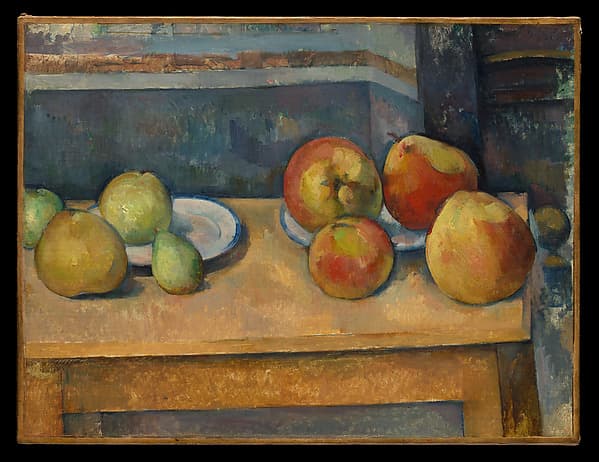
Five versions of “The Card Players” appeared in 1890–1895; the sitters were labourers from the fields around the Jas de Bouffan. He worked on his still lifes for so long that, as Vollard recalled, the apples had time to rot, and then he switched to paper flowers. Vollard himself sat for his portrait one hundred and fifteen times. In November 1895 Vollard opened Cézanne's first solo exhibition in his Paris gallery: fifty works out of about a hundred and fifty sent to him in a bundle. In 1897 Hugo von Tschudi acquired a landscape of his for the Nationalgalerie in Berlin.
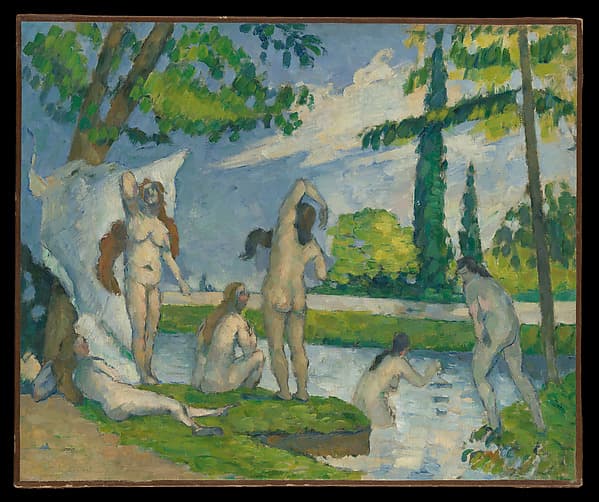
His mother died in October 1897, in 1899 the Jas de Bouffan was sold, and Cézanne moved into a small flat in town. In 1902, on the hill north of Aix, on the Chemin des Lauves, a studio was built for him with a long narrow slit in the wall so that the large canvases of the “Bathers” could be carried out. The largest version, 208 by 249 centimetres, is now in Philadelphia. The local public did not care for him: after a vicious article by Henri Rochefort in 1903 people slipped the newspaper under his door with advice to get out of town. He confessed to his coachman that he did not understand the world and the world did not understand him. Émile Bernard, who stayed with him in 1904, called his method a reflection with brush in hand, and it was to Bernard that Cézanne wrote about the cylinder, the sphere and the cone on 15 April 1904. In the autumn of 1904 the Salon d'Automne gave him a whole room.
On 5 September 1906 he complained in a letter to his son that he was becoming more clear-sighted before nature but could not manage to render the intensity of what he saw. In mid-October he was still working in the garden on a portrait of the gardener Vallier and writing angrily to his colour merchant about a delayed order. Cézanne died in Aix on 22 October 1906 and is buried in the town's Saint-Pierre cemetery.
Artist works
Works by the artist
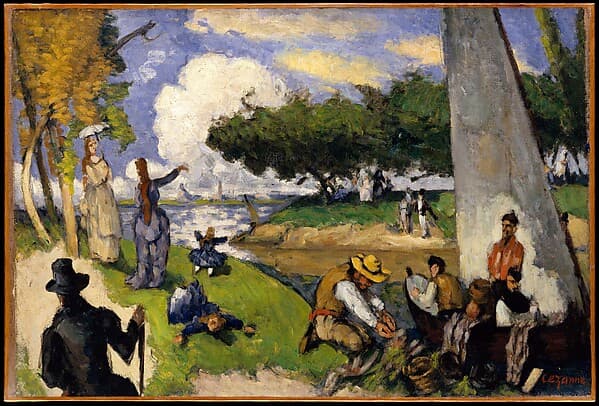
Works by Paul Cézanne available in this edition of NEOARCA.
Related context
Associations
Works connected through artistic movements, cultural context and period. Priced works available in this market appear first.








Profile notes
Profile and sources
Image
Artist image
На основе открытого изображения: Unknown; Cézanne was born in 1839 and died in 1906; Wikimedia Commons; Public domain.
