
05.10.1807–28.07.1879
Pancho Fierro
Pancho Fierro (1807–1879) earned his living in Lima by painting shop signs and bullfight posters, and became known for watercolours on cardboard sheets, of which about 1,200 are recorded. They show street vendors, washerwomen, priests, soldiers, carnivals and processions of the late colonial period and the first decades of the republic. Large collections of his work are now in Lima, Saint Petersburg and New York.
Biography
The largest collection of Fierro’s watercolours is not in Peru but in Saint Petersburg: 78 sheets brought by the ethnographer Leopold von Schrenck are kept in the Kunstkamera, the city’s museum of anthropology and ethnography. The artist could hardly have imagined it; he sold his sheets to Lima collectors and to foreigners.
He was born in Lima on 5 October 1807. He was baptized on 5 February 1809, and for that reason the literature gives his birth year with some hesitation: 1807, 1809, sometimes 1810. I have taken 5 October 1807, but only the baptism is documented.
His father was Nicolás Rodríguez del Fierro, a Creole who became a priest; his mother was Carmen Fierro, a slave in the household of his father’s family. The boy was free from birth: by an unwritten rule, the son of a Spaniard was not supposed to be born a slave. He was a mulatto and, it seems, grew up in his mother’s family. There is no record that he studied painting anywhere; from an early age he was, apparently, self-taught. In May 1828 Fierro married Gervasia Rosa Cornejo Belzunce in Lima. His income came from practical work: commercial signs, bullfight posters, rough figures for Christmas nativity scenes. He painted murals in Lima houses, but these have been destroyed or painted over. In the tax registers of the Lima trade guilds he appears as a painter of the second class and later of the first, alongside another well-known mulatto, José Gil de Castro.
His main work was watercolour on cardboard sheets, the same kind on which signs were painted. He made about 1,200 scenes of Lima life: street vendors and washerwomen, water carriers, porters with pack animals, shops, carnivals, street processions, bullfights, Indians and Afro-Peruvians in popular dress, wealthy ladies, priests. Some sheets look on their subjects with sympathy, others come close to caricature and satire. He sold them, among other outlets, through the Ricordi firm; the sheets found buyers among locals and visitors, and imitators, even plagiarists, appeared. The captions were not his: it has been suggested that Fierro could not write and that the writer Ricardo Palma added the inscriptions. That is worth checking against the albums themselves. One of the best-known collections was assembled by the educator Agustín de la Rosa Toro; it then passed to Palma and formed the album “Lima, tipos y costumbres”, and Palma’s heirs gave it to the city. Today 254 watercolours are in the Pinacoteca Municipal Ignacio Merino. Other significant collections were formed by the French painter Léonce Angrand, by Schrenck, and by the Hispanic Society in New York. Archibald Smith gathered a number of works in 1853, and some of them reached museums in the United States, France and Russia.
In 1937 José Sabogal published a study of the mulatto watercolourist. The Institute of Peruvian Art, which Sabogal headed, recognised Fierro as the first Peruvian artist, and one of its rooms bore his name.
Fierro died on 28 July 1879 in the Hospital Dos de Mayo in Lima, on Peruvian Independence Day. The obituary in El Comercio said that besides his watercolours he left oil paintings and charcoal portraits, “the only inheritance of his disconsolate family”.
Related context
Associations
Works connected through artistic movements, cultural context and period. Priced works available in this market appear first.








Profile notes
Profile and sources
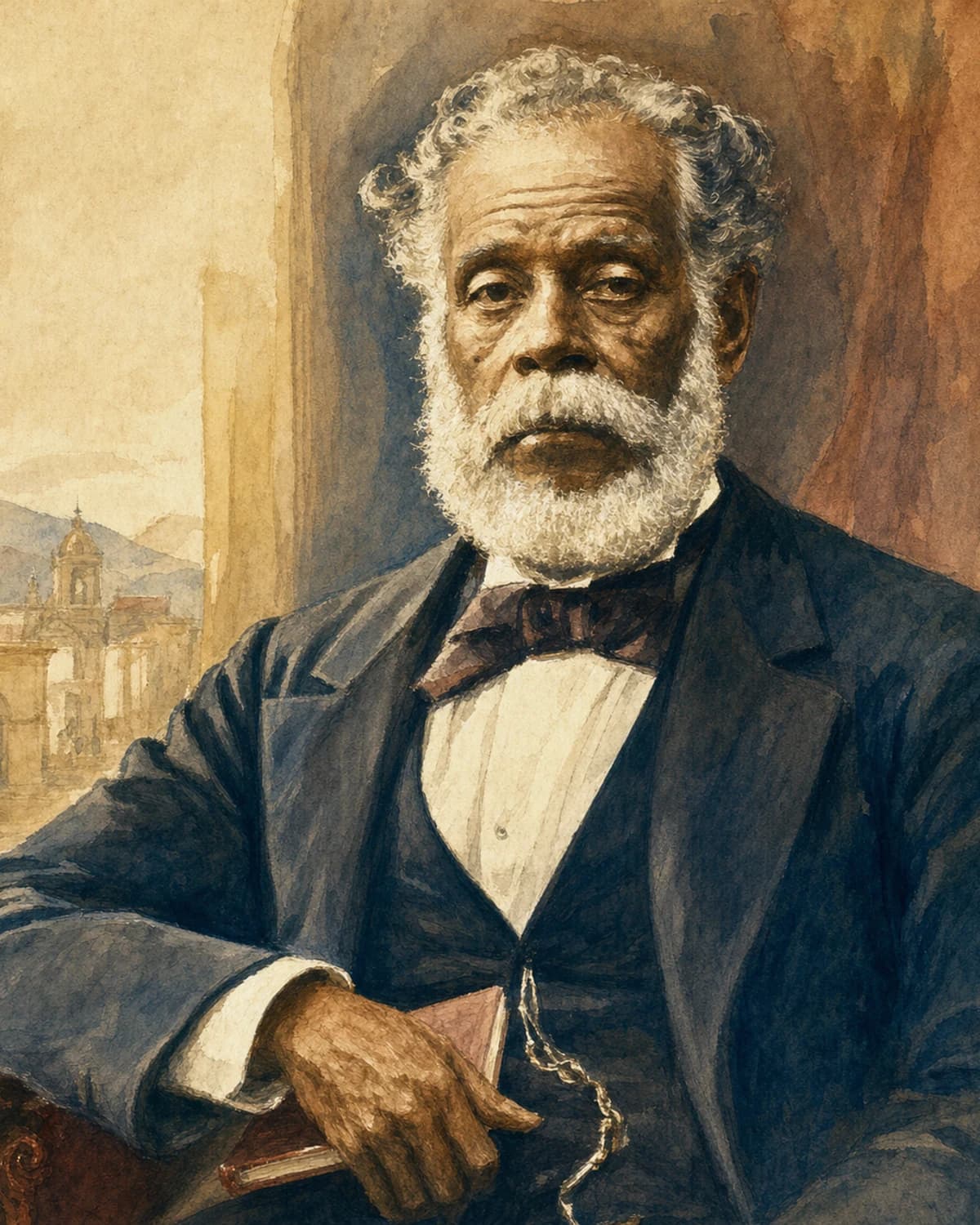
Image
Artist image
На основе открытого изображения: Estudio Courret Hermanos This image was scanned by Miguel Alan Córdova Silva (user MiguelAlanCS ). Other scanned image see here; Wikimedia Commons; Public domain.
