
26.06.1898–1945
Pablo Amorsolo
Pablo Amorsolo (1898–1945) studied under his uncle Fabián de la Rosa, graduated from the School of Fine Arts of the University of the Philippines and taught painting there until the war. In the 1930s he drew for Manila magazines and painted portraits and pictures on themes from Philippine history, among them “Magellan and the Natives”. Most of his work was lost in a fire in 1945.
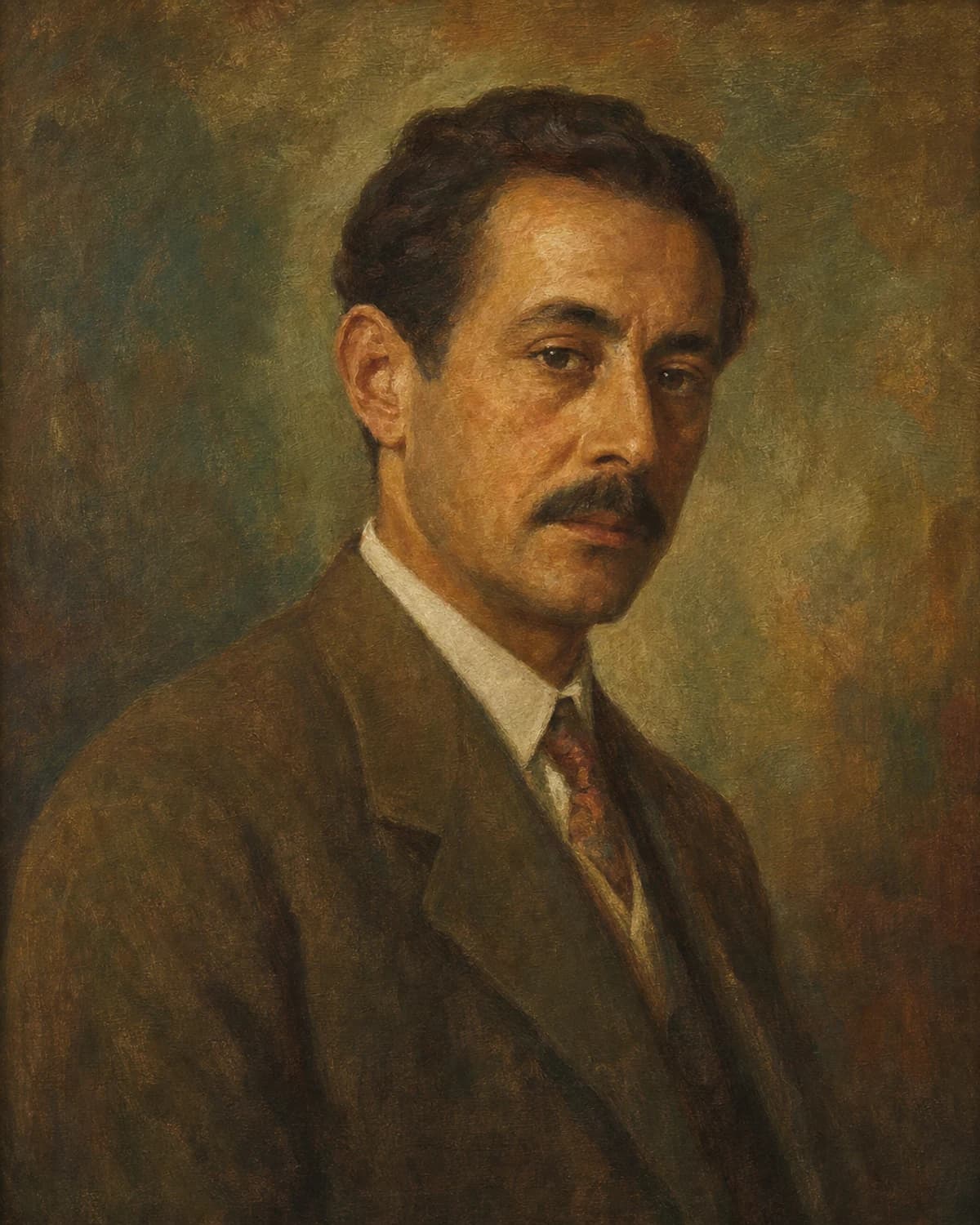
Biography
The date of his death is known exactly, 21 February 1945, but the circumstances are told in different ways. More on that below.
Pablo Cueto Amorsolo was born on 26 June 1898 in Daet, in the province of Camarines Norte. His father, Pedro Amorsolo, was a bookkeeper (according to other accounts, a librarian), and his mother was called Bonifacia Cueto. When the boy was eight, the family moved to Manila. His elder brother was Fernando Amorsolo, later a National Artist of the Philippines. He was taught to draw by his uncle, Fabián de la Rosa, in a household where painting was a family affair: both brothers studied in their uncle’s studio. After elementary school Pablo went to the Lyceum of Manila, and in 1924 he graduated from the School of Fine Arts of the University of the Philippines. Two years after enrolling at the university he was appointed an assistant teacher of painting. He taught until the start of the Second World War, until the Japanese arrived in Manila.
In the 1930s he worked a great deal as an illustrator: Amorsolo’s drawings appeared in the magazines and newspapers Graphic, Tribune, La Vanguardia, Herald and Manila Times. Alongside this he painted portraits. His sitters were people of different social standing and age, and, judging by the descriptions, he succeeded in conveying the character of the person in front of him. In 1929 a book, “Paintings of Twelve Philippine Women, Christian, Mohammedan and Pagan”, with twelve colour plates, was published in Manila; what his connection to it was and what exactly in it is by his hand is hard to tell from the information available.
He also worked in history painting. A large picture, “Ferdinand Magellan and Natives” (1930, oil on canvas), is known, and in 1944 he painted “The Discovery of the Philippines”. To my mind, this work is most interesting for its date: it was painted in occupied Manila, in the last year before the city’s liberation.
Little is known about his last months, and the sources differ. According to some accounts, during the Japanese occupation he took part in partisan activity, was captured and was shot by guerrillas at Antipolo, in Rizal province, in 1945, and was buried there. According to others, the death record in the Manila civil registry gives a different place and a different cause, and the burial took place at a church in the Sampaloc district of Manila. It is not possible to establish from this information how it really was.
Most of his paintings were lost in a fire in 1945.
Related context
Associations
Works connected through artistic movements, cultural context and period. Priced works available in this market appear first.








Profile notes
Profile and sources
Image
Artist image
На основе открытого изображения: Pablo Amorsolo; Wikimedia Commons; Public domain.
