
04.08.1926–22.04.2014
Oswaldo Vigas
Oswaldo Vigas took a medical degree in 1951, and in 1952 he won the National Visual Arts Award for “La gran bruja” and left for Paris, where he lived for twelve years. He painted and made ceramics, tapestries and mosaics for the Central University of Venezuela, and in 1954 represented his country at the Venice Biennale. Later he ran cultural programmes in Mérida and Caracas.
Biography
In 1952 the painting “La gran bruja”, made the year before, brought Oswaldo Vigas the National Visual Arts Award of Venezuela and a solo exhibition at the Museo de Bellas Artes in Caracas. Witches (brujas) would remain a recurring theme for the rest of his life. Immediately afterwards he left for Paris.
The sources disagree on his date of birth: 4 August 1923 or 4 August 1926. The place is certain: Valencia, in Carabobo state. His father, Dr José Jesús Vigas, died when the boy was about ten; his mother, Nieves Linares, was descended from the painter Arturo Michelena. His childhood was spent between Valencia and Tinaquillo. In 1941 Vigas moved to Guacara, where he painted his first pictures, and in the same year he illustrated a book of poems for the Ateneo in Valencia. He won his first prizes at local salons before his university degree, in 1942 and 1943, and in 1943 he was given a medal of honour for the work “Hojas Rojas” (“Red Leaves”).
He studied medicine at the University of the Andes in Mérida and at the Central University of Venezuela in Caracas, and took his medical degree in 1951. At the same time he took classes at the Taller Libre de Artes (a free art workshop) and at the Escuela de Artes Plásticas Cristóbal Rojas, where he met the painters Manuel Cabré and Pedro Ángel González. According to one source, he never practised medicine.
He lived in Paris for twelve years. In 1953 he enrolled at the École des Beaux-Arts, studying etching under Marcel Jaudon and lithography under Stanley William Hayter; according to another source, in the same years he attended a course in art history at the Sorbonne. There he married Janine and associated with Fernand Léger, Max Ernst and Wifredo Lam. In 1953 he took part in the São Paulo Biennial and received a commission for five mosaic murals for the Central University of Venezuela (the campus was named a UNESCO World Heritage Site in 2000). In 1954 he became the first artist to represent Venezuela at the Venice Biennale.
In 1955 Vigas visited Pablo Picasso. After that, stylised faces close to pre-Columbian art began to appear in his paintings. His son Lorenzo later said that his father had not sought a closer relationship with Picasso. His interest in anthropology and the early cultures of the Americas had begun earlier, and he was drawn to pottery too, in particular the Venus de Tacarigua figurines. Throughout that period he moved from the figure towards constructivism and abstraction. In 1956, at the Gulf-Caribbean Art Exhibition in Houston, one of his works won a prize and was acquired. In 1957 he showed his “Objetos” series in Caracas, at the Sala Mendoza.
In 1964 Vigas returned to Valencia. From the early 1960s he had worked in an informalist style: the figure was built from heavy black lines and abstract volumes. On his return he became, at the same time, Cultural Director of the University of the Andes in Mérida and Artistic Director of the Instituto Nacional de Cultura y Bellas Artes (INCIBA) in Caracas. In these posts, which he held until 1972, he pressed for the creation of national salons and prizes for Venezuelan artists. From the second half of the 1960s his painting gradually returned to figuration. In 1967 his son Lorenzo, the future film director, was born, and in 1970 the family moved to Caracas. In the early 1970s Vigas worked with weaving workshops, which made tapestries from his designs, and in 1972 he produced a series of screenprints in the United States.
In the 1980s he made series of tapestries and ceramics. In 1983 came gouaches and drawings about Simón Bolívar, and in 1985 his first bronze sculptures were shown. In 1990 the Museo de Arte Contemporáneo de Caracas Sofía Imber organised a large retrospective: paintings, sculptures, tapestries, ceramics and jewellery. In 1992 Monaco awarded him the Prince Rainier III Grand Prize, and the Monnaie de Paris showed one hundred and thirty-two works from 1952 to 1993. In 2005 the Musée Jean Lurçat et de la Tapisserie Contemporaine in Angers exhibited his work under the title “Sortilèges des Tropiques” (“Charm of the Tropics”).
Later he received honorary doctorates from the University of the Andes (1999) and the Universidad Gran Mariscal de Ayacucho, the Latin Union Award in Washington in 2004, the French title of Commandeur de l’Ordre des Arts et des Lettres in 2008 and, twice, in 2008 and 2014, the International Association of Art Critics Award. In 2012 he took part in the group show “Un Coeur, un Monde”, which travelled through several countries, and in a survey of Latin American art at the Miura Museum of Art in Tokyo.
Vigas died in Caracas on 22 April 2014. In 2015 the retrospective “Oswaldo Vigas Antológica: 1943–2013” opened at the Museum of Contemporary Art in Lima and was then shown in Santiago and Bogotá. The Oswaldo Vigas Foundation looks after his legacy. His son Lorenzo won the Golden Lion at the Venice Film Festival in 2015 for the film “From Afar”.
Profile notes
Profile and sources
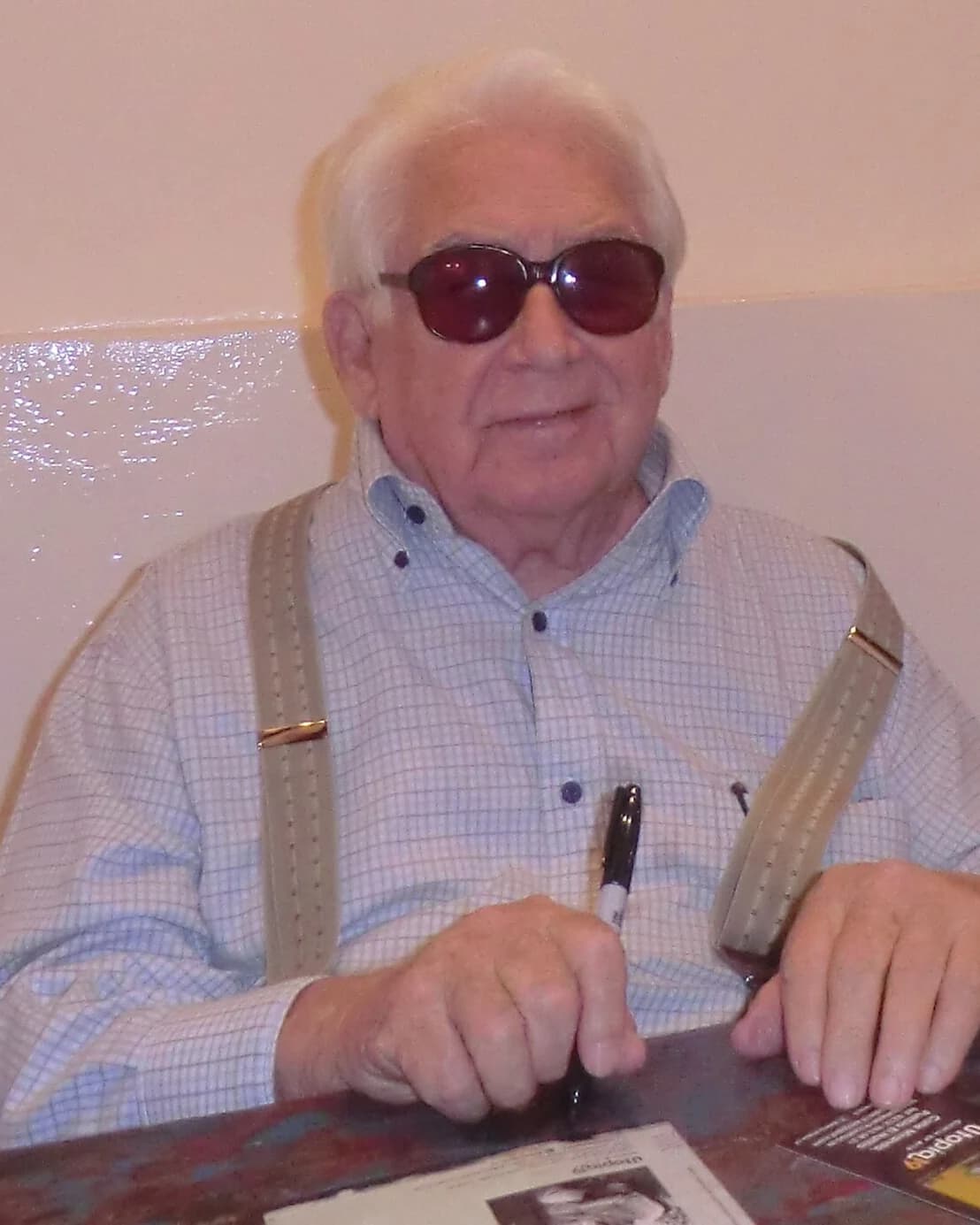
Image
Artist image
Guillermo Ramos Flamerich; Wikimedia Commons; CC BY-SA 3.0.
