
03.02.1894–08.11.1978
Norman Rockwell
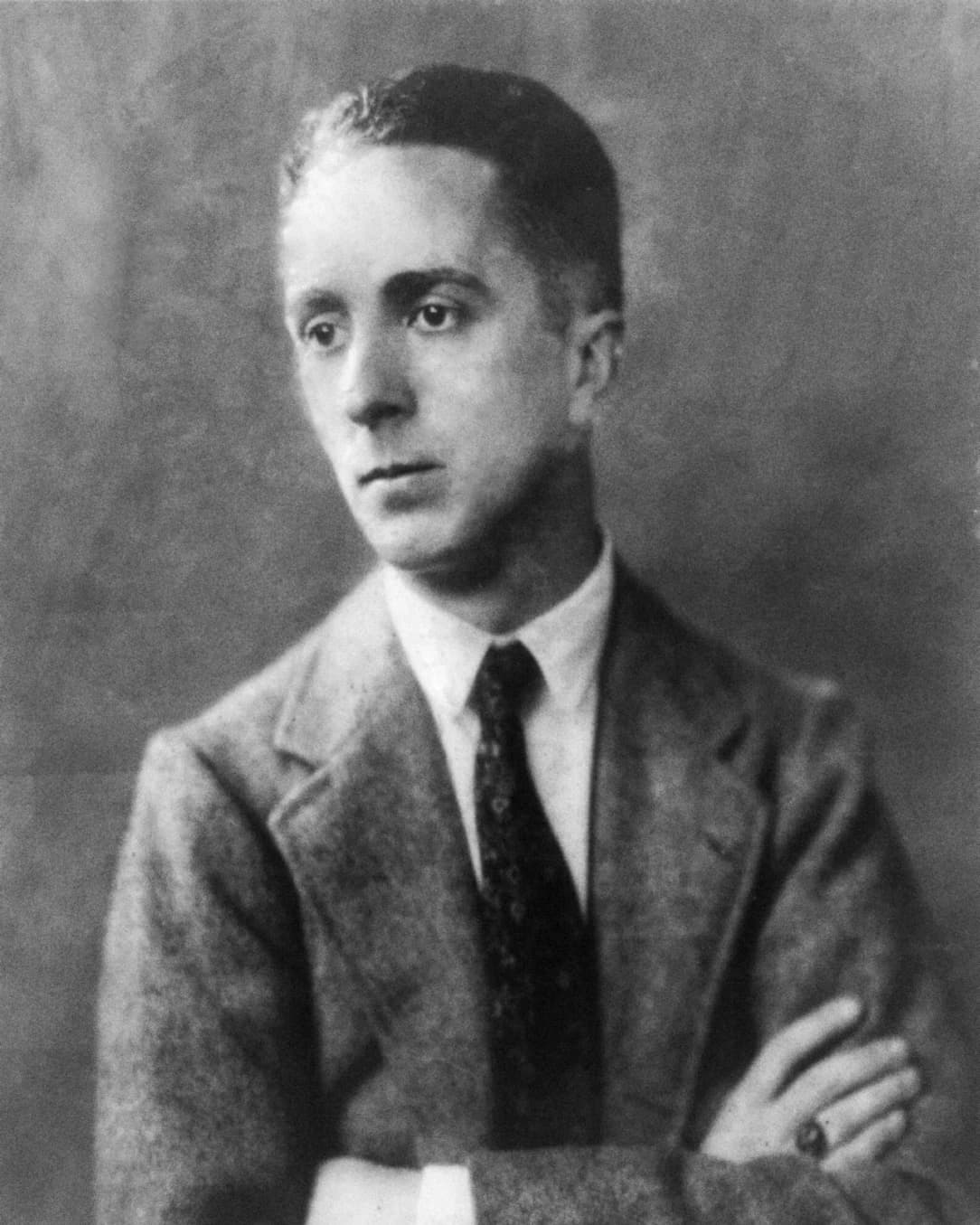
For forty-seven years, from 1916 to 1963, Norman Rockwell (1894–1978) painted covers for The Saturday Evening Post, 322 in all. He painted the “Four Freedoms” series (1943), worked for the Boy Scouts for more than half a century, and in the 1960s painted about civil rights for Look magazine. He made more than four thousand original works in all; his museum in Stockbridge holds more than seven hundred.
Biography
A little girl walks to school. On either side of her are white federal marshals, and the wall they are passing is covered with racist insults. This is Norman Rockwell’s painting “The Problem We All Live With” (1964), about racial integration in schools; the girl is Ruby Bridges. In 2011, when Bridges met Barack Obama, the painting hung in the White House.
It was painted for Look magazine, to which Rockwell had moved a year earlier after parting with The Saturday Evening Post.
He was born on 3 February 1894 in Harlem, in New York City. His father spent his whole career managing the New York office of a Philadelphia textile firm. At fourteen Norman moved from an ordinary high school to the Chase Art School (later the Parsons School of Design), then to the National Academy of Design and the Art Students League, where he studied under Thomas Fogarty, George Bridgman and Frank DuMond. Fogarty prepared him for magazine illustration, and from Bridgman he took the technical methods he relied on all his life. He earned extra money as a supernumerary at the Metropolitan Opera. He completed his first commission, four Christmas cards, at fifteen, and at eighteen he illustrated Carl Claudy’s children’s book “Tell Me Why”. Then he was taken on as staff artist at the scouting magazine Boys’ Life, and at nineteen he became its art editor. His first magazine cover, “Scout at Ship’s Wheel”, appeared in September 1913.
When he was twenty-one the family moved to New Rochelle. There he shared a studio with the cartoonist Clyde Forsythe, who worked for the Post, and with his help Rockwell’s first cover for that magazine, “Boy with Baby Carriage”, came out on 20 May 1916. Eight appeared in the first year. He valued the magazine highly and called it the most accurate mirror of American life; covers for the Literary Digest, Country Gentleman and Life followed. In the First World War the Navy would not take him because he was underweight; in one evening he gorged himself on bananas and doughnuts, passed the next day, but served as a military artist and saw no action. From 1926 he painted the annual calendars for the Boy Scouts. This collaboration lasted sixty-four years, longer than any other in his career: 471 images, the last of which, “The Spirit of 1976”, he finished at eighty-two.
In 1939 Rockwell moved to the small town of Arlington in Vermont, and small-town America came into his work more and more. In 1943, prompted by a speech by Franklin Roosevelt, he painted four pictures in seven months: “Freedom from Want”, “Freedom of Speech”, “Freedom of Worship” and “Freedom from Fear”. “Freedom from Want” contains references to Leonardo’s “Last Supper”, and he himself considered “Freedom of Speech” the best of the four. The Treasury toured the originals through sixteen cities to sell war bonds. That same year a fire in his studio destroyed many paintings, costumes and props. The period costumes could not be replaced, and after the fire he painted mostly people of his own day.
Serious critics did not accept him in his lifetime, and the word “Rockwellesque” still sounds like a charge of sentimentality. He called himself an illustrator and did not mind when others called him one. It seems to me that this self-assessment is more convincing than many later attempts to defend him.
In 1953 the family moved to Stockbridge, Massachusetts. In 1960 his autobiography “My Adventures as an Illustrator”, written with his son Thomas, was published; the first magazine excerpt from it opened with the “Triple Self-Portrait”. In 1963 the last of his 322 covers appeared in the Post. For the next ten years he worked for Look: civil rights, poverty, space exploration, “The Russian Schoolroom” (1967). He painted portraits of Presidents Eisenhower, Kennedy, Johnson and Nixon, as well as Nasser, Nehru and Judy Garland, and illustrated more than forty books, among them “Tom Sawyer” and “Huckleberry Finn”. In 1966 in Hollywood he painted portraits of the actors in the film “Stagecoach” and appeared in it himself as an extra. In the early 1970s he entrusted his works to the historical society of Stockbridge, from which the museum bearing his name grew. In 1977 President Gerald Ford awarded him the Presidential Medal of Freedom.
Norman Rockwell died at his home in Stockbridge on 8 November 1978, at the age of eighty-four. Rosalynn Carter came to the funeral.
Related context
Associations
Works connected through artistic movements, cultural context and period. Priced works available in this market appear first.








Profile notes
Profile and sources
Image
Artist image
en:Underwood Underwood; Wikimedia Commons; Public domain.
