
25.12.1834–21.05.1919
Nikodim Silivanovich
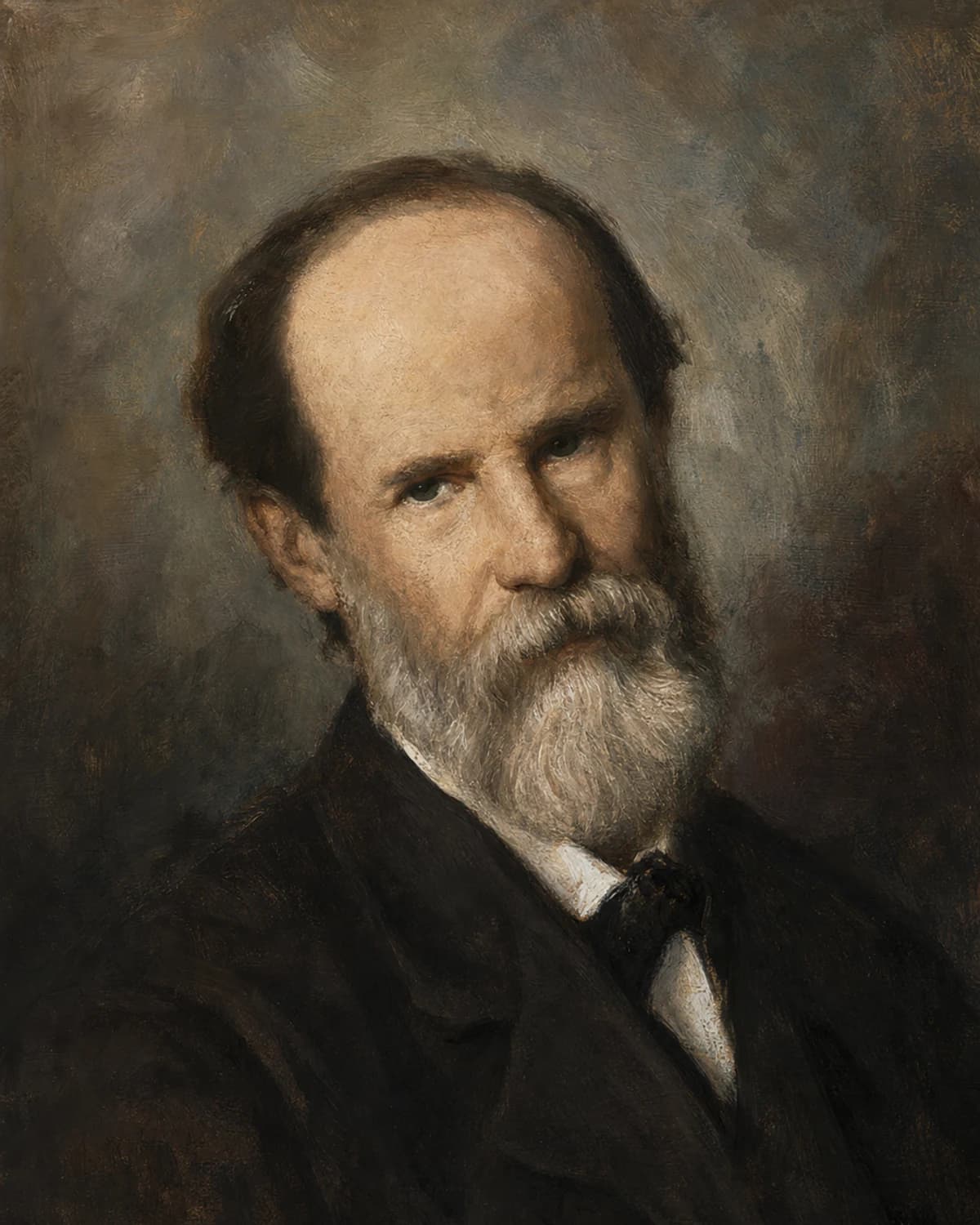
Nikodim Silivanovich (1834–1919) grew up in the Belarusian village of Cyncavičy, in a serf family, and became an academician of mosaic at the Imperial Academy of Arts. In St Petersburg he worked on mosaics for the main iconostasis of St Isaac’s Cathedral, including “The Last Supper”; at home he painted portraits, genre scenes and church icons.
Biography
Nikodim Silivanovich’s father, Yury Ivanovich, was born in 1799, and in the middle of the nineteenth century the family still lived in the village of Cyncavičy in the Vileyka district of the Vilna province. The village belonged to the estate of the Bernardine nuns of the Vilna monastery, and only in 1841 was it transferred to the state administration. Scholars often call the father a state peasant, but for the time of his son’s birth that is inaccurate.
Silivanovich was born on 25 December 1834 (13 December, Old Style). He studied general subjects at the five-class school for the nobility in Maladzyechna, and then became a private tutor in the family of a local landowner. The landowner noticed that the young man was always drawing and sent him, at his own expense, to St Petersburg, to the school of the Society for the Encouragement of the Arts, which prepared pupils for admission to the Academy.
In 1856 Silivanovich passed the examinations and entered the portrait painting department of the Imperial Academy of Arts. His teachers were Fyodor Bruni, Alexey Markov and Timofey Neff. In 1863 he completed the course and received the title of free artist. There is another dating of his admission, 1859, but 1856 is the more common one.
From 1864 to 1866 he lived in Vilna, painting portraits and working in churches, and there he married Pelagia Prankavicheva. Then he returned to Cyncavičy: the Lida district administration commissioned him to decorate the churches of the district. He painted several icons for them, among them an image of Alexander Nevsky, but none has survived. Paintings of those years have survived, for example “The Old Shepherd”, “Head of a Girl” and “Portrait of the Artist’s Father”. For this work he received, in 1866, the title of Artist of the Third Degree and went back to the Academy, now to the mosaic department, which he completed in 1870.
Mosaic became the main business of his life. Bruni, the head of the mosaic department, first told him to make an oil copy of an image of the Saviour and then to execute his first mosaic. In 1867 Silivanovich took part in the mosaics “The Saviour in Glory” and “The Saviour Enthroned” for the burial chapel of the Princes Pozharsky in the Spaso-Evfimiev Monastery in Suzdal. In 1873 he was included in the team that made an image of the Virgin and Child for the burial chapel of the Counts Shuvalov in Wiesbaden.
In the early 1870s the Academy invited him, as a man with experience of church decoration, to work in St Isaac’s Cathedral. For “The Last Supper” for the main iconostasis (together with Ivan Laveretsky, after an original by Semyon Zhivago) he was appointed chief mosaicist. He also took part in the mosaics “Saint Luke the Evangelist”, “Saint Matthew the Evangelist” and “Saint Mark the Evangelist”. “The Kiss of Judas” he made together with Mikhail Shchetinin, by some accounts over about ten years. From 1876 Silivanovich was an academician of mosaic. In the same year his painting “Prisoners” was shown at the Centennial Exposition in Philadelphia, and in 1881 he received the Order of Saint Stanislaus, third class. By some accounts he was appointed senior mosaic artist in 1885, and he continued his service at the Academy until 1899.
His wife died and the children were left to him; they can be recognised in the paintings “Children in the Yard” and “To School”. By some accounts his wife died in 1901, but there is no certain date, and I would check this point. At the end of 1898 Silivanovich submitted his request for retirement, and in 1901 he settled permanently in Birštonas, in the Trakai district, and set up a small workshop in his own house. In the summers of 1883–1885, according to Lithuanian data, he ran a photographic studio in Birštonas.
In March 1909, on commission from the Bishopric of Vilnius, he painted fourteen scenes of the Stations of the Cross, and in 1910 an image of the Apostle Jude Thaddeus for the church then being built in Birštonas.
At the outbreak of the First World War he went to Russia, and later returned to the places of his birth. Silivanovich died on 21 May 1919; the sources give the place of death differently: Cyncavičy or Vileyka.
The main part of his legacy is kept in Vilnius. The National Art Museum of Belarus holds “A Soldier with a Boy”, and mosaics survive in Moscow and St Petersburg. In 2009 a memorial marker was set up in Cyncavičy, and in Vileyka there is an exhibition hall named after him.
Related context
Associations
Works connected through artistic movements, cultural context and period. Priced works available in this market appear first.








Profile notes
Profile and sources
Image
Artist image
На основе открытого изображения: Unknown author Unknown author; Wikimedia Commons; Public domain.
