 International contemporary art platform
06.1594–19.11.1665
Nicolas Poussin
Nicolas Poussin was born in 1594 in Les Andelys, Kingdom of France. He was a painter, draftsman, and art theorist, recognized as one of the founders and prominent representatives of classical painting. In 1624, Poussin moved to Rome, where he gained the patronage of Cardinal Francesco Barberini, which supported the development of his artistic work. His art…

Biography
Nicolas Poussin was born in 1594 in Les Andelys, Kingdom of France. He was a painter, draftsman, and art theorist, recognized as one of the founders and prominent representatives of classical painting. In 1624, Poussin moved to Rome, where he gained the patronage of Cardinal Francesco Barberini, which supported the development of his artistic work. His art encompassed various genres, including genre painting, religious, mythological, and historical painting, as well as allegories, landscapes, and portraits. Thanks to the support of King Louis XIII and Cardinal Richelieu, Poussin was awarded the title of first painter to the French court. In 1640, the artist relocated to Paris; however, he struggled to adapt to court life and encountered conflicts with leading French artists. By 1642, he returned to Italy and lived in Rome until his death in 1665, continuing to work on commissions for the French royal court and collectors. Among his notable works are "Et in Arcadia ego," "The Seven Sacraments," "The Battle of the Israelites with the Amorites," "The Lamentation over the Dead Christ," "The Four Seasons," and "The Inspiration of the Poet." Poussin also engaged in graphic arts and architectural drawing. He died and was buried in Rome.
Artist works
Works by the artist
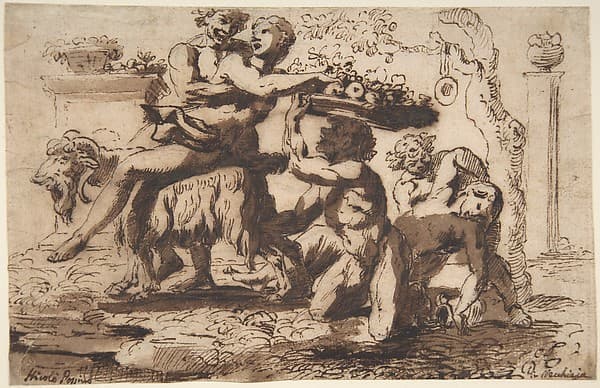
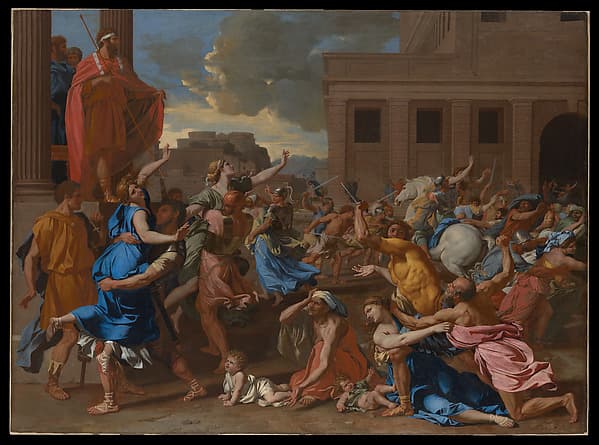
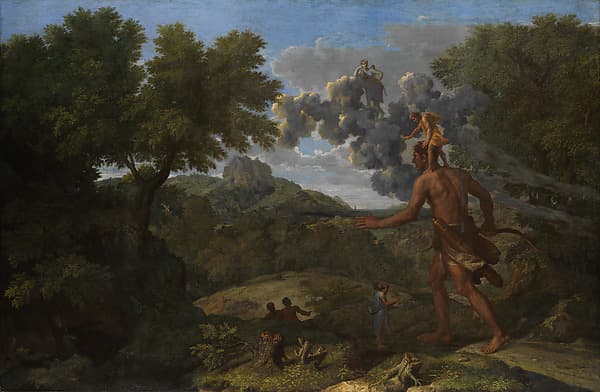
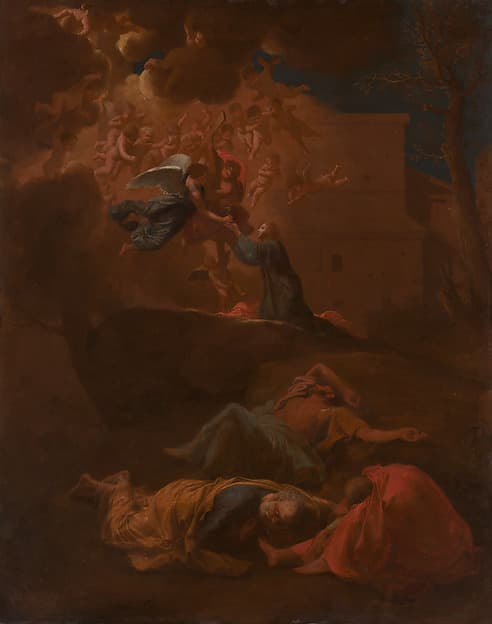
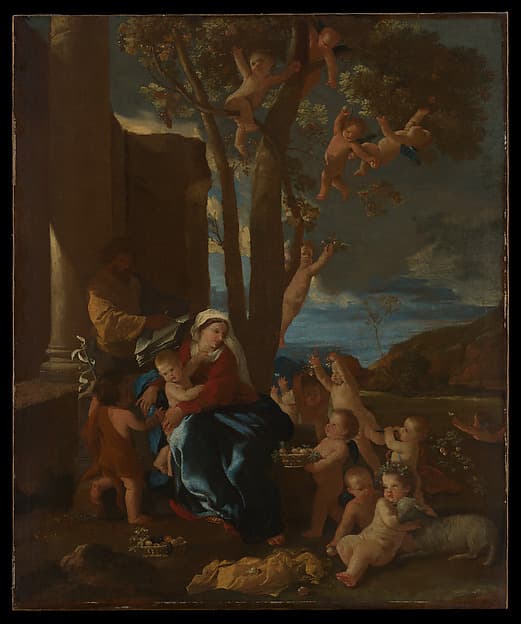
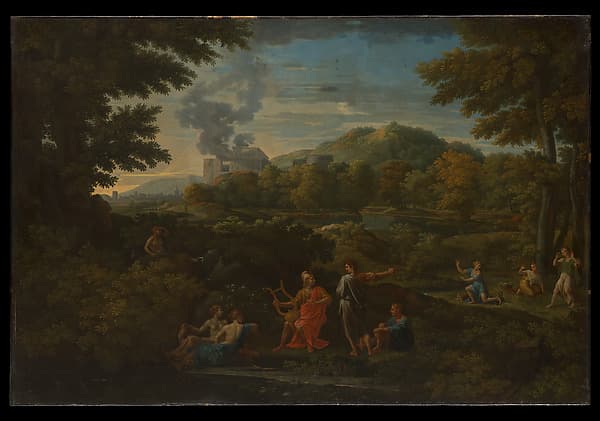
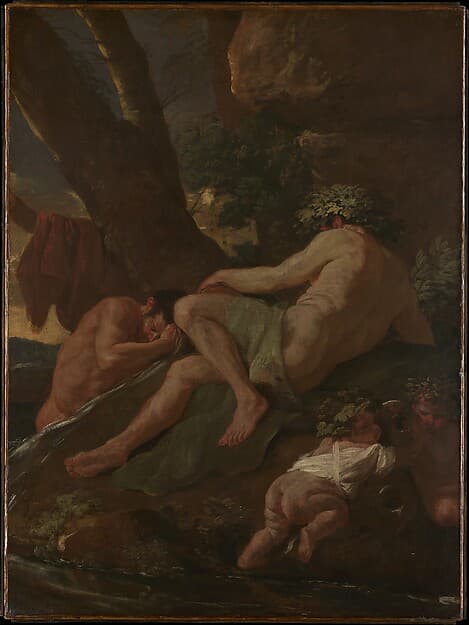
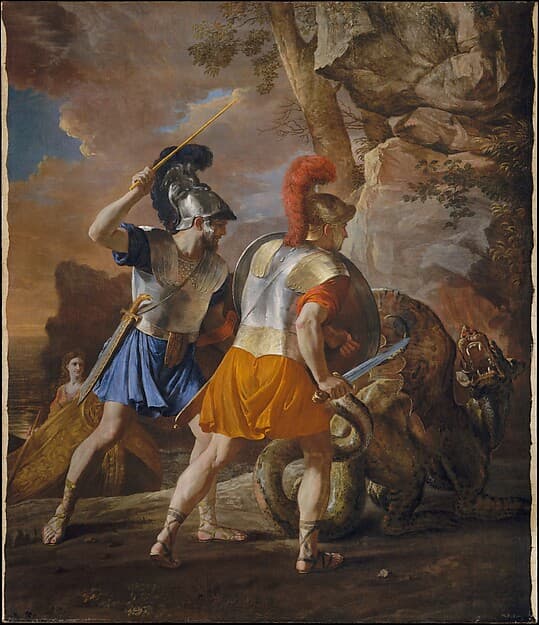
Works by Nicolas Poussin available in this edition of NEOARCA.
Related context
Associations
Works connected through artistic movements, cultural context and period. Priced works available in this market appear first.
Profile notes
Profile and sources
Image
AI interpretation inspired by the artist’s period and visual language. It is not a historical portrait or an artwork by the artist.AI editorial interpretation
ИИ-стилизация на основе открытого изображения: Nicolas Poussin; Wikimedia Commons; Public domain.
