
24.12.1937–19.06.2016
Nicolás García Uriburu
In June 1968, at the Venice Biennale, Nicolás García Uriburu dyed the waters of the Grand Canal bright green with fluorescein. An architect by training from Argentina, he repeated the action in New York, Paris and Buenos Aires, and later planted trees and organised protests against the pollution of the Riachuelo river.
Biography
In June 1968, at the Venice Biennale, the water of the Grand Canal suddenly turned green. It was dyed by an invited Argentine, Nicolás García Uriburu, who poured fluorescein into the canal, a dye that gives water a bright green colour and recalls microorganisms.
He was born in Buenos Aires on 24 December 1937, into a family of nine children; as the eldest son he was given his grandfather’s name. His first works were abstract landscapes in the manner of informal painting, and later he turned to the aesthetics of Pop Art. He began exhibiting in 1954, at the Müller Gallery in Buenos Aires. He graduated from the University of Buenos Aires with a degree in architecture. In 1965 he moved to Paris with his wife, Blanca Isabel Álvarez de Toledo, and in 1966 he received an artist’s residency there at the Cité internationale des arts. In 1968 his Pop Art sculpture “Three Graces” won him the Grand Prize at the National Sculpture Salon. At the same time, at the Iris Clert Gallery, he showed an acrylic composition with an artificial garden, and the work turned him towards environmental themes. From Paris he went to Venice.
After Venice the dye entered the waters of the East River in New York, the Seine in Paris and the river at Buenos Aires: the plan had been to colour the mouth of the polluted Riachuelo, but the action was carried out on the Río de la Plata. In 1970 he made pastel montages over photographs of these actions. Such works could be reproduced without limit, and this suited his aim: to remind people of water pollution around the world. The works “Unión de Latinoamérica por los ríos” (Latin America Union for Rivers) and “No a las fronteras políticas” (No to Political Borders) belong to the same theme. They carry a political tone: he spoke of the antagonism between nature and civilisation.
Then came the Lac de Vincennes near Paris (1971), the Trocadéro fountains (1972), and the ports of Nice and Antwerp (1974). In 1975 he won first prize at the Tokyo Biennale. In 1981 the German Greens invited him to dye the Rhine on a day of protest called “Wasserfest”. Joseph Beuys, one of the party’s founders, approached him and proposed working together. A year later, at Documenta 7 in Kassel, they worked together on Beuys’s project of planting seven thousand oaks. They shared views on humanism, the organisation of society and ecology.
In 1982 Uriburu returned to Buenos Aires and planted 50,000 trees along the city’s streets, and went on to repeat such plantings many times. In the 1980s he painted the city’s myths: Eva Perón, Carlos Gardel and the Virgin of Luján. In 1993 the Ruth Benzacar Gallery presented his solo exhibition “Utopía del Sur” (Southern Utopia).
He was a member of the Grupo Bosque, which ran reforestation campaigns in Maldonado, Uruguay. Together with Greenpeace he protested against the degradation of the industrial Riachuelo river, and he taught secondary school students. He presided over the foundation that bears his name, which displays his work and houses a collection of Pre-Columbian art. He also lived in Punta del Este, where he assembled a collection of Uruguayan art from 1880 to 1945 and in 2000 donated it to the Uruguayan state; a museum was created on the basis of it, and he remained its curator for life. His awards include the Prix Lefranc (Paris, 1968), the National Grand Prize in Argentina in 1968, the Braque Prize, the National Fund for the Arts career achievement award (2000), the Platinum Konex Award (2002) and the Creative Careers Award of the Universidad del CEMA (2010). He was a member of the National Academy of Fine Arts.
He died in Buenos Aires on 19 June 2016. In 2017 he was invited to the Venice Biennale again, to the main exhibition, “VIVA ARTE VIVA”.
Profile notes
Profile and sources
Image
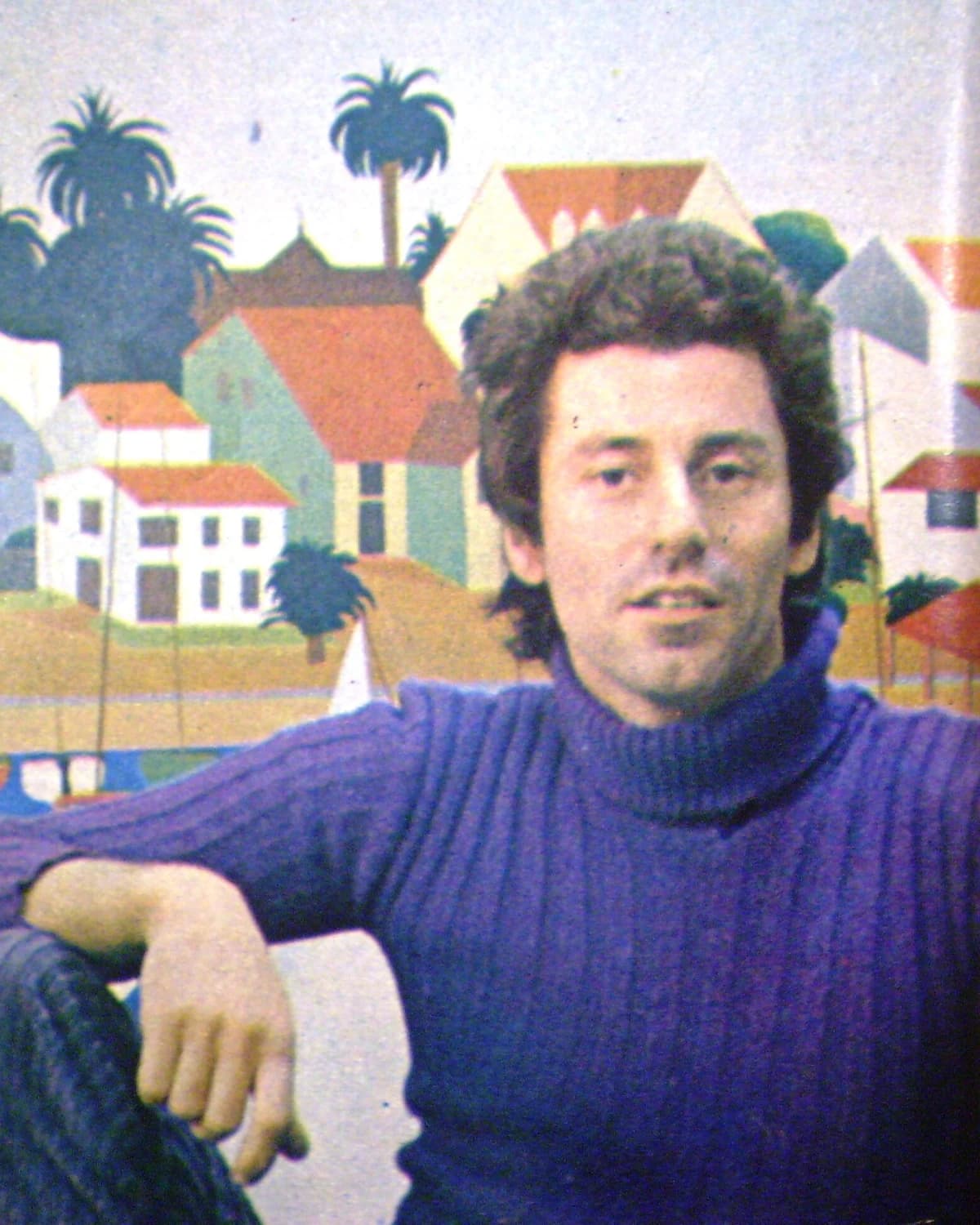
Artist image
Unknown author Unknown author; Wikimedia Commons; Public domain.
