
03.06.1882–27.11.1934
Mitrofan Grekov
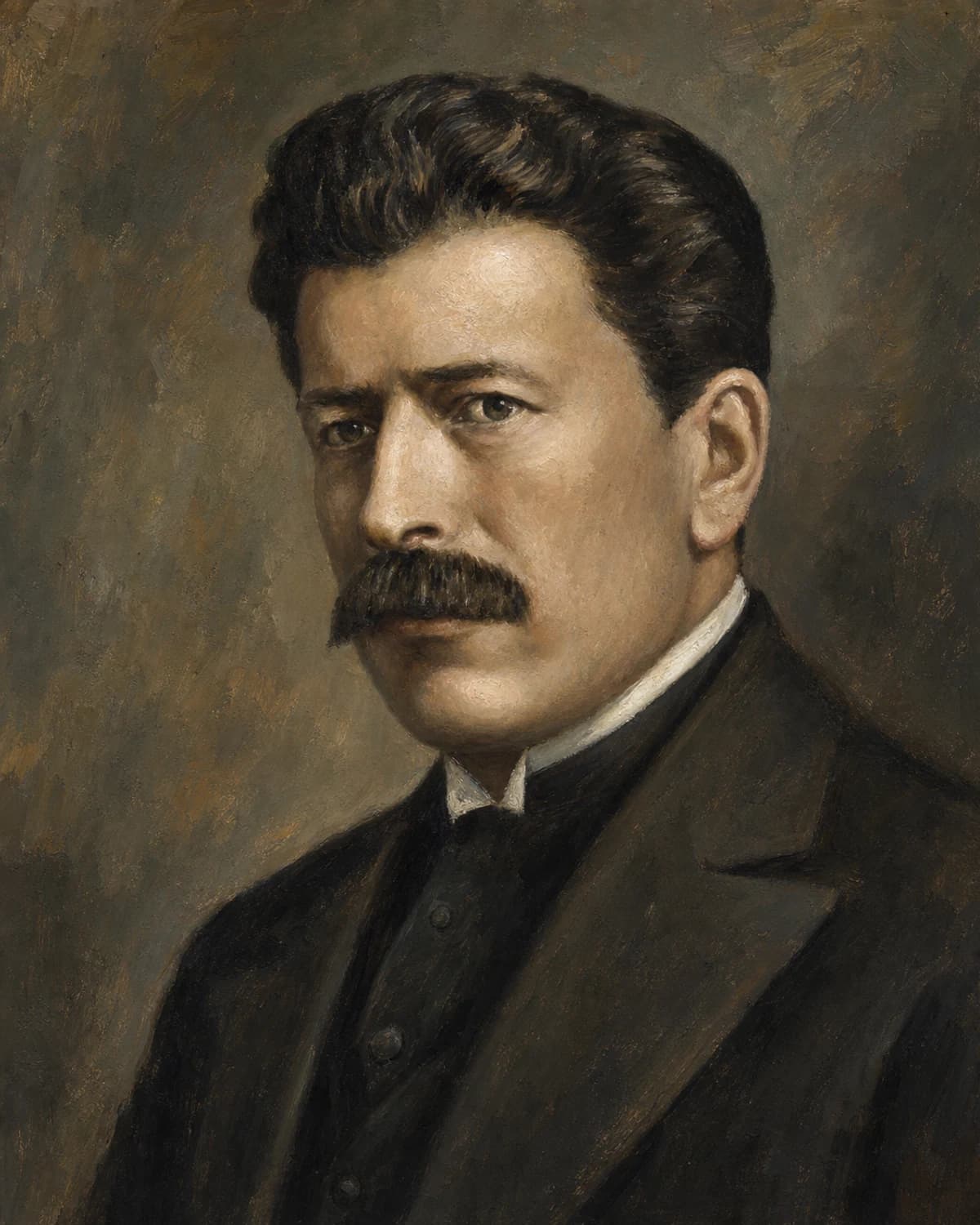
Mitrofan Grekov (1882–1934), born on a Don farmstead into a Cossack family, studied under Kiriak Kostandi, Ilya Repin and Franz Roubaud, fought for three years in the First World War, and in 1920 volunteered for the Red Army. In the 1920s he painted Budyonny’s First Cavalry Army: “Tachanka”, “Trumpeters of the First Cavalry Army”, “Battle at Yegorlykskaya”. He died in Sevastopol while working on the panorama “The Storming of Perekop”.
Biography
In 1911 the Academy of Arts awarded him the title of artist for his competition painting “Oxen at the Plough”. The change of his surname and patronymic belongs to the same year: until then he had been Mitrofan Pavlovich Martyshchenko, and from then on he was Mitrofan Borisovich Grekov. Why, the material available to me does not explain.
A year later he was serving in the Life Guards Ataman Regiment.
He was born on 3 (15) June 1882 into a Cossack family, on the Sharpayevka khutor in the Yanovskaya volost of the Donetsk district of the Don Host Oblast. At fifteen he entered the Odessa Art School, where he studied under Kiriak Kostandi, and five years later passed the examinations for the Academy of Arts in St Petersburg. His teachers there were Ilya Repin and Franz Roubaud, a classic of battle painting. While still a student, Grekov worked for Roubaud on the panoramas “The Defence of Sevastopol” and “The Battle of Borodino”.
During the First World War he spent three years at the front and brought back a great many sketches. In 1917, after a serious wound, he was demobilised.
In 1920 Grekov volunteered for the Red Army. In the 1920s he drew Budyonny’s First Cavalry Army and painted a series of battle pictures about the victories of the Reds over the Whites. The best known are “Tachanka”, “Trumpeters of the First Cavalry Army”, “Battle at Yegorlykskaya”, “Devil’s Bridge”, “The Reds Entering the Stanitsa of Baklanovskaya”, “General Pavlov’s Frozen Cossacks” and “The Defence of Tsaritsyn”. He painted battles of the distant past as well: among his works is “The Attack on the Swedes by the Yaroslavl Dragoons near the Village of Erestfer, 29 December 1701”. Grekov’s first solo exhibition was held in 1927 in Novocherkassk. In 1930 he joined the Association of Artists of Revolutionary Russia, and in 1931 he moved to Moscow.
In 1934 Grekov headed the team entrusted with the panorama “The Storming of Perekop”. It was at this work, in Sevastopol, that he died on 27 November 1934. He was buried in Moscow, at the Novodevichy Cemetery.
His name is borne by the Rostov and Odesa art schools and by the studio of military artists in Moscow, which has been working since 1934. His house museum is open in Novocherkassk, and there are Grekov streets in Novocherkassk and Minsk. In 1966 the USSR Ministry of Culture, the Union of Artists of the USSR and the Main Political Directorate of the Army and Navy established the Grekov Medal for the best works on military-patriotic themes; from 1967 to 1991 one gold and three silver medals were awarded on Victory Day. In 1967 his painting of the First Cavalry appeared on a Soviet postage stamp. Grekov’s works are in the house museum, the Tretyakov Gallery and other collections.
Related context
Associations
Works connected through artistic movements, cultural context and period. Priced works available in this market appear first.








Profile notes
Profile and sources
Image
Artist image
На основе открытого изображения: Anonymous Unknown author; Wikimedia Commons; Public domain.
