
03.10.1865–10.12.1934
Margaret Stoddart
Margaret Olrog Stoddart (1865–1934) studied at Christchurch’s first art school from the year it opened, and at twenty joined the council of the Canterbury Society of Arts. The Canterbury Museum bought twelve of her botanical watercolours. She spent more than nine years painting in England, France and Italy, then returned and taught in New Zealand for the rest of her life.
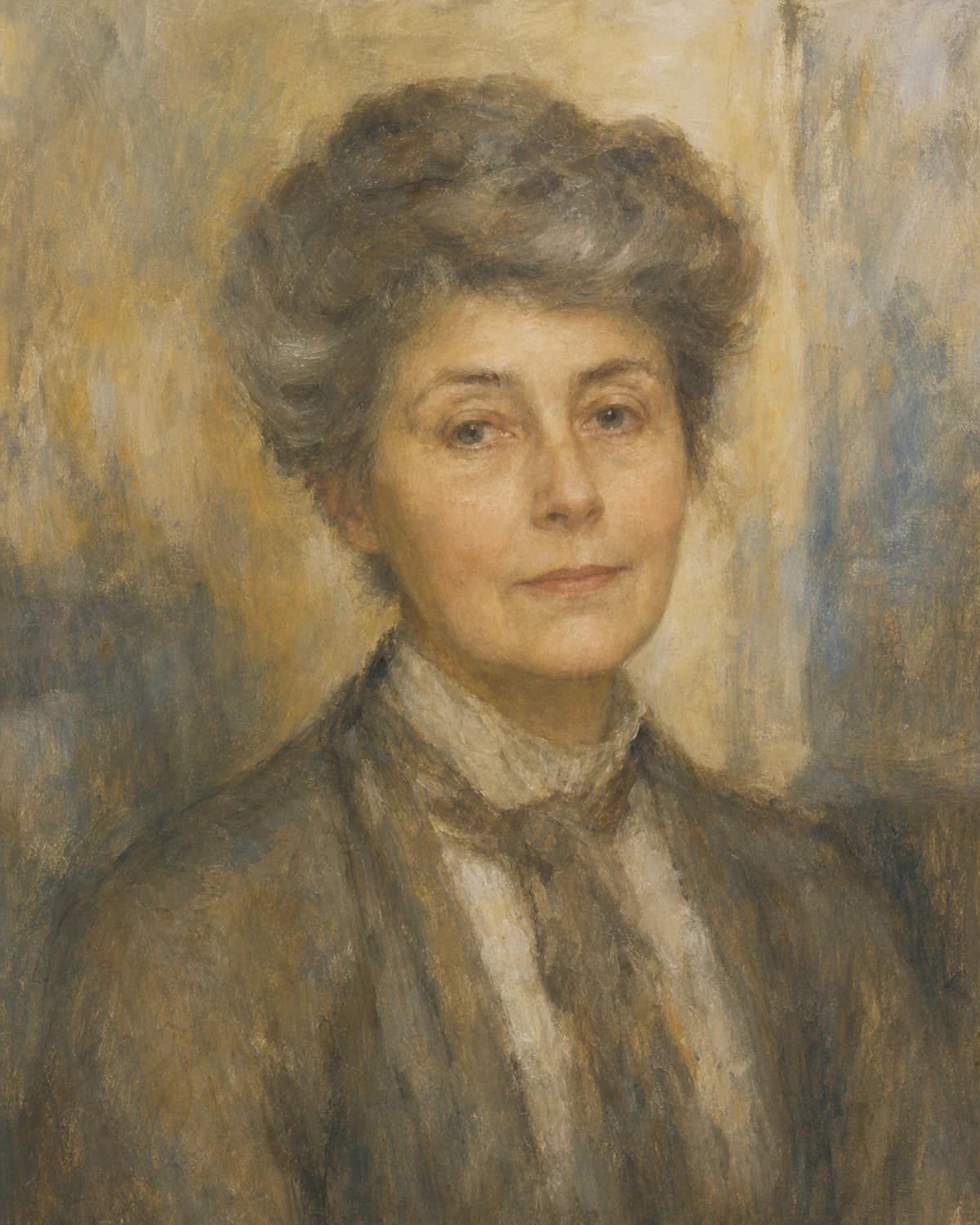
Biography
In 1885 the Canterbury Society of Arts bought two flower paintings by Margaret Stoddart for its permanent collection. She was nineteen or twenty, and in the same year she was elected to the society’s council.
She was born on 3 October 1865 in Diamond Harbour, in the Canterbury region of New Zealand, one of six children of Mark Pringle Stoddart and Anna Barbara, née Schjott. Her paternal grandfather was an admiral in the British Royal Navy, and her uncle was the Scottish poet Thomas Tod Stoddart. In 1876 the family went to Scotland, and Margaret attended Edinburgh Ladies’ College; when she was about fourteen the family came back and settled in Fendalton, in Christchurch. How long exactly they stayed in Scotland is hard to say.
In 1882 the Canterbury College School of Art (now the Ilam School of Fine Arts) opened in Christchurch. Stoddart enrolled at once and finished the course in 1889 or 1890, receiving a Second Grade Full Certificate. At that time she joined the Palette Club, an association of artists committed to working from nature. She travelled to Banks Peninsula and the Southern Alps, made sketches and collected native plants for future pictures. In 1886 and 1891 she visited friends in the Chatham Islands and recorded the vegetation there; an album of these journeys was later given to the Canterbury Museum. In 1890 the museum acquired twelve of her botanical paintings, and in 1892 she exhibited in Auckland.
In 1894 Stoddart went to Melbourne, where, with the support of the Australian flower painter Ellis Rowan, she held a successful exhibition.
Around 1898 she sailed for England (according to other accounts, in 1897). She lived in London, then in St Ives in Cornwall, where an artists’ colony had gathered at the time. Later came Norway, which she visited soon after her arrival, France, and almost a year in Italy in 1905–06. Her teachers included Norman Garstin, Louis Grier and Charles Lasal, among others; the strongest influence on her was Impressionism. She met Frances Hodgkins, another expatriate artist from New Zealand, from time to time, and in 1903 worked alongside her in the English village of Bushey in Hertfordshire. Stoddart showed work at the Royal Institute in London, at the Society of Aquarellists in Rome, and in Paris at the Salons of the Société des Artistes Français and the Société Nationale des Beaux-Arts. Her 1902 exhibition at the Baillie Gallery in London was singled out for praise by The Sunday Times. Before leaving for home she exhibited at the Royal Academy of Arts and with the Society of Women Artists. I think it was in these years that the flower painter became a landscape painter: in St Ives landscape finally came first for her, and her later work bears this out.
In November 1906 she returned to New Zealand and went to live with her mother and sister. In October 1911 fifty of her paintings were shown at the Canterbury Society of Arts gallery, mostly views of Diamond Harbour and its cottages covered in flowers: from botanical sheets she had moved to more painterly landscapes, following the European Impressionists. In 1913 or 1914 the family moved to Christchurch, to the Cashmere Hills, overlooking the Canterbury Plains and the Southern Alps. Apart from a trip to Australia and Tahiti around 1926, she never left the country again. In 1928 the Canterbury Society of Arts held a large retrospective of her work.
Stoddart was fond of hiking and mountaineering. At first she painted alpine flowers, then more and more the mountain views themselves. In 1895 she wrote to the suffragist Rosa Dixon about her plan to walk and paint the rugged West Coast of the South Island; she was especially interested in the lilies of the Southern Alps, and around 1930 she completed “Mountain Lilies”.
In later years she was a member of the Christchurch Sketch Club, vice-president of the Canterbury Society of Arts, and a teacher at the Canterbury College School of Art. Her pupils included Toss Woollaston and Evelyn Page.
Margaret Stoddart died on 10 December 1934 in Hanmer Springs, in North Canterbury. In 1935 large retrospective exhibitions in her memory were held in Christchurch, Wellington and Auckland.
Related context
Associations
Works connected through artistic movements, cultural context and period. Priced works available in this market appear first.








Profile notes
Profile and sources
Image
Artist image
На основе открытого изображения: Margaret Stoddart; Wikimedia Commons; Public domain.
