
29.04.1875–28.05.1963
Margaret Preston
Margaret Preston was born in Port Adelaide, studied in Melbourne and Adelaide and spent long periods in Munich, Paris and England; after coming home she became one of Australia’s leading modernists. Her woodcuts of banksias, waratahs and views of Sydney Harbour are signed with the monogram MP. From 1925 she urged that Australia should look to Aboriginal art as the foundation of a national art.
Biography
In 1927 Margaret Preston, then fifty-two, published an essay about her childhood in the Sydney magazine “Art in Australia”. She wrote about herself in the third person and called the piece “From Eggs to ‘Electrolux’”. Its central scene is her first visit to the Art Gallery of New South Wales: a twelve-year-old girl, a large quiet room, a pleasant smell, students on high stools in front of their easels. What struck her more than the pictures was how nice it must be to sit on a stool like that while people walking past glanced at you. That was when she decided to become an artist.
She was born on 29 April 1875 in Port Adelaide, the first child of David McPherson, a Scottish marine engineer, and Prudence McPherson, née Lyle. At home she was called by her second name, Rose, and she began to call herself Margaret only at about thirty-five. In 1885 the family moved to Sydney. The girl spent two years at Fort Street Girls’ School, painted china and took private lessons from William Lister Lister.
From 1889 to 1894 she studied at the school of the National Gallery of Victoria under Frederick McCubbin. Her studies were interrupted by her father’s illness and death; when she came back she worked under Bernard Hall. She painted people reluctantly and still lifes willingly, and in 1897 a still life won her a scholarship, a year of free tuition. In 1898 she moved to the Adelaide School of Design to study under H. P. Gill and Hans Heysen, and in 1899 she opened a studio of her own and began teaching, among other places at St Peter’s College and the Presbyterian Girls’ College. Her pupils included Bessie Davidson, Gladys Reynell and Stella Bowen; Bowen remembered her as a small red-haired “rebel” and an inspiring teacher.
After her mother’s death in 1903 Preston went to Europe with Bessie Davidson and stayed there from 1904 to 1907. In Munich she attended the state art school for women for a short while, and German art decidedly did not appeal to her: half of it she thought mad and vicious, and much of the rest dull. Paris suited her better. In 1905 and 1906 she exhibited at the Salon, looked at Cézanne, Gauguin and Matisse, and at the Musée Guimet discovered Japanese art. From there came asymmetrical composition, plants as the main subject and pattern as a way of organising the flat surface; she described her aim as “decoration without ornament”. In 1907 the National Gallery of South Australia bought “Onions” (1905) from her joint exhibition with Davidson. In 1912 Preston went to France again, this time with Gladys Reynell, and when the war broke out the two moved to England. There she studied pottery and the principles of modern design at Roger Fry’s Omega Workshops, and then, with Reynell, taught pottery and basket-weaving to shell-shocked soldiers at the Seale Hayne military hospital in Devon.
In 1919 she took work to an exhibition at the Carnegie Institute in Pittsburgh, and on the voyage home she met William George Preston, a recently demobilised lieutenant. They married on 31 December 1919 and settled in Mosman, a harbourside suburb of Sydney. Bill Preston was a director of several companies, and for the first time she had money for unhurried work and for travel.
Recognition came quickly. In 1920 the Art Gallery of New South Wales bought her “Summer” (1915), in 1926 she became one of the founders of the Contemporary Group, and in 1929 the trustees of the same gallery commissioned a self-portrait from her, the first such commission they had given to a woman.
To my mind, the most interesting part of her work is the prints. The woodcut was cheap and could reach a wide public; more than four hundred of her prints are known, some of them now lost. Most often they show native plants: banksia, waratah, eucalyptus blossom, cropped close and set off-centre in the frame. And views from the windows of her Mosman flats: Mosman Bay, “Sydney Heads I” and “II” (1925), “Circular Quay” (1925), “The Bridge from the North Shore” (1932). She usually printed in black and coloured the impressions by hand. Crafts, she wrote, cleared her head whenever she felt she was beginning to falter as a painter.
In 1925, in an article titled “The Indigenous Art of Australia”, Preston proposed building a national art on the art of the Aboriginal people, who had used the same symbols for centuries, and she illustrated the text with prints based on carved shields and grave trees. The publisher Sydney Ure Smith gave her more space in his magazines than anyone else and devoted three special issues to her work (1927, 1929, 1949). From 1932 to 1939 the Prestons lived in the bush suburb of Berowra, and there this line became her main one: motifs from Aboriginal art and a palette of natural pigments, which she carried on later in “The Brown Pot” (1940) and “Manly Pines” (1953). In 1937 she won a silver medal at the World Exhibition in Paris and in the same year became one of the founding members of the Australian Academy of Art, the anti-modernist body set up by Robert Menzies. It is an odd combination, and I would not venture to explain it.
After returning to Mosman in 1939 she painted the deliberately naive pictures “Japanese Submarine Exhibition” (1942) and “Children’s Corner at the Zoo” (1944–1946); the first carries a note of mockery at the suspiciousness of the war years. Her last works are devoted to religious subjects, and in the 1950s she made a series of stencilled gouaches.
Margaret Preston died on 28 May 1963 in Mosman. In 2012 the curator Carolyn Christov-Bakargiev included several of her works in Documenta 13 in Kassel.
Related context
Associations
Works connected through artistic movements, cultural context and period. Priced works available in this market appear first.








Profile notes
Profile and sources
Image
Artist image
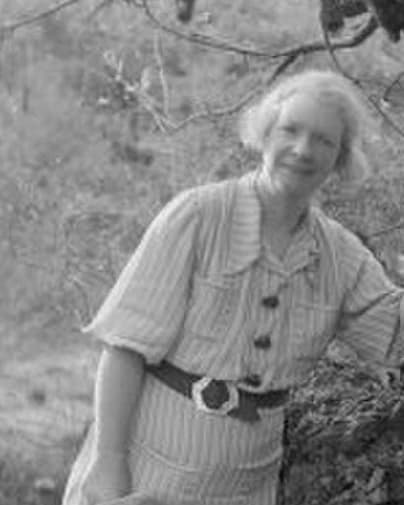
Harold Cazneaux; Wikimedia Commons; Public domain.
