
1710–1773
Marcos Zapata
Marcos Zapata worked in Cusco in the mid-eighteenth century and between 1748 and 1764, a span of sixteen years, painted at least two hundred canvases on religious subjects. In his “Last Supper” of about 1753 a roast guinea pig lies on the table and the cups hold chicha. Commissions went to Cusco, Chile and northern Argentina.
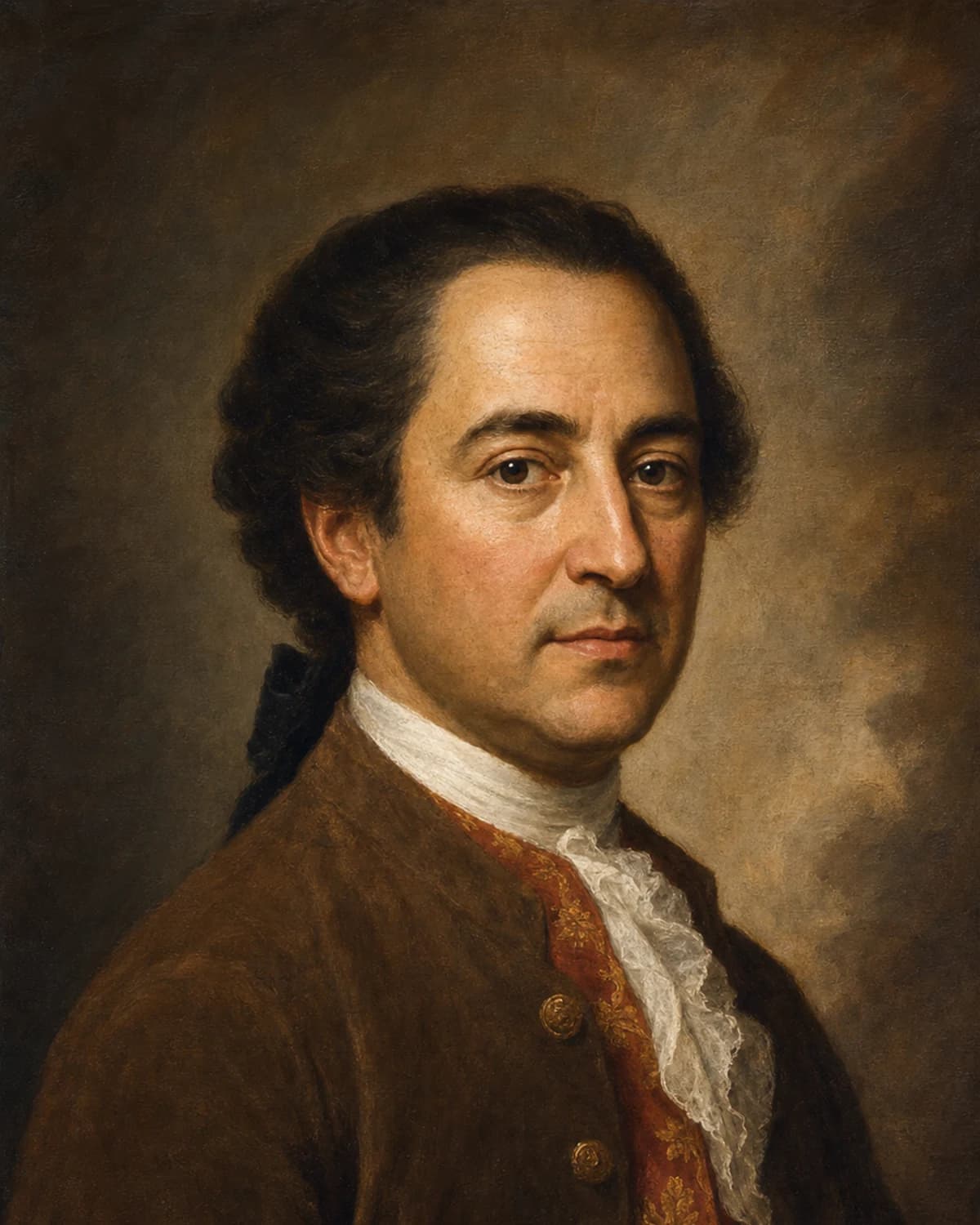
Biography
In Cusco Cathedral hangs a “Last Supper” (about 1753) in which a dish of roast guinea pig, or cuy, stands between Christ and the twelve apostles. Beside it is chicha, a maize beer, in place of wine. The picture is attributed to Marcos Zapata, and it is his best-known work.
He was born in Cusco around 1710.
He is counted among the last masters of the Cusco School, in which Spanish painters taught local people to paint religious subjects. Sources describe him as coming from the Quechua people. Some texts give his name as Marcos Sapaca Inca, but it has been suggested that he was once confused with another painter, Marcos Sápaca, working at the same time: they had different signatures and different bodies of work, and a series of paintings signed by Sápaca is in Humahuaca in Argentina. As far as I can judge, the double name in older reference books should be put down to this confusion.
He introduced Andean motifs into Christian subjects deliberately. In the “Last Supper”, besides the cuy and the chicha, there are, by description, potatoes, stuffed rocoto peppers and corn, and in the background a crucifixion and figures of Mary. In Andean culture the guinea pig was both a delicacy and a sacrificial animal, and a viewer in Cusco read such a table differently from a European. What exactly lies on the dish is not settled: it has been suggested that it is a viscacha. The idea that the drink is chicha has also been put forward by guides at the cathedral, and I have no documents on that point. Between 1748 and 1764 he painted at least two hundred works. Twenty-four of them illustrate the life of Saint Francis of Assisi and were made for the Capuchin order in Santiago, Chile. He produced fifty canvases on the Litany of Loreto, the litany to the Virgin, for the cathedral in Cusco. His palette was dominated by blue and red; by other accounts, blue and vermilion. His workshop was large, with several apprentices, and a steady flow of commissions passed through it.
He is best known for his images of the Virgin, almost always surrounded by cherubim. In his allegorical Madonnas he drew on prints, and he kept the compositions simple so that complex theological ideas could be read without difficulty. For the Jesuits he made another series together with his pupil Cipriano Gutiérrez. It included an enthroned Virgin, finished in 1764 for the church of the Almudena in Cusco. Judging by the number of copies and variants that circulated in the region, the image was valued.
Among his other works are “Virgen de la Silla with the graduation of the García brothers” (about 1750–1760), commissioned by two graduates of the University of San Antonio Abad in Cusco and now in the Museo de Arte de Lima, and “King Solomon” (about 1764), in which vermilion is used, rare at the time because its materials were hard to obtain. His workshop is also credited with an “Adoration of the Magi” (about 1760); the animals in the background there resemble native Peruvian ones, and the fabrics are decorated with gold. It was later exhibited in the United States and entered the Denver Art Museum.
Zapata’s fame reached beyond Cusco: his influence extended to Upper Peru, Chile and the north of present-day Argentina. His manner was continued by Antonio Vilca and Ignacio Chacón. After 1764 commissions and records of him become fewer. By one account, in 1773 he was in prison for reasons unknown, after which the trail goes cold; other sources give 1773 as the year of his death, and a third gives 1776. Neither the place of his death nor its circumstances could be established.
Related context
Associations
Works connected through artistic movements, cultural context and period. Priced works available in this market appear first.








Profile notes
Profile and sources
Image
Artist image
На основе открытого изображения: Marcos Zapata; Wikimedia Commons; Public domain.
