
04.12.1891–27.03.1971
Manuel Rodríguez Lozano
Manuel Rodríguez Lozano (1891–1971) refused to work on the state murals commissioned by José Vasconcelos and showed a Mexico that was melancholy, not festive. In 1940 he became director of the National School of Plastic Arts, lost the post after being accused of stealing engravings, and in Lecumberri prison painted the mural “Piedad en el desierto”. It began his “white stage”.
Biography
In 1940 Rodríguez Lozano became director of the National School of Plastic Arts, and less than two years later he was in Lecumberri prison. For the four-hundredth anniversary of the Colegio de San Nicolás in Michoacán, the school had been asked to lend engravings by Dürer and Guido Reni. He requested them, they vanished, and the responsibility was laid on him. The Dürer engraving reappeared without explanation only in 1966.
He was released after four months.
He was born in Mexico City on 4 December 1891 into a well-off family, the son of Manuel Rodríguez and Sara Lozano, who loved music and painting and received guests, among them the poet Amado Nervo. His birth year was long given variously, anywhere from 1894 to 1897, but surviving birth records confirm 1891. It is said that as a child he entered military service and later prepared for a diplomatic career, and that he abandoned both. He began to draw and paint on his own around 1910, then studied briefly at the Academy of San Carlos under Germán Gedovius and Alfredo Ramos Martínez, and left it for reasons that are unknown.
In August 1913 he married Carmen Mondragón, later known as Nahui Ollín, the daughter of General Manuel Mondragón. After the Decena Trágica (the Ten Tragic Days, the coup in Mexico City) and the assassination of President Francisco Madero, the family went into exile in Europe for almost eight years: first in Paris, then, with the outbreak of the First World War, in Spain. In Paris he met Matisse, Braque and Picasso, and the writers André Salmon and Jean Cassou and the painter André Lhote. The couple’s only child died soon after birth. Little is known of this period, no early works survive, and the exact reasons for the couple’s separation are not documented. He returned to Mexico in 1921.
After his return he exhibited at the Department of Fine Arts and at San Carlos, and the following year took a job teaching drawing in primary schools by the method of Adolfo Best Maugard. In 1923 Roberto Montenegro introduced him to Francisco Sergio Iturbe, who became his patron. His closest students were Abraham Ángel and Julio Castellanos; the three travelled to Argentina, where they showed work at the Museo Provincial de Bellas Artes, and then exhibited in Paris. Tebo and Nefero are also counted among his students. Abraham Ángel died in 1924, by one account of a cocaine overdose; the chronology of these journeys differs between sources, and I would check it against exhibition catalogues.
In 1928 he grew close to Antonieta Rivas Mercado, the daughter of a prominent architect. Together they founded the Ulises Theatre, a centre for the Contemporáneos (a circle of Mexican poets and writers). Salvador Novo, Celestino Gorostiza and Isabela Corona came there; plays were staged with his sets, and books were published, among them Xavier Villaurrutia’s “Dama de corazones”. At the request of Carlos Chávez he persuaded Rivas Mercado to help found a Mexican symphony orchestra, and later he organized the ballet group “El ballet de la paloma azul”. In 1932–1933, on commission from Iturbe, he painted “Los tableros de la muerte”, and in 1935 he finished “Il Verdaccio”, one of his principal works.
He did not get on with Vasconcelos, then head of public education, who invited him to take part in state projects: he held that art should not carry a political message. He used Mexican subjects and types without emphasis, believing that his painting was Mexican in any case. The influence of De Chirico and Picasso is visible, but he followed no movement strictly, and critics called him now a Cubist, now a Surrealist. Luis Cardoza y Aragón rejected the work; Raquel Tibol and Berta Taracena, by contrast, valued precisely its melancholy Mexico. He also painted portraits: Jaime Torres Bodet, Daniel Cosío Villegas, Rodolfo Usigli.
His work is divided into three periods. Until 1934 he painted Mexican archetypes: large, solid figures, restrained but rich colour. In 1935–1939 came gigantic figures of prostitutes, labourers and people of poor neighbourhoods, and towards the end of the period the colour pales. The third, “white” period began with the mural “Piedad en el desierto”, painted in Lecumberri: lilac, blue, grey and light pink around white, with only the night skies left dark. The figures lengthen and become almost skeletal or ghost-like, often androgynous, and the rebozo (a shawl) serves as a sign of pain. This device later echoed in Emilio Fernández’s film “La perla”. In this period he made more than thirty paintings and two murals. The prison mural was moved to the Palacio de Bellas Artes and restored in 1967. The second mural, “El holocausto”, he painted in 1945 in Iturbe’s house.
In 1948 he was invited to exhibit at the Musée de l’Orangerie in Paris. In the 1950s he stopped painting, though a portrait of Alfonso Reyes from 1960 is known. In 1960 a book of his essays, “Pensamiento y pintura”, appeared. A retrospective was held in 1968 as part of the cultural programme of the Mexico City Olympics, and another, posthumous, in 2011 at the Museo Nacional de Arte.
He died in Mexico City on 27 March 1971 and was buried in the Panteón de Dolores.
Related context
Associations
Works connected through artistic movements, cultural context and period. Priced works available in this market appear first.








Profile notes
Profile and sources
Image
Artist image
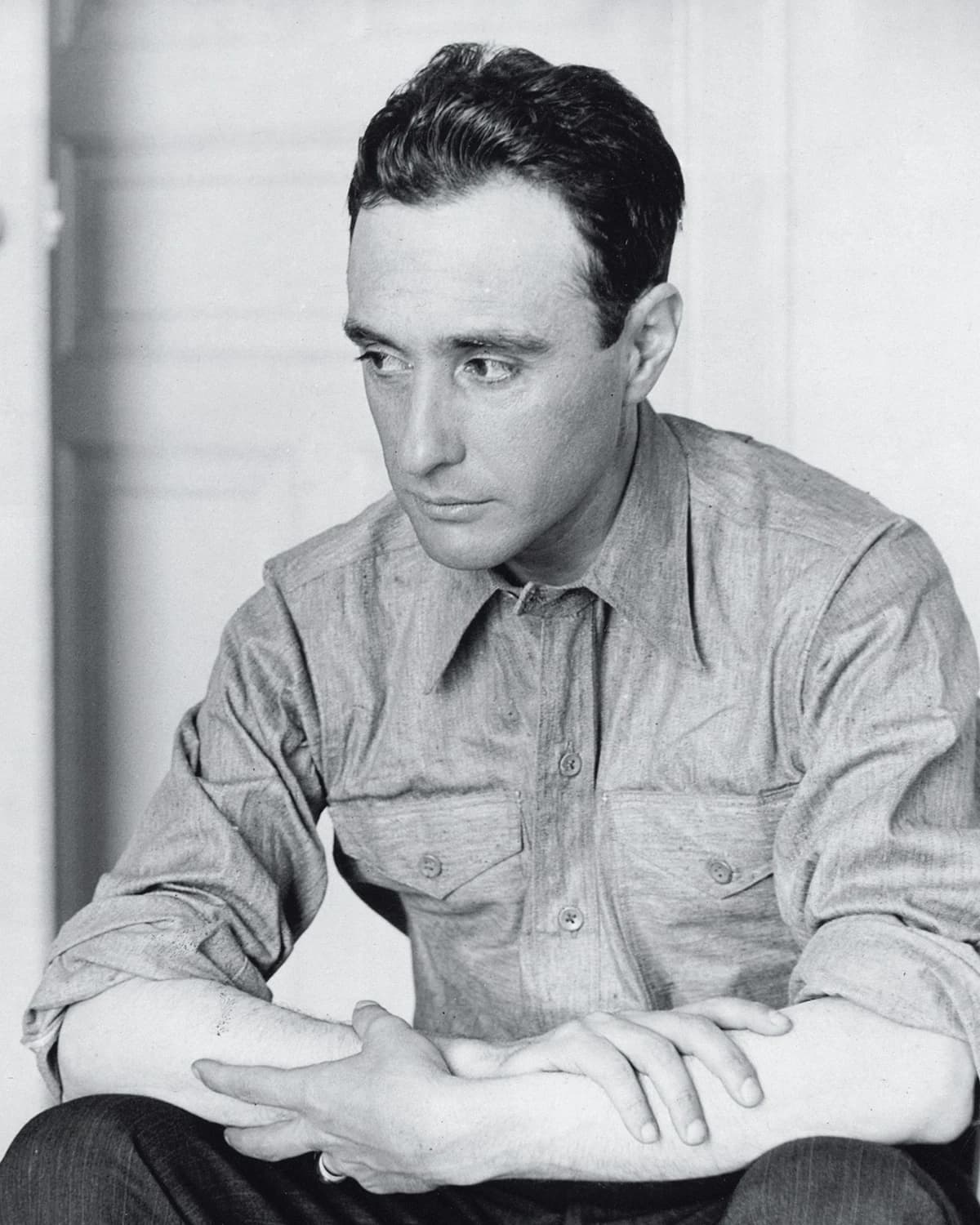
Tina Modotti; Wikimedia Commons; Public domain.
