
10.1826–23.03.1869
Luis Montero Cáceres
In 1847 Luis Montero of Piura received the first state scholarship in Peru for study in Europe, after a miniature portrait of President Ramón Castilla. He studied in Florence and spent six years there on “The Funeral of Atahualpa”. In 1868 he gave the huge canvas to Congress, and in 1881 Chilean troops carried it off.
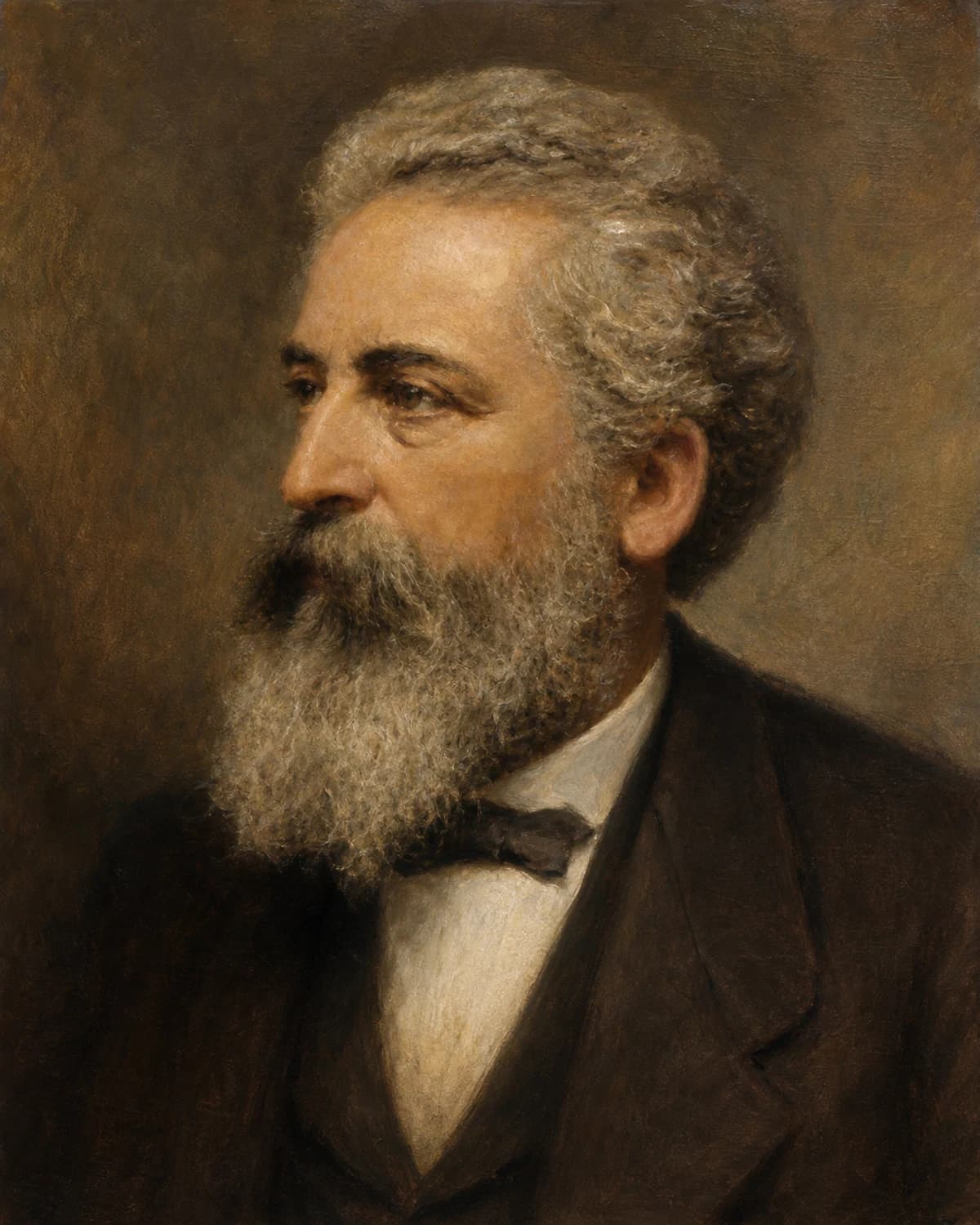
Biography
According to one story, President Ramón Castilla, on seeing a miniature portrait of himself, summoned the painter to the palace and asked why he had been painted so fair-skinned: he was a mestizo. The young artist confessed that he longed to study but had no money. So, the tale goes, Montero received a scholarship of five hundred pesos a year. One thing is certain: it was granted, and in Peru it was the first such grant.
Montero was born in October 1826 in Piura. He began drawing as a child. It is said that at eleven he was taught by Robert Tiller, a foreigner held in Piura prison for counterfeiting. The source of this story is an essay by the Argentine writer Vicente Gregorio Quesada, written in October 1867, when the painter was still alive; later biographers relied on it. Montero moved to Lima around 1844, worked for a year at the Casa Dorca y Barreda and studied at the drawing school under Ignacio Merino. The years of his study are given differently: 1843, 1844 or 1845. In 1848 (by other accounts he received the scholarship in 1847 and sailed then) Montero left for Europe: Genoa, Livorno, where Count Ceppi looked after him, then Florence. At the Academy of Fine Arts in Florence he spent almost three years studying under Giuseppe Bezzuoli. To this time belong “The Magdalene”, for which he won the academy’s second prize, “El Perú Libre”, “The Massacre of the Innocents”, “The Beggar and His Daughter” and “The Sleeping Venus”. Of these works, “The Massacre of the Innocents” now belongs to the Banco de Crédito del Perú, “El Perú Libre” hangs in the Legislative Palace under the title “Liberty”, and “The Sleeping Venus” is in the National Museum of Archaeology, Anthropology and History of Peru. Exhibited in Lima, it is thought to have been the first nude figure in Peruvian painting; it also prompted one of the first pieces of art criticism in the country.
In 1852 Montero became director of the Academia de Dibujo in Peru, but in less than a year he received a second scholarship, from President José Rufino Echenique, and went back to Florence. There he painted “The Lima Woman in a Hammock”, shown at a Florence exhibition in 1855; according to Quesada, the critic Cavalucci judged it more favourably than most other pictures. When Echenique’s government fell, the payments stopped and he had to return. On the way, in Cádiz, he painted a portrait of Pezuela’s son, changed his mind and set off for Cuba. In Havana he was admitted to the Lyceum, and there he married Juana López. They say the wedding fell on the day he won the lottery; that is hard to verify.
From 1858 (by other accounts, 1859) until 1860–1861 he lived in Peru again and painted portraits of Lima society, then left once more for Italy.
In 1861–1862 Montero found himself in Florence for the third time. He worked on “The Funeral of Atahualpa” for six years, finishing the canvas roughly between 1865 and 1867; by one account it was commissioned by the Peruvian government for the Exposition Universelle in Paris. The picture was shown in Rio de Janeiro, Montevideo and Buenos Aires. The painter returned to Lima in September 1868, exhibited it there one last time and gave it to Congress; the law accepting the gift was signed on 26 October 1868, and the chamber of sessions was assigned as its place.
Montero was preparing a fourth journey to Europe when he died at the Hotel de la Unión in the port of Callao. The date of death is 23 March 1869 by some accounts, 22 March by others.
After his death, during the War of the Pacific, the Chilean army removed “The Funeral of Atahualpa” from occupied Lima, and the picture was shown in Chile’s National Museum. The writer Ricardo Palma helped to bring it back to Peru. From 1885 to 1906 it hung in the still unrepaired National Library, then in the Palace of the Exhibition, and it is now in the Museum of Art of Lima.
Related context
Associations
Works connected through artistic movements, cultural context and period. Priced works available in this market appear first.








Profile notes
Profile and sources
Image
Artist image
На основе открытого изображения: ICAP Instituto Cultural de Arte Peruano (Aporte de G. Montero); Wikimedia Commons; Public domain.
