
08.12.1922–20.07.2011
Lucian Freud
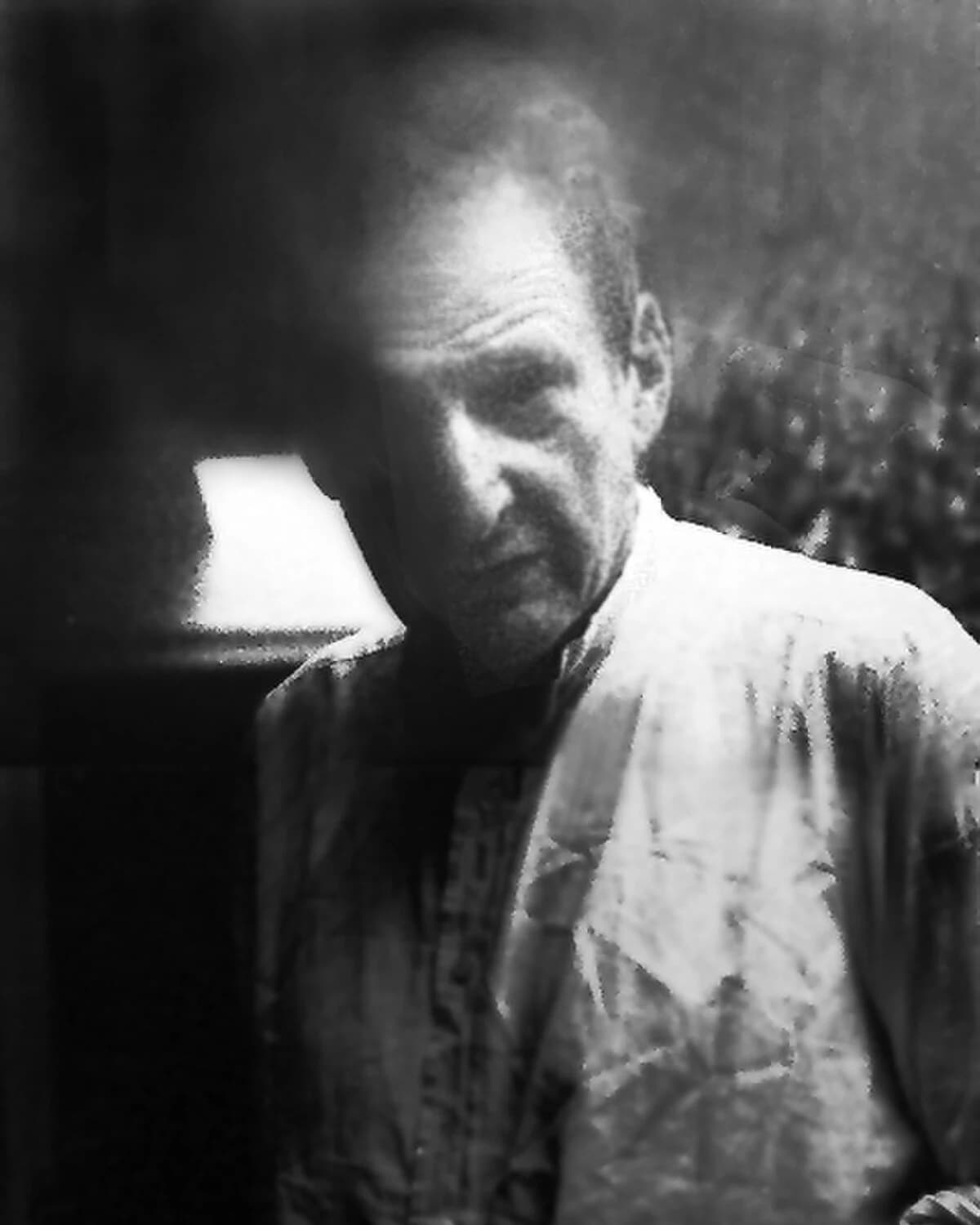
Lucian Freud (1922–2011), grandson of Sigmund Freud, grew up in Berlin and lived in London from 1933. He painted only from life, standing, for months on a single picture: friends, relatives, fellow painters and, from the 1950s, more and more often the naked model in thick impasto. The portrait of Elizabeth II he finished in 2001 was called a travesty by the newspapers.
Biography
Freud painted the portrait of Elizabeth II from May 2000 to December 2001. “The Sun” called it a travesty, the royal photographer Arthur Edwards said such a picture belonged in a bathroom, and the director of the National Gallery, Charles Saumarez Smith, found it psychologically acute and thought-provoking.
Lucian Michael Freud was born on 8 December 1922 in Berlin. His mother, Lucie Brasch, named him after Lucian of Samosata; his father, the architect Ernst Freud, was the fourth child of Sigmund Freud. In 1933 the family fled the Nazis for London, to St John’s Wood, and in 1939 Lucian became a British subject.
He was expelled from Bryanston School for bad behaviour. After a short spell at the Central School of Art in London, he attended Cedric Morris’s East Anglian School of Painting and Drawing at Dedham from 1939 to 1942, which moved in 1940 to Benton End, a house near Hadleigh in Suffolk, and then Goldsmiths’ College in 1942–43. In 1941 he went to sea as a merchant seaman in an Atlantic convoy and was invalided out after a few months. In 1943 the poet and publisher Tambimuttu commissioned drawings from him for Nicholas Moore’s collection “The Glass Tower”, published in 1944; among them were a stuffed zebra and a palm tree, and both found their way into “The Painter’s Room”, shown at his first solo exhibition in 1944 at the Lefevre Gallery. In the summer of 1946 he went to Paris, then for several months to Greece to see John Craxton; in the early 1950s he was often in Dublin, where he shared a studio with Patrick Swift. From 1949 to 1954 he taught at the Slade.
His early pictures are small, thinly painted, muted in colour and precise in line, done with sable brushes: the self-portrait “Man with a Thistle” of 1946, “Girl with a Kitten” of 1947 with the huge eyes of the model, Kitty Garman, to whom he was then married. “Girl with a White Dog” of 1951–52 stands at the turning point: by the middle of the decade he had switched to hog’s-hair brushes, thick paint and impasto, had begun to paint standing and to clean his brush after every stroke on flesh so that no colour repeated. Around 1960 the manner settled and changed little afterwards. He painted the people around him and demanded long sittings; his titles stayed impersonal, and the Duke and Duchess of Devonshire did not know for several years that the baby in the portrait they had bought was the artist’s daughter. In the 1970s a series of portraits of his mother took about four thousand hours. Animals appeared beside their owners, as in “Naked Man with Rat” of 1977–78, along with wilting houseplants, heaps of rags for wiping brushes and, in the 1980s, London roofs seen from the studio window. He began with a charcoal drawing, painted a small area and worked outwards from it, starting with a new sitter’s head in order to “get to know” the person and returning to it at the end; a patch of canvas was deliberately left bare until the very end. Day pictures were painted in daylight, night pictures under lamps, and the two were never mixed. The painter R. B. Kitaj called him, Bacon, Auerbach, Andrews and Kossoff the “School of London”: figurative painters in the years of abstraction. The influence of German Expressionism that many see in his early work he himself denied; I know of no document that proves him wrong.
The model had to be present even while he painted the background.
His first exhibition outside London was held in Hartlepool in 1972, a large retrospective at the Hayward Gallery in 1988, when the BBC also recorded one of his few conversations on camera. In 1989 he was shortlisted for the Turner Prize. He painted Francis Bacon and Frank Auerbach, Leigh Bowery many times, Henrietta Moraes; in the mid-1990s came the huge naked portraits of Sue Tilley, an employment office worker, with her job title in the titles, as in “Benefits Supervisor Sleeping” of 1995. From the early 1960s he made etchings, in the last twenty-five years of his life with advice from the printer Marc Balakjian; the Victoria and Albert Museum holds 143 of them. In 1997 he received the Rubens Prize of the city of Siegen. “After Cézanne” of 1999–2000 is painted on an oddly shaped canvas with a grafted-on upper left corner; the National Gallery of Australia bought it. Retrospectives followed in Frankfurt in 2000–01 and at Tate Britain in 2002, and in 2004 his work was the first by a living artist to be shown at the Wallace Collection. “Ria, Naked Portrait” of 2007 took sixteen months: the model sat every evening but four, some 2,400 hours.
In his last years his most frequent sitter was his assistant David Dawson, who is also the subject of the unfinished final canvas, “Portrait of the Hound”. Freud died in London on 20 July 2011 and is buried in Highgate Cemetery; the funeral was taken by Rowan Williams, Archbishop of Canterbury. The exhibition “Lucian Freud Portraits”, which he had been preparing, opened at the National Portrait Gallery in February 2012.
Profile notes
Profile and sources
Image
Artist image
procsilas; Wikimedia Commons; CC BY 2.0.
