
25.12.1911–31.05.2010
Louise Bourgeois
Louise Bourgeois (1911–2010) grew up in a family that restored antique tapestries, and as a girl she drew in the worn-away parts of their patterns. From 1938 she lived in New York. Recognition came late: the Museum of Modern Art gave her its first retrospective in 1982, when she was seventy. Her best-known works came after that: the “Cells” and the huge steel spider “Maman”.
Biography
Beneath the Bourgeois family’s flat in Choisy-le-Roi, outside Paris, was a workshop for restoring tapestries. The parents ran a gallery of antique tapestries, the mother was in charge of the workshop, and the daughter drew in, for the restorers, the parts of the pattern that time had worn away. Much later Louise Bourgeois would call her “Maman”, a nine-metre spider of steel and marble, an ode to her mother, who, like a spider, wove and mended.
She was born on 25 December 1911 in Paris, the middle of the three children of Joséphine Fauriaux and Louis Bourgeois. She kept a diary from 1923. Her father’s affair with the Englishwoman who taught the children lasted ten years, and he was unfaithful openly, in front of the family; she later made this story the main material of her art.
At the Sorbonne she studied mathematics and geometry because, as she put it, only in rules that nobody could change did she find peace of mind. In 1932 her mother died, and Bourgeois gave up mathematics for art. She studied wherever she could: at the École du Louvre and the École des Beaux-Arts, in the academies of Montparnasse and Montmartre (Colarossi, Ranson, Julian, the Grande Chaumière), with André Lhote, Paul Colin and Cassandre. To avoid paying fees, she worked as an interpreter in classes for English-speaking students. In one of them Fernand Léger looked at her work and told her she was a sculptor, not a painter. She led tours at the Louvre. In 1938 she opened a gallery of her own next door to her father’s tapestry shop and showed Delacroix, Matisse and Suzanne Valadon there. One customer who came in was an American art history professor, Robert Goldwater. They married, and in 1938 she left with him for New York.
In New York Bourgeois went on studying painting at the Art Students League under Vaclav Vytlacil and made prints. Her first solo exhibition took place in 1945, and the same year her work was included in “The Women”, a show of fourteen women artists at Peggy Guggenheim’s gallery. Around then came the series of paintings “Femme Maison” (1946–1947), in which the female figures have houses instead of heads. Her sculptures of the 1940s were carved from wood scavenged from junkyards and from driftwood; she painted over the flaws and used nails to make holes and scratches. In 1951 her father died, and she took American citizenship. In 1954 she joined the American Abstract Artists group, was friends with Willem de Kooning, Mark Rothko and Jackson Pollock, and at the same time moved from upright wooden figures to marble, plaster and bronze. From 1958 until the end of her life she lived and worked in a house on West 20th Street in Chelsea. In the late 1960s her imagery became openly sexual (“Janus Fleuri” and “Fillette”, both 1968). She did not consider her art feminist and said her work dealt with problems that came before the division into genders. That did not stop “Femme Maison” from appearing in 1976 on the cover of Lucy Lippard’s book on feminist art.
In 1973 Goldwater died. She taught at the Pratt Institute, the Cooper Union and Brooklyn College, and in 1974–1977 taught printmaking and sculpture at the School of Visual Arts. In the early 1970s young artists gathered at her house on Sundays to show her their work; she took it apart so ruthlessly that these meetings were nicknamed “Sunday, bloody Sundays”.
“The Destruction of the Father” (1974) was her first large work in soft materials: plaster, latex, wood, fabric and red light. It is a cramped, cave-like room, something like a dining room, where, by the artist’s own account, the children have done away with a tyrannical father and eaten him. For the installation, it is said, pieces of lamb were bought from a butcher. Four years later came her first public sculpture, “Facets of the Sun”, outside a federal building in Manchester, New Hampshire.
The 1982 retrospective at the Museum of Modern Art made her famous at seventy. In an interview timed to the opening she said plainly that her imagery was entirely autobiographical and that at its root lay the childhood discovery that the governess was her father’s mistress.
In her seventies she returned to printmaking, set up her old press at home, added a second one, and worked with printers who came to her house until the end. In all she made about fifteen hundred printed compositions; in 1990 she gave the whole archive of her prints to the Museum of Modern Art. After eighty came two series of “Cells”: enclosed spaces that the viewer peers into or enters, containing her earlier sculptures, found objects and personal belongings. In “Cell (Choisy)” (1990–1993), named after the town of her childhood, a marble house stands beneath a large guillotine. Each cell, Bourgeois explained, deals with a particular fear. In 1992 her work was shown at Documenta in Kassel, in 1993 she represented the United States at the Venice Biennale, and in 1999 she received the Golden Lion there. In 2000 “Maman” stood in the Turbine Hall at the opening of Tate Modern; six bronze casts were made from it, and there are examples in Ottawa and Doha. In 2001 an exhibition of her work was held at the Hermitage.
It seems to me that her late work is easiest to understand through her parents’ craft: she cut, sewed and mended, only instead of tapestries she had fabric, latex and stone.
She worked until her last week. Louise Bourgeois died on 31 May 2010 in New York, in Manhattan. A few months later “Do Not Abandon Me”, a series made jointly with Tracey Emin, was exhibited in London: Bourgeois painted the watercolours and Emin drew on top of them.
Related context
Associations
Works connected through artistic movements, cultural context and period. Priced works available in this market appear first.








Profile notes
Profile and sources
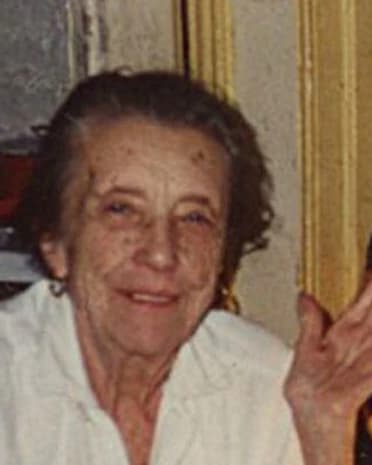
Image
Artist image
Tetsuo Harada; Wikimedia Commons; CC0.
