
17.03.1895–02.12.1988
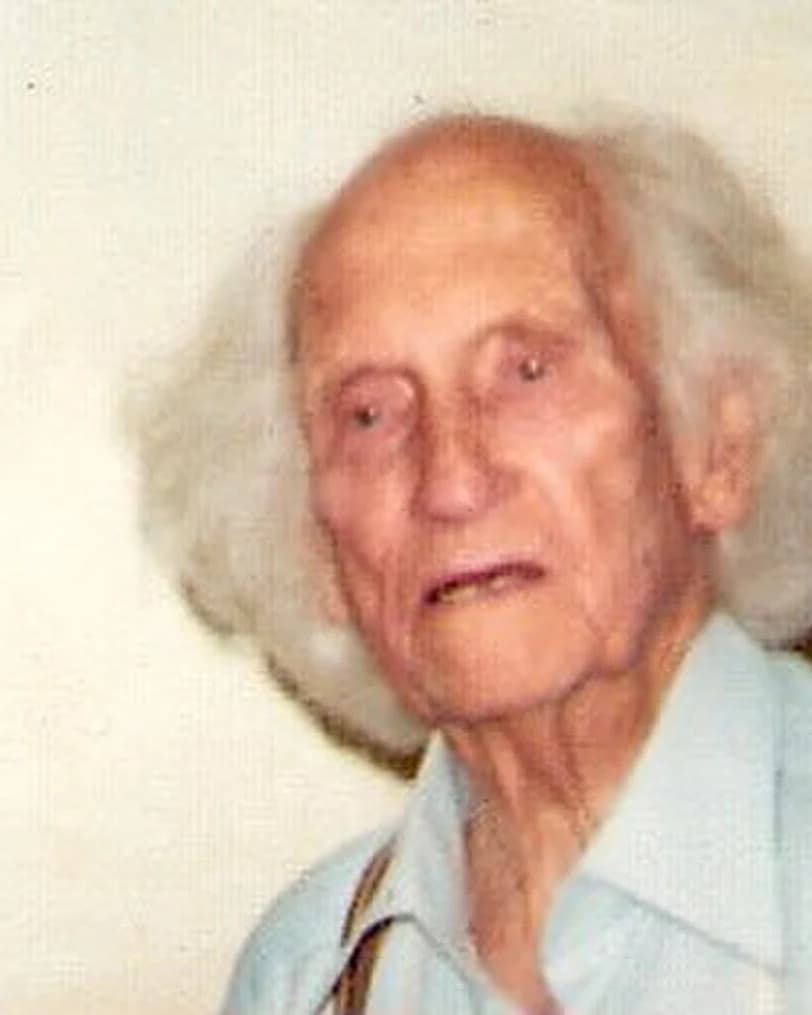
Lloyd Rees
Lloyd Rees (1895–1988) was born in Brisbane into a family with Mauritian and Cornish roots, began as a commercial artist and spent his life drawing Sydney Harbour and the landscapes of France and Italy. He won the Wynne Prize twice, taught at the University of Sydney's architecture faculty from 1946 to 1986 and painted until he was 93. His last pictures are about light.
Biography
Lloyd Rees painted his last pictures almost blind. He said that failing eyesight had one advantage: he could look straight at the sun. “The Sunlit Tower” was painted when he was 91 and in 1987 won the Jack Manton Prize, awarded by the Queensland Art Gallery.
It all began in Brisbane.
Lloyd Frederic Rees was born on 17 March 1895 in Brisbane (by some accounts in the suburb of Yeronga), the seventh of eight children. His father, Owen Rees, was head of the family; his mother, Angèle Burguez, was half Mauritian and half Cornish. He attended Ironside State School and Ithaca Creek State School, then the Central Technical College in Brisbane. He seems to have drawn old French and Italian buildings a great deal on his own initiative, and his first earnings came from postcards and architectural illustrations, among them work for St Brigid’s Catholic Church in Red Hill. In 1917 he moved to Sydney and became a commercial artist. There he began to paint the harbour; his points of reference were Corot and Constable.
In the 1920s he travelled to Europe for the first time, going to join his fiancée, the sculptor Daphne Mayo. He left his sketches, many of them of Paris, on a London bus. The engagement to Mayo was broken off in 1925. His bond with the landscapes of France and Italy lasted all his life: he returned to Europe in 1953, 1959, 1966–67 and 1973, and drew on every trip. His sketchbooks (about 700 sheets in pencil, carbon pencil, wash, watercolour and ballpoint pen) are in the Art Gallery of New South Wales, to which his son and daughter-in-law gave them after his death.
In 1926 Rees married Dulcie Metcalfe, and in 1931 he married again, to Marjory Pollard. The family settled in Northwood, a suburb of Sydney, where he built a house in an Italian style. In 1937 his drawings won a silver medal at the World’s Fair in Paris. In the same year he became a founding member of the Australian Academy of Art, an organisation created by Robert Menzies that stood against modernism.
From the 1940s to the 1960s he belonged to the Northwood group: friends, among them Roland Wakelin, George Feather Lawrence and John Santry, who went out together to paint Sydney Harbour and the north-west of the city. They had no manifesto and were conservative, closer to Neo-Impressionism, with a flowing, sinuous line. Sydney abstract expressionism was going on beside them, but Rees respected abstraction and stayed with his own way. In 1950 he won the Wynne Prize for “The Harbour from McMahons Point”. From 1946 to 1986 he taught at the Faculty of Architecture of the University of Sydney. His working method was unconventional: standing before a wet canvas, he would throw turpentine from a container over it, let the paint run, and then wipe back chosen areas with a cloth. Traces of this technique can be seen in his paintings of the 1980s. A portrait of Rees by his friend and Northwood neighbour William Pidgeon won the Archibald Prize in 1968.
Other awards followed one after another: the Commonwealth Jubilee Art Prize (1957), the John McCaughey Memorial Art Prize (1971) and the International Cooperation Art Award (1971). In the 1970s he went to Tasmania, where he painted large works, and a trip to Central Australia in 1976 produced pictures of Uluru and the Olgas. He tried lithography and etching, and in 1982 he won the Wynne Prize again.
His late works move further from the recognisable object: form is simplified, and the source of light and its effect on the landscape come to the fore. I think his outlook is best conveyed by his own words in the epilogue to his last book, written with Renée Free: from an early age he was overwhelmed by the fact of endlessness, and this, he said, gives life a sense of mystery that never leaves him.
He was appointed a Companion of the Order of St Michael and St George in 1978, in 1985 became a Companion of the Order of Australia, and in 1987 received the Médaille de la Ville de Paris. In 1988 he was given the Sydney University Union Medal, and the Australian Bicentennial Authority included him among the two hundred people who made Australia great.
His wife died on 14 April 1988. He died on 2 December of the same year in Hobart, Tasmania.
Related context
Associations
Works connected through artistic movements, cultural context and period. Priced works available in this market appear first.








Profile notes
Profile and sources
Image
Artist image
Peter Rees; Wikimedia Commons; CC BY-SA 3.0.
