
30.08.1907–18.01.1996
Leonor Fini
Leonor Fini (1907–1996) grew up in Trieste, never went to art school, and from the early 1930s lived in Paris, exhibiting alongside the Surrealists without ever joining their group. Her canvases are peopled by sphinxes, witches and women who hold power. From the mid-1940s, for almost thirty years, most of her work went into theatre, ballet and film, and she illustrated about fifty books.
Biography
While working for Elsa Schiaparelli at the turn of the 1930s and 1940s, Leonor Fini designed the bottle for the perfume “Shocking”, taking its shape from Mae West’s torso. She had begun making theatre costumes in the same decade, in the 1930s, for extra income, and in time they became very nearly her main occupation.
She was born on 30 August 1907 in Buenos Aires. Her father, a wealthy and despotic man, kept the household in fear, and her mother, a native of Trieste, took the child back to her home town before she was eighteen months old.
Her childhood in Trieste was unsettled. Her father fought for custody of the girl and refused her mother a divorce (an Italian court granted it only in 1919), and there were times when mother and daughter had to leave in a hurry, travelling in disguise. Leonor was expelled from several schools for being unruly. In her early teens an eye disease forced her to go about for a while with both eyes bandaged, and once she had recovered she decided to become an artist. She did not study at an academy, then or later; her schooling came from museums and from the Italian painting of the Renaissance and Mannerism that had surrounded her since childhood. At seventeen she moved to Milan, and that same year a gallery in Trieste showed one of her paintings. In Milan portrait commissions came from local dignitaries, and in 1929 the Galleria Barbaroux gave her her first solo exhibition.
Around 1931 Fini moved to Paris. Her new acquaintances included Paul Éluard, Max Ernst, Georges Bataille, Picasso, Salvador Dalí, the writer André Pieyre de Mandiargues and Henri Cartier-Bresson; with the last two she drove around Europe, and on that trip Cartier-Bresson took one of his best-known photographs, showing her naked in a pool. The strongest influence on her painting of those years was the metaphysical manner of Giorgio de Chirico and Carlo Carrà.
She did exhibit with the Surrealists: in London in 1936, in New York in 1938, and in 1943 in the “Exhibition by 31 Women” at Peggy Guggenheim’s New York gallery, Art of This Century. Her first major exhibition had come as early as 1936, at the Julian Levy Gallery in New York. But she never became a member of the group. To my mind, this explains a good deal about her career: from the outside she was counted among the Surrealists, while she herself kept her distance.
Her characters are almost always women or beings of uncertain sex: sphinxes, werewolves, witches. Fini’s women often dominate the scene, and the scene itself is frequently openly erotic. She painted many portraits, among them Jean Genet, Anna Magnani, Jacques Audiberti, Alida Valli, Jean Schlumberger and Suzanne Flon. In 1959 she painted “Les Sorcières” for the Mexican actress María Félix.
From 1944 to 1972 most of her time went into costumes for film, drama, ballet and opera. For George Balanchine she designed “Le Palais de cristal” (1947); for “Les Demoiselles de la nuit” (1948), the first production of Roland Petit’s Ballet de Paris, she made the costumes in which the young Margot Fonteyn danced. In 1949 Frederick Ashton choreographed “Le Rêve de Léonor”, a ballet to music by Benjamin Britten based on her idea, and she dressed its half-human, half-animal creatures as well. She also worked with the directors Giorgio Strehler and Jorge Lavelli, and in cinema she designed the costumes for Renato Castellani’s “Romeo and Juliet” (1954) and John Huston’s “A Walk with Love and Death” (1968).
There are about fifty books with her illustrations: the Marquis de Sade’s “Juliette” in a 1944 edition, the “Satyricon”, Baudelaire, Edgar Allan Poe, Shakespeare, Nerval’s “Aurélia”, Marcel Schwob, Jean Genet, and books by Lise Deharme. Her best-known drawings are probably those for “Story of O”. She readily gave drawings to young authors to make it easier for them to get published. In the 1970s Fini wrote three novels herself; one of them, “Rogomelec”, came out in 1979.
In Paris she shared a household with the Italian count Stanislao Lepri, who had given up his diplomatic career for her, and, from October 1952, with the Polish writer Konstanty Jeleński as well. The three of them lived together to the end. At one time there were as many as twenty-three Persian cats in the house.
In London her paintings were shown by the Kaplan Gallery (1960) and the Hanover Gallery (1967), and in the spring of 1987 by the Editions Graphiques gallery; in Paris in 1986 the Musée du Luxembourg exhibited more than 260 of her works: paintings, watercolours and drawings, costume designs, masks. Leonor Fini died on 18 January 1996 in Paris. A catalogue raisonné of her oil paintings, compiled by Richard Overstreet and Neil Zukerman, was published in Zurich in 2021.
Related context
Associations
Works connected through artistic movements, cultural context and period. Priced works available in this market appear first.








Profile notes
Profile and sources
Image
Artist image
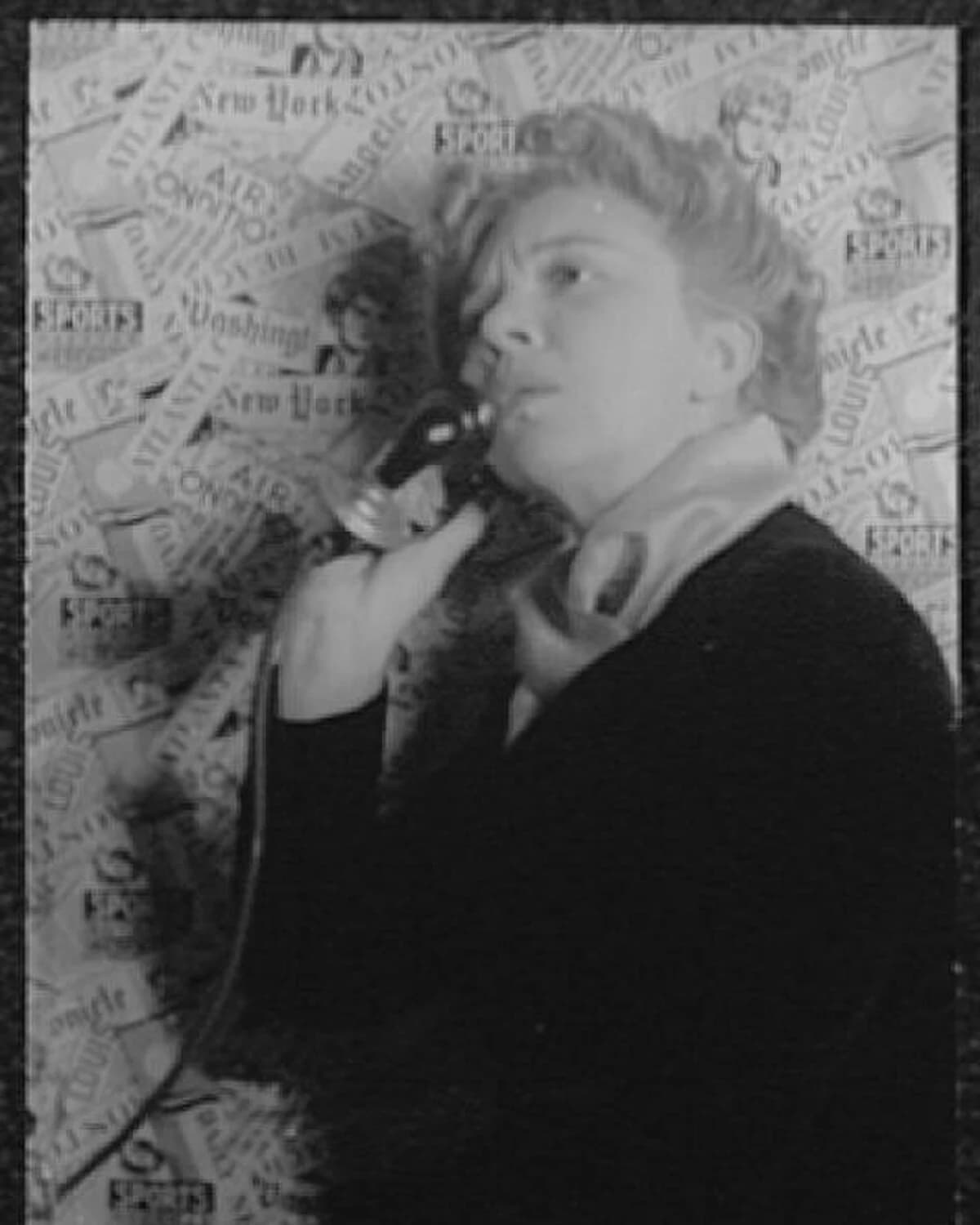
Carl Van Vechten; Wikimedia Commons; Public domain.
