
25.01.1713–23.01.1791
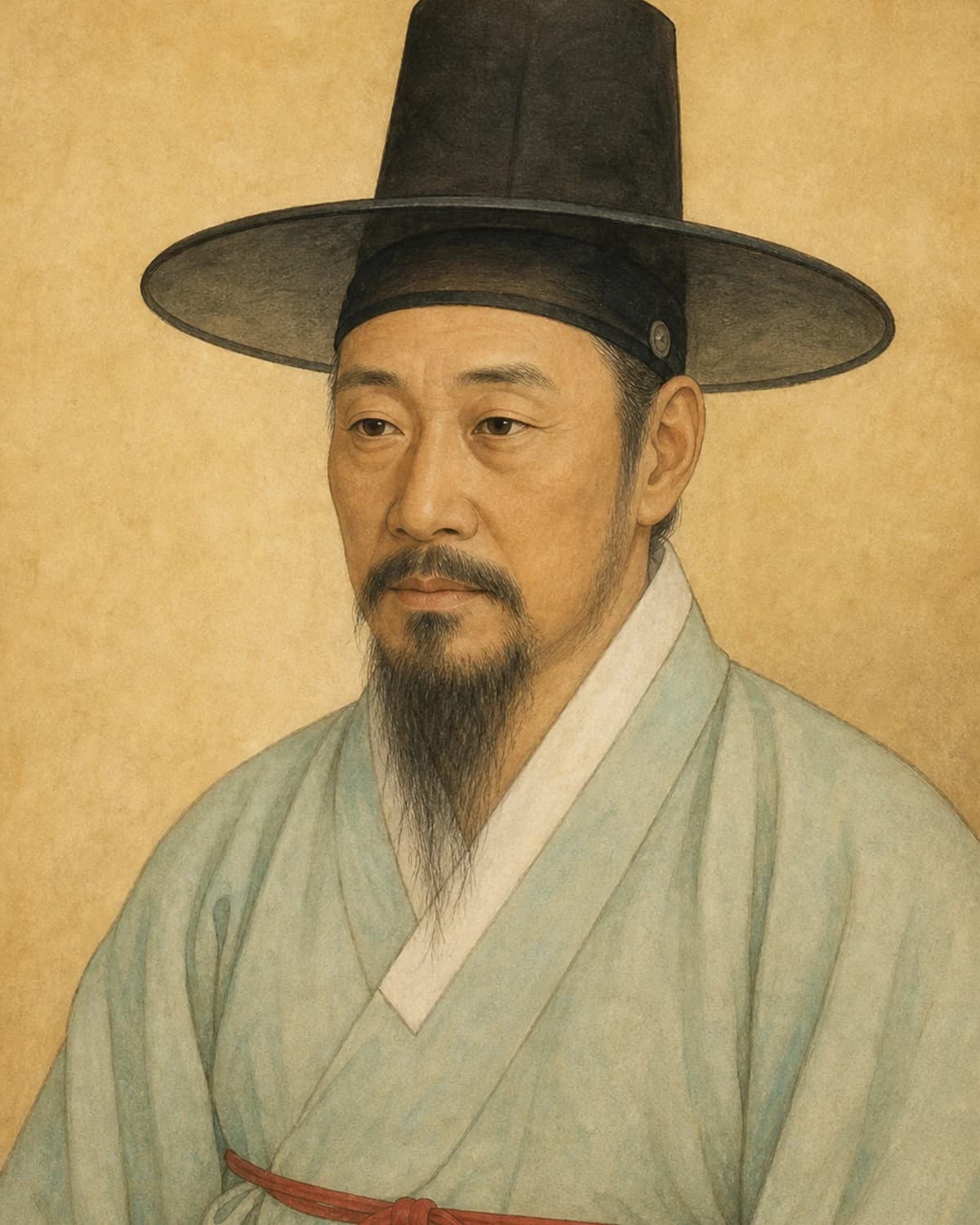
Kang Sehwang
Kang Sehwang (1713–1791) spent thirty years in Ansan, away from office, and took up a government post only after the age of sixty. He painted, practised calligraphy, left notes on art, taught the young Kim Hongdo and visited Beijing in 1784. Korean literati painters regard him as one of the founders of muninhwa.
Biography
In 1744 Kang Sehwang settled in Ansan. He rarely left it, and lived there for about thirty years.
He was born on 25 January 1713, which by the lunar calendar was 21 May. Sources give different places of birth: by some accounts it was Jinju in the south of Korea, by others Seoul. What is beyond dispute is that he came from a learned family of the Kang clan of Jinju, and that his father was called Kang Hyŏn. The artist’s pen name was Pyoam, his courtesy name Gwangji.
The Ansan decades were a time of study and of his own work. Kang painted, practised calligraphy, wrote poetry and reasoned about art: contemporaries valued him as a connoisseur whose eye was sterner than that of many practising artists. Here he also taught painting to a boy who was destined to become one of the best-known Korean artists, Kim Hongdo (in the Korean tradition he is more often called by his pen name, Danwon). I found no details of the lessons, but every source repeats the fact of the apprenticeship. Kang was involved in muninhwa, “paintings by people of culture”. The term refers to the painting of the seonbi, educated men of the upper class who painted not for money but as part of their own literary pursuits. Kang gave this movement a manner of his own, and for that reason he is sometimes called the creator of the style. He also took part in developing “true view” painting, that is, the depiction of real Korean landscapes in place of imaginary Chinese ones.
In 1774, at the age of sixty-one, he moved to the capital and entered government service. By some accounts he was a court painter who served for more than sixty years, but that figure does not fit the other dates: according to other accounts, he entered service only after sixty. I would trust the second version, because it agrees with the date of his move.
In 1784 Kang was sent to Beijing. His works were highly appreciated there.
He remained in Seoul until his death. Kang Sehwang died on 23 January 1791.
Related context
Associations
Works connected through artistic movements, cultural context and period. Priced works available in this market appear first.








Profile notes
Profile and sources
Image
Artist image
На основе открытого изображения: Kang Sehwang; Wikimedia Commons; Public domain.
