
19.03.1888–15.12.1956
José Sabogal
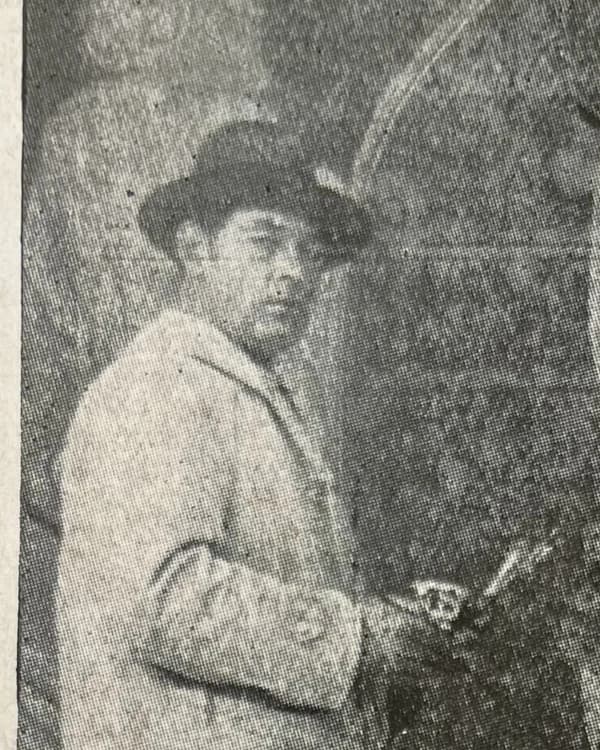
José Sabogal (1888–1956) showed in Lima in 1919 canvases painted during six months in Cuzco, and made the Andean indigenous people a subject for serious painting; the exhibition caused a scandal. From 1932 to 1943 he directed the capital’s School of Fine Arts and gathered a circle of pupils around him. He also wrote essays on Peruvian popular art.
Biography
Sabogal’s first exhibition in Lima took place in 1919 at the Casa Brandes. On the walls hung canvases brought from Cuzco, where the artist had spent about six months. The Lima public saw indigenous people in them, and part of it took this as a challenge. The sources speak of a scandal, but they give no details of the reaction.
José Arnaldo Sabogal Diéguez was born on 19 March 1888 in Cajabamba, in northern Peru, into a mestizo family; his parents were Matías Sabogal del Castillo and Manuela Diéguez de Florencia. From 1908 to 1913 he travelled widely: he visited Spain, the south of France, Italy and North Africa. Then he studied at the School of Fine Arts in Buenos Aires, for five years according to one source. Afterwards he taught drawing in the north of Argentina, in San Salvador de Jujuy. Cuzco changed his work. He himself came from a family of Spanish descent, but he was interested in pre-Columbian culture and its imagery. The city and its inhabitants became his main subject. His other pictures of the 1910s and 1920s include “Solitary Cactus” (1916), “Carnival in Tilcara” (1918) and “The Varayoc of Chinchero” (1925). These titles are known to me from a list of works; I have not seen the canvases themselves, so I am cautious about judging the painting.
In 1922 Sabogal went to Mexico and met Diego Rivera, José Clemente Orozco and David Alfaro Siqueiros there. After this trip he resolved to promote Peruvian art abroad. At about that time a circle of young artists formed around him. Among his pupils are named Camilo Blas, Enrique Camino Brent, Julia Codesido, Cota Carvallo, Jorge Segura, Aquiles Ralli, Gamaniel Palomino, Pedro Azabache and Eladio Ruiz. The best part of his work dates from the 1920s to the 1940s.
From 1920 Sabogal taught at the National School of Fine Arts in Lima, and from 1932 to 1943 he was its director. He made the break with European academicism a programme of the school. It seems to me that it was through teaching that he influenced Peruvian painting more than through individual pictures.
He made woodcuts, for example “The Innkeeper of Huanta” and “Sacsayhuamán” (both 1925) and “Ayacucho” (1930). There were portraits too: of his wife, the writer María Wiesse, painted in 1921, and of his son, in 1946. Late works include “Mochica Fisherman” (1956) and “Woman in the Sechura Desert” (1951). After leaving the post of director, Sabogal and Luis Eduardo Valcárcel founded in Lima the Free Institute of Peruvian Art at the National Museum of Peruvian Culture. At the same time he wrote about popular crafts. In 1945 came “Mates burilados”, a study of carved gourd vessels, and a book on the graphic artist Pancho Fierro. Then followed “The Bull in Peruvian Popular Arts” (1949), a book on the “kero”, the painted wooden libation cups of Cuzco (1952), and “The Attic of Peruvian Imagery” (1956). The collection “On Art in Peru and Other Essays” appeared only after his death, in 1975.
Sabogal died in Lima on 15 December 1956.
Related context
Associations
Works connected through artistic movements, cultural context and period. Priced works available in this market appear first.








Profile notes
Profile and sources
Image
Artist image
The West Coast Leader, Ltd.; Wikimedia Commons; Public domain.
