
08.1946–present
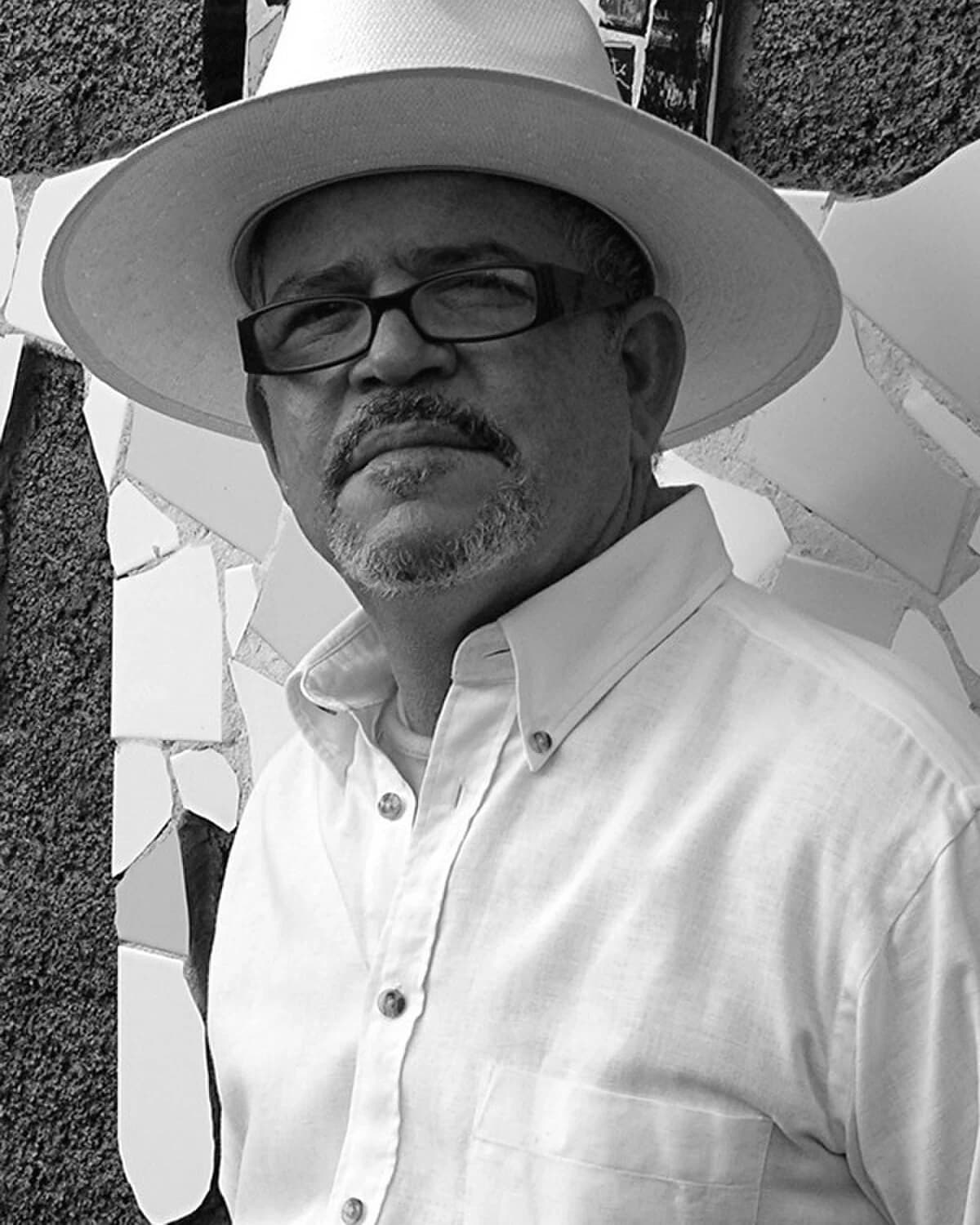
José Rodríguez Fuster
José Fuster (born 1946) turned the fishing village of Jaimanitas on the outskirts of Havana into a vast open-air museum: he decorated more than eighty houses with mosaics and ceramics and built a chess park and a theatre. He grew up in Caibarién in a working-class family, studied in Havana from 1963, and worked as a ceramicist, painter and graphic artist. He paid for the project from the sale of his own paintings and ceramics.
Biography
José Antonio Rodríguez Fuster was born on 6 August 1946 in Caibarién, on the northern coast of Cuba. Sources give his birthplace differently: sometimes only the province of Villa Clara, to which the town belongs, is named.
His family was working-class and lived by fishing. In 1961, as a teenager, he took part in Cuba’s national literacy campaign; according to some accounts, he taught in the Sierra Maestra. In 1963 he went to Havana and enrolled at the National School of Art Instructors (ENIA). His studies ran until 1965, after which he worked as a ceramicist in the Cubanacan Ceramics workshop in Havana. Since 1966 he has lived as a freelance artist.
His first exhibitions were modest. In 1966 he was chosen for “Arte Popular”, a show organised by his own school at the International Art Centre in Havana. In 1967 came a solo exhibition of watercolours and drawings, “Alegría de vivir” (“Joy of Living”), which travelled to several Havana galleries. In 1974 he won a prize for ceramics at the Fourth National Youth Salon of Visual Arts, held at the National Museum of Fine Arts in Havana. His ceramics were also included in the group exhibition “Cerámicas Cubanas” of 1975 at the Museum of Decorative Arts, and in 1976 his drawings and ceramics were shown in Bucharest.
He travelled in Europe and saw Antoni Gaudí’s work in Barcelona and Constantin Brâncuși’s sculptural ensemble in Romania. Critics often compare his own pieces with theirs; among those who inspired him, Picasso and Jean Dubuffet are also named. In 1984 he took part in the International Ceramics Symposium in Römhild.
Around 1980 Fuster settled in Jaimanitas, in Havana’s western district of Playa, at first in a wooden house. He remodelled it and then, by agreement with the owners, began painting and tiling the neighbouring ones. Sources date the start of the large project differently: some give 1994, others speak of ten years of work. The result was more than eighty decorated houses, with domes and murals chosen to suit the character of the residents, a chess park with giant boards and tables, the Artists’ Wall of dozens of tiles signed and donated by other Cuban artists, a theatre and public swimming pools. The district is known as Fusterlandia. His visual language includes the mermaid, the fish, the palm, the rooster, dominoes, crocodiles and figures of Santería saints; some of the subjects are linked with the prose of Alejo Carpentier, Onelio Jorge Cardoso and Ernest Hemingway. According to Fuster, all of it was paid for with the proceeds from his paintings and ceramics.
To my mind, it is hard to separate art from neighbourhood life in Jaimanitas: the work was done at the residents’ invitation and on their walls.
In 2007 he unveiled the sculpture “The Olympus of the Five”, dedicated to the five Cubans imprisoned in the United States: a silver-coloured hand ten metres high on a concrete-and-ceramic plinth. It was inaugurated in September, on the tenth anniversary of their arrest.
His solo exhibitions (more than a hundred, by some accounts) have been held in various countries: in Lyon in 1998, in Oxford in 2007, and in 2008 at La Galleria on Pall Mall in London. His works are in the National Museum of Fine Arts in Havana, the Ceramics Museum in the Castillo de la Real Fuerza and the Center for Cuban Studies in New York. Fuster lives and works in Havana.
Profile notes
Profile and sources
Image
Artist image
Soydcuba; Wikimedia Commons; CC BY-SA 3.0.
